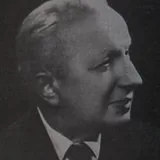
Mikhail Tal called him Maestro, and the name held for more than forty years — from the thin dark-eyed boy who turned up in a Riga chess room, to the funeral in 1992 where Aleksandrs Koblencs rose to give the farewell and could not get through it for weeping. He was a real master in his own right, four times champion of Latvia, and a writer whose books taught the game in nine languages. But his life's work was another man's genius, and he was clear about what a trainer could actually do: not make a genius, only prepare the soil one might grow in.
The sawmill owner's son
Koblencs was born in Riga in September 1916, in the last months of the Russian Empire, into a prosperous Jewish family. His father owned a sawmill and German was the language of the house. He learned the moves at ten from Jean Dufresne's little primer, and from 1932 he was playing in Latvian tournaments.
At nineteen he sat down to write his first chess book. Latvian Chess Pearls came out in Riga in 1937, when he was twenty-one, and the habit never left him — he was still writing, and editing a magazine, in the last year of his life.
Hastings, Barcelona, Brno
The nineteen-thirties gave him a passport and he used it hard. In 1934 he finished third-fourth in a side tournament at the Hastings festival. In 1935 the Riga daily Jaunākās Ziņas sent him out as its chess correspondent to cover the Warsaw Olympiad and the Alekhine–Euwe world championship match, and in London he sat down and interviewed Emanuel Lasker. He won a tournament in Barcelona that year and stayed on in Catalonia, editing the chess magazine Els Escacs a Catalunya — until he found himself sitting with the other players in Barcelona in the summer of 1936 as the first shooting of the Spanish Civil War started around them.
His best result as a player came at Brno in 1937: nine points out of eleven, clear first ahead of Lajos Steiner. He was twenty. He played at Milan in 1938 and used the trip to study bel canto — he had a pleasant tenor voice, and it would earn him a living sooner than he could have guessed. He spent six months of 1939 in London. Then the map closed: the Soviet Union annexed Latvia in 1940, and that pre-war life on the European circuit ended.
In Garry Kasparov on My Great Predecessors, Part I, Koblencs recalls a conversation with Capablanca. The normally calm Cuban became “an enraged lion” when the subject turned to the world championship, bitter at the failure to arrange a return match with Alekhine (chapter 4, “In the Autumn of his Career”).
“I have gathered almost all the documents proving our family's right to the house — all but one: the record of my mother's death in the ghetto.”
“The game was still going on, but I was already receiving condolences.”
“Tal’s position was now absolutely won, but Koblents and Mikenas, Keres’s second, were reclining in their seats, clutching their hearts and sucking tranquillisers ...”
“For a long time I was reluctant to talk about this incident, although I am sure that it demonstrates very clearly the mastery of Koblents as a trainer.”
“In this work, my long-term coach Alexander Koblenz invites readers to look into his laboratory and get acquainted with the training process, and actively attend his training sessions.”
The tournament that saved his life
In March 1941 he won the first championship of the Latvian SSR, ahead of Fricis Apsenieks and of Vladimirs Petrovs, the strongest player the country had ever produced. That June he travelled with Petrovs to Rostov-on-Don for a semi-final of the USSR Championship. He was still there on 22 June when Germany invaded and the tournament broke off mid-stream. That accident of a chess calendar is the reason he lived. He sat out the war deep in the Soviet interior, at Samarkand, keeping himself by giving simultaneous displays in military hospitals and by singing at concerts.
When it ended he learned that his mother and his sisters had been murdered in the Riga ghetto. Petrovs did not come back either: arrested in August 1942 for complaining about living standards under Soviet rule, sentenced to ten years, dead of pneumonia at Kotlas in 1943 — a fact not confirmed publicly until 1989. Latvian chess had been emptied out, and Koblencs, who had survived by being somewhere else, was much of what remained of it. He was made a Master of Sport of the USSR in 1945, finished fourteenth in the USSR Championship final in Moscow that year, and took the Latvian title again in 1945, 1946 and 1949.
Misha
On a routine patronage visit to Riga's School No. 22, Koblencs met a thin boy with piercing black eyes called Misha Tal. Tal's own account in The Life and Games of Mikhail Tal places Koblencs among the masters in his first adult Riga championship, which he entered at the end of 1950, and calls him “my future trainer” (chapter 1, “My First Steps”). The sessions later ran for hours at Koblencs's flat and at his dacha, and what he found there was a combinational vision of frightening sharpness bolted to an almost fanatical appetite for work. His job, as he understood it, was not to tame the vision but to build a positional understanding underneath it strong enough to carry the weight.
They also played each other, and for a few years the teacher still won. Koblencs beat Tal in the Latvian championship in 1952, and beat him again in the championship final of February 1953, when the pupil was sixteen. In his textbook Schachtraining he also printed an undated draw between them as an example of active counterplay holding the balance: Tal, with Black, refused to defend passively, and the game contained three rook sacrifices before the players agreed a draw (p. 108). It did not last long. In 1957 Tal won the USSR Championship at twenty, the youngest man ever to do it, and in 1960 he took the world title from Mikhail Botvinnik.
On the tournament circuit
The later journeys brought their own anxieties. In Garry Kasparov on My Great Predecessors, Part II, Koblencs remembers watching Tal against Oscar Panno at Portorož in 1958: “The game was still going on, but I was already receiving condolences.” Bronstein came over to reassure him, and Simagin remarked on the mass of pieces Panno had for his sacrificed queen. Tal and Koblencs analysed the adjournment all night; Tal went on to win (Game 123, comments to 20...Bf5 and 42.Qf1+).
His recollections also caught moments away from the board. In Garry Kasparov on My Great Predecessors, Part IV, he remembers Zagreb in 1959, when Tal asked Fischer whether he had ever been to the opera. Fischer answered by singing a march from Carmen (chapter 2, narrative after Game 57).
Tal's second in two title matches
Koblencs was Tal's second in the 1960 match and in the 1961 rematch that handed the title back. By then the role had grown far past chess: he was sparring partner, analyst, travelling companion, manager, and the man who looked after the champion's nerves and — as far as anyone could — his health. Russian accounts of the pair keep reaching for the same phrase, that Koblencs had become in practice a second father. He was named an Honoured Trainer of the USSR in 1960, coached the Soviet national team from 1956 to 1960 through the winning Olympiads at Moscow and Leipzig, and remained Tal's official trainer until 1979.
Tal gives a quieter example in The Life and Games of Mikhail Tal. After the eighth game of the 1960 match, they discovered at home that he had missed an immediate win. Tal spent the night awake. The next morning Koblencs arrived with tomatoes and a cucumber; they breakfasted, called friends, walked around Moscow and went to the theatre that evening. Tal calls the incident an example of his mastery as a trainer (chapter 4, “World Champion”).
Tal describes another kind of preparation in The Life and Games of Mikhail Tal. At Riga in 1959, Koblencs deliberately asked him to play somewhat passively in the opening so that he would become accustomed to defending. They judged the tournament by what it contributed to preparation for Botvinnik, rather than setting a target placing (chapter 3, “The Road to the World Championship”).
Kasparov gives a concrete instance of that advice in Garry Kasparov on My Great Predecessors, Part II: before game eleven of the 1960 title match, Koblencs suggested the Réti Opening, and Tal took it up after his struggles against Botvinnik's Caro-Kann (introduction to Game 129). The analytical work was often collective. In Garry Kasparov on My Great Predecessors, Part V, the master A. Petersons recalls Tal, Koblencs, Klovans and himself spending hours on Tal's adjourned game against Korchnoi in Kiev in 1964/65. They judged it drawable; Tal nevertheless lost after resumption (pp. 48–49, introduction to Game 11).
In The Life and Games of Mikhail Tal, Tal recalls an unnamed spectator saying to his second after Tal–Filip at Portorož in 1958: “If Tal has an open file, then there will be a mate!” (chapter 3, “The Road to the World Championship”). Koblencs had a working principle borrowed from Heinrich Neuhaus, the teacher of Sviatoslav Richter — that nobody can create a genius, only the soil in which one grows. It is an unusually modest account of a career spent, by any measure, growing one.
The teacher of a small republic
Latvia was a small republic with a chess tradition and almost no machinery to support it, and Koblencs spent forty years building the machinery. He wrote the first chess textbook in the Latvian language, edited the magazine Šahs, ran the republic's chess club from 1966 to 1972 and served as its chief trainer through the 1970s, found money for coaches' salaries, translated instructional material and set up tournaments for children. With Tal and Aivars Gipslis he founded a grandmaster school for the young.
In Stories About Combinations (1970), he names an example he particularly likes: Korchmar–Polyak, played in 1937. He asks readers to forgive him for returning to the same combination in every edition of his textbooks, including that booklet (p. 18).
He described how Schachtraining began in its German edition's foreword, dated Riga 1966. At the 1960 Leipzig Olympiad, where he was trainer of the Soviet team and personal coach of the world champion Tal, players from many countries told him they wished they could attend the Soviet lessons and learn their secrets. Talk of secrets struck him as odd, he wrote, because Soviet trainers considered it their first duty to pass on everything they had learned, and so the idea grew of writing down the lessons he gave in Riga. He asked readers to solve the positions in their heads with a clock running, as if each were the deciding game of a world championship, and said his long years as a trainer had convinced him that looking up the answer, even after a failed attempt, leaves a deep impression.
He also used his own mistakes. In Chess School (1962), he returns to his draw with Klaman at Leningrad in 1946 and explains why he rejected a continuation: he stopped calculating when he foresaw an unpleasant pin. A little further calculation, he writes, would have shown a way to equal chances (p. 272). In Schachtraining he did the same with a loss to Alexandrov. He saw at once that the quiet 18.Ba6 would have blunted Black's attack, but after forty-five minutes' thought he accepted the offered sacrifices; with both players short of time he went wrong with 31.Rxd5, and Black won (p. 112).
The books went everywhere. Stories About Combinations (1970), The Magical World of Combinations (1980), Lessons in Chess Strategy (1983), Memoirs of a Chessplayer (1986), the German Schachtraining, and — with Tal himself — Study Chess with Tal, built out of the diaries Koblencs had kept through all the years of the climb. They appeared in nine languages: Latvian, Russian, German, English, French, Serbian, Italian, Spanish and Yakut. In 2020 Victor Ciobanu published a further English translation, Chess Strategy: Or Why Positions Do (Not) Collapse, with a foreword by Tal. He never stopped competing either, playing in the Latvian championship into his forties and winning the Riga city title for the last time in 1979, at sixty-three — more than forty years after the first.
Legacy
In 1991, with Latvia independent again, the new federation found no room for the men of the Soviet decades — not even for the one who had written the republic's first chess textbook in its own language. At seventy-five Koblencs left for Berlin, where his son lived and where his childhood German was spoken, founded the Schach-Journal, and started planning a Mikhail Tal international chess academy. He also began assembling the paperwork to reclaim the family house in Riga, and could not complete it: the file wanted a document recording his mother's death in the ghetto, and no such document existed. Tal died in June 1992, and at the funeral Koblencs stood to speak and broke. He died in his Berlin flat on 8 December 1993, eighteen months after his pupil. The Riga club he built is a bank now and his journals have folded, but the eighth World Champion was his life's work — and when Genna Sosonko came to write his portrait, he titled it with the name Tal had given him: The Maestro.
Books
Books Aleksandrs Koblencs wrote, co-wrote, edited, or contributed to. Translations and reprints are grouped under the same work.
-
Latvijas šacha pērles
Author
-
Padomju šacha meistaru partijas
Author
-
Padomju šacha triumfs
Author
-
Šaha skola
Author
-
Сицилианская защита / Sicīliešu aizsardzība
Author
-
Школа шахматной игры
Author
-
Дорогами шахматных сражений / Mikhail Tal: The Street-Fighting Years
Author
-
Рассказы о комбинациях
Author
-
Lehrbuch der Schachstrategie, Band 1
Author
-
Lehrbuch der Schachtaktik, Band 2
Author
-
Schachtraining: Der Weg zum Erfolg
Author
-
Study Chess with Tal / Schachtraining mit Exweltmeister Tal
Coauthor — Mikhail Tal, Aleksandrs Koblencs
-
Волшебный мир комбинаций
Author
-
Der Weg zum Erfolg, Band 1
Coauthor — Mikhail Tal, Aleksandrs Koblencs
-
Schachstrategie: Ein Intensivkurs mit Übungen und ausführlichen Lösungen
Author
-
Der Weg zum Erfolg, Band 2
Coauthor — Mikhail Tal, Aleksandrs Koblencs
-
Уроки шахматной стратегии
Author
-
Воспоминания шахматиста / Schach lebenslänglich: Erinnerungen eines Erfolgstrainers
Author
-
Schach positionell
Author
-
Schach spielend leicht kombinieren
Author
-
Schach richtig analysieren
Author