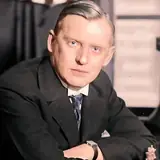
Alexander Alekhine was born into a Moscow noble family, lived through internment, war and revolution, and left Soviet Russia in 1921 to make his career in the West. In 1927 he took the world title from José Raúl Capablanca, whom almost no one expected him to beat. He lost it to Max Euwe in 1935 and won it back two years later, the first champion to regain the title. His attacking games, and his own notes to them, are still studied a century later. He died in a hotel room in Estoril in 1946, still World Champion, the only player to die holding the title.
A Moscow childhood, and a German prison
Alekhine was born in Moscow on 31 October 1892, the third child of a wealthy noble family. His father was a landowner and Privy Councillor, and his mother was the daughter of an industrialist. He learned chess from his mother, his older brother Alexei and his older sister Varvara, and began playing at seven; Alexei became his main opponent. He was playing correspondence chess by the age of twelve. Moscow masters visited the family home, and one of them, Fedor Duz-Khotimirsky, liked to say that he had given Alexander many lessons and that the future champion spent the rest of his life unlearning them.
In February 1909, aged sixteen, he won the All-Russian amateur tournament in St Petersburg with 13 out of 16 and became a master. In the autumn of 1911 he entered the Imperial Law School in St Petersburg. He won at Stockholm in 1912 and Scheveningen in 1913, and at St Petersburg 1914, after beating Rubinstein in the preliminary stage and Tarrasch twice in the final, he finished third behind Lasker and Capablanca. He completed his law course that spring. Pyotr Romanovsky later recalled that Alekhine arrived at Mannheim two hours before the first round, having waited to learn whether Capablanca would play. When Romanovsky objected that Lasker, not Capablanca, was world champion, Alekhine replied: “But soon it will be Capablanca.”
At Mannheim, the German Chess Federation congress that summer, after eleven rounds he was leading with 9½ points when war broke out and the tournament was stopped. The Russian players were arrested and held in German prisons. In Na puti k vysshim shakhmatnym dostizheniyam, the Russian edition of his collection Auf dem Wege zur Weltmeisterschaft (1923–1927), Alekhine wrote that he was held in the prison at Rastatt with Bogoljubov, Romanovsky, Bogatyrchuk and others. “There were no books, no newspapers and, of course, no chessboard,” he recalled, as Garry Kasparov quotes him in My Great Predecessors. “Bogoljubow and I played blindfold chess for hours.” A German medical board found him unfit for military service, and he was released on 14 September. He reached Russia that autumn by way of Switzerland, Italy, London and Stockholm.
War and revolution, 1914–1921
During the First World War Alekhine volunteered for medical work at the front. In 1916, he wrote in Na puti, he went to the Galician front as a Red Cross representative, was badly concussed in the back, and lay immobile for several months in the military hospital at Tarnopol. Local players visited him there at his request, and he gave them small blindfold exhibitions; My Best Games of Chess 1908–1923 prints a game from one of them, played in September 1916. He received the Order of St Stanislav and two St George medals. “For me at that time playing blindfold was a real godsend,” he remembered.
In Odessa in 1919 he was arrested by the secret police and sentenced to be shot. According to the account Kasparov gives, a member of the Odessa military tribunal reached the Ukrainian commissar Khristian Rakovsky, who ordered his release a couple of hours before the sentence was due to be carried out. Back in Moscow he worked as an investigator for the police criminal investigation department, and from the summer of 1920 as an interpreter for the Comintern. That year he won the All-Russian championship, later counted as the first Soviet championship, with nine wins and six draws. In March 1921 he married Annaliese Rüegg, a Swiss Comintern delegate, and in April he was given permission to go abroad. He left by way of Riga for Berlin. He and Rüegg soon parted, and after a year of tournaments he settled in Paris, where he enrolled at the Sorbonne and would later use the title Dr. Alekhine. In August 1921, in a consultation game in Zurich, he first played the defense 1.e4 Nf6 that now bears his name.
Vasily Panov remembered seeing him at the Moscow chess club in 1921, studying the old La Bourdonnais–McDonnell games by the last daylight at a window, still wearing a coat and fur hat. When someone brought a newly arrived Lasker–Capablanca game, Alekhine immediately turned to its analysis. Panov’s recollection in his 1958 Alekhine Memorial book places his study habits amid the cold and shortages of those years.
“I do not play chess – I fight at chess. Therefore I willingly combine the tactical with the strategic, the fantastic with the scientific, the combinative with the positional ...”
“I have considered three fundamental prerequisites as absolutely essential to success: Firstly, self-knowledge; secondly, a firm comprehension of my opponent's strength and weakness; thirdly, a higher aim — one that transcends momentary self-satisfaction.”
“I cannot conceive why there is such an ardent desire to discover in a game of chess anything more subtle than it has to offer, for I am of opinion that the real beauty which it possesses should be more than sufficient for all possible demands.”
“I must admit that the final attack of this game gave me (and I hope will give the readers) much more pleasure than a scientifically correct, but purely technical, exploitation of a queenside pawn majority would do. After all, chess is not only knowledge and logic!”
“Capablanca has the title, Lasker has the results, but only Alekhine has the style of a real world champion.”
“Alekhine is a poet, who creates a work of art out of something which would hardly inspire another man to send a picture postcard.”
“He had great imagination; he could see more deeply into a situation than any other player in chess history.”
“Alekhine's attacks came suddenly, like destructive thunderstorms that erupted from a clear sky.”
“In spite of his enterprising and adventurous methods, he gave his opponents few opportunities; and the balance of luck did not in any way favour him.”
Hastings to Buenos Aires, 1922–1926
In September 1922 Alekhine won a double-round tournament of six players at Hastings with 7½ out of 10, half a point ahead of Akiba Rubinstein, and annotated all thirty games for The Book of the Hastings International Masters' Chess Tournament 1922. His notes are hard on himself. He lost only to Frederick Yates, with a move he called “A gross blunder! and one which changes a win into a loss.” Against Sir George Thomas he captured the queen at once instead of playing the line he had planned, which would have won in a few moves, and it took him three more hours to win. He blamed his nerves: “This class of blunder caused through a certain nervousness which I had eliminated from my play a long time ago, returned to me in the course of several of my games at Hastings, and was due to the strain and vicissitudes of the London International.”
He also set blindfold records. Three days after the New York tournament of 1924 he played 26 opponents blindfold at the Hotel Alamac in New York (+16 =5 −5), and on 1 February 1925 in Paris he played 28 (+23 =2 −3). He thought such games had little artistic value, and wrote that he would not recognise many of his own blindfold games as his in style. The New York tournament itself disappointed him; he arrived tired from a tour of North America and finished third, behind Lasker and Capablanca. But in Na puti he described one game there as a revelation. In their first meeting Capablanca outplayed him and kept much of his advantage into a rook ending, then let the win slip, and Alekhine concluded that Capablanca grew less sure of himself against stubborn resistance.
In August 1926 he went to Buenos Aires. Within a week, he wrote, influential circles there, including President Alvear, were discussing a title match, and once the money required by the London rules was guaranteed he sent Capablanca his challenge. He won all 23 of his serious tournament and consultation games in Buenos Aires. In Mezhdunarodnyi shakhmatnyi turnir v N'yu-Iorke 1927, the Russian edition of his New York 1927 tournament book, he wrote that he had sent the challenge by telegram in September, after fruitless attempts in 1921 and 1923. It was neither declined nor accepted: instead of a direct answer he received the programme of a six-player tournament in New York.
Buenos Aires, 1927
Few people expected him to beat José Raúl Capablanca. In six years as champion the Cuban had lost only three games, and in their serious games before the match he led Alekhine with three wins and seven draws. Earlier in 1927 Capablanca had won the New York tournament, undefeated and two and a half points ahead of Alekhine, and had beaten him there with Black. Alekhine had studied Capablanca's games closely. On the voyage to Buenos Aires, he wrote in the New York book, he went through Capablanca's New York games in detail aboard the Massilia, and only then saw how exaggerated the general admiration for them had been. He had also put himself in good physical condition; he later wrote, as A. A. Kotov reports in Shakhmatnoe nasledie Alekhina, that he only became confident of winning once he had broken his tobacco habit, though Kotov adds that he never fully gave it up. Before the match he said: “I have thoroughly prepared for the battle, but even so I cannot imagine how I will be able to win six games against Capablanca. However, I can imagine even less how he will win six games against me.”
The match was played under the London rules of 1922: the first player to win six games would be champion, and draws did not count. It began in Buenos Aires on 16 September 1927 and lasted 73 days. Alekhine won the first game with Black. He later wrote that illness troubled him at the start of the match and fatigue in its last phase, and that he lost no game with White. Capablanca won three games, and in the 31st he missed a win that would have levelled the score at 4–4; Alekhine then won the 32nd and the 34th. Capablanca resigned the adjourned last game on 29 November by letter: “Dear Mr Alekhine! I resign the game. You are therefore the world champion.” The final score was +6 −3 =25, and 32 of the 34 games were Queen's Gambits. It remained the longest formal title match until 1984. Alekhine put his win down to psychology: “For my victory over Capablanca I am indebted primarily to my superiority in the field of psychology.”
Capablanca wanted a return match, but the two men never agreed terms. Alekhine insisted on the same first-to-six conditions, writing to him, “I won six games from you in fair play and I shall only recognise the superiority of one (be it you or another) who will also win six games from me.” Capablanca was slow to issue a challenge, and after the 1929 crash he could not raise the money. Relations between them broke down completely, and they did not meet over the board again until Nottingham 1936. Kasparov counts their decisive games over both careers at seven wins each.
Reign — San Remo, Bled, and two matches with Bogoljubov
As champion Alekhine entered tournaments and won them by wide margins. At San Remo 1930 he scored +13 =2 without a loss, three and a half points ahead of Nimzowitsch, and at Bled 1931 he scored +15 =11, again unbeaten and five and a half points ahead of Bogoljubov. “He deals with us like inexperienced fledglings,” Nimzowitsch said at Bled. He played first board for France at four Olympiads from 1930 to 1935, scoring 9 out of 9 at Hamburg in 1930 and taking the board-one gold medal at Prague in 1931 and Folkestone in 1933.
He defended the title twice against Efim Bogoljubov, a fellow émigré from Russia. The 1929 match, played in Wiesbaden, Heidelberg, Berlin, The Hague and Amsterdam, ended +11 −5 =9, and the 1934 rematch, played in a series of German cities, ended +8 −3 =15. Kasparov judged Bogoljubov “undoubtedly a more convenient opponent for the champion” than Capablanca. By then Alekhine's break with the Soviet Union was complete. At a banquet in his honour at the Russian Club in Paris in 1928, according to reports in the émigré press, he toasted the hope “that the myth of the invincibility of the Bolsheviks should be dispelled, just as the myth of Capablanca's invincibility had been dispelled,” and Nikolai Krylenko, the head of Soviet chess, declared him an enemy. Kotov, in his biography Alekhine, wrote that several of the émigré papers did not mention the remark. The State Publishing House still issued the New York book in Russian in 1930, but N. Grigoriev's preface endorsed Krylenko's verdict, saying that Alekhine had made several openly anti-Soviet public statements, while ranking him among the leading annotators in the world.
Euwe, and the return match
In 1935 he lost the title to Max Euwe, an Amsterdam mathematics teacher whom he had underestimated. “I do not believe in Euwe as a future world champion,” he had written. The match began in Amsterdam on 3 October and moved from town to town across the Netherlands for thirty games. Stories of Alekhine playing drunk grew with retelling. Euwe said that “Alekhine did not drink at all during the first half of the match,” although in the second half the tired champion allowed himself some cognac, and he arrived late for the 21st game at Ermelo smelling of spirits. Alekhine's own verdict was about his play: “There are some moves of mine in the first Euwe match which I actually simply cannot understand. Neither before nor since have I played such decidedly unsound chess, especially in the openings!” Euwe won 15½–14½ (+9 −8 =13). With tears in his eyes, Alekhine called out, “Hurrah for the new world champion! Long live Dutch chess!”
The contract gave him a return match. “Nothing terrible has happened,” he said when he left Holland. “We will consider that I have loaned the title ... for two years!” At Nottingham in 1936, in his first game against Capablanca since 1927, he lost, and he finished sixth. He spent a year and a half preparing for Euwe, and in the return match, played in the Netherlands from 5 October to 7 December 1937, he came back from 3–2 down after five games to win +10 −4 =11. Botvinnik said that “in a match against the Alekhine of 1937, who had fully regained his form, anyone could have lost.”
Erich Eliskases worked as his second for the rematch. In an interview with Salo Landau, reproduced in Botvinnik’s match book, Alekhine explained that he studied Soviet books and articles for general opening ideas as well as individual moves. He singled out their work on the Sicilian and Nimzo-Indian defences.
War, controversy, and a hotel room in Estoril
When war broke out during the 1939 Olympiad in Buenos Aires, he returned to Europe and joined the French army as an interpreter (some accounts say a sanitation officer), and after the fall of France he played in tournaments in Germany and the occupied countries. In March 1941 articles under his name in the Pariser Zeitung divided chess into Aryan and Jewish schools and called the hypermodern theories of Réti and Nimzowitsch cheap bluff. His accounts of them changed. In Spanish interviews in September 1941 he spoke of trying in the Pariser Zeitung to examine chess “from a racial viewpoint.” In 1946 he wrote that “the vapourings of the Pariser Zeitung were a fake,” and that he had played in Germany “because this was our only means of livelihood, but also the price I paid for my wife's liberty.” His wife Grace had been left behind in occupied France. The question of authorship has never been fully settled.
In the winter of 1942–43 he nearly died of scarlet fever in Prague. He spent the last years of the war in Spain and Portugal, poor and in failing health, and invitations to play in London and Hastings were withdrawn after protests. When Keres declined a match he remarked, “They all want to wait till I'm past 60.” His last games were a four-game match with Francisco Lupi in Estoril in January 1946. On 4 February Botvinnik sent him a challenge for a title match in London. On 24 March 1946 he was found dead in his room at the Hotel do Parque in Estoril, sitting in a chair in front of a chessboard. The official finding was asphyxia from a piece of meat lodged in his larynx; some witnesses said a heart attack had coincided with it. He was 53.
Legacy
FIDE filled the vacant title in 1948 with a match-tournament of five players, which Mikhail Botvinnik won. Alekhine was first buried near Estoril on 16 April 1946, in a Portuguese chess player's tomb. Kotov writes that for the tenth anniversary of his death Soviet officials planned to rebury him in Moscow, but his widow Grace insisted on Paris. In 1956 his remains were moved to the Cimetière du Montparnasse, under a monument inscribed Génie des échecs de Russie et de France; Grace died shortly before it was unveiled and was buried there with him. Moscow held the first Alekhine Memorial the same year, where Botvinnik and Smyslov shared first. His name is attached to Alekhine's Defense (1.e4 Nf6) and to Alekhine variations of the French, the Sicilian, the Ruy López, the Slav, the Vienna, the Queen's Gambit Accepted and the Budapest. His annotated collections, My Best Games of Chess 1908–1923 and 1924–1937, are still read; a third volume, covering 1938–45, was annotated by C.H.O'D. Alexander. Kasparov, who described his own style as “a kind of symbiosis of the styles of Alekhine, Tal and Fischer,” called Alekhine “the pioneer of the universal style of play.”
Books
Books Alexander Alekhine wrote, co-wrote, edited, or contributed to. Translations and reprints are grouped under the same work.
-
107 Great Chess Battles 1939–1945
Author
-
Auf dem Wege zur Weltmeisterschaft 1923–1927
Author
-
My Best Games of Chess 1908–1923
Author
-
My Best Games of Chess 1924–1937
Author
-
New York 1924
Author
-
New York 1927
Author
-
Nottingham 1936
Author
-
Das Schachleben in Sowjet-Russland
Author
-
The Book of the Hastings International Masters’ Chess Tournament 1922
Author
-
The World’s Chess Championship 1937
Author
-
300 избранных партий Алехина с его собственными примечаниями (300 Selected Games with Alekhine’s Own Notes)
Contributor — original game annotations; compiled by Vasily Panov