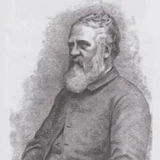
Alexander McDonnell
Alexander McDonnell had a full-time job. He was secretary to the Committee of West India Merchants in London, a serious commercial post, and he played the best chess of his life in the hours it left him. In 1834 he sat down opposite Louis-Charles Mahé de La Bourdonnais — the strongest player in the world — and played eighty-five games against him across a single summer. He lost the series and won a permanent place in the game's history. Fifteen months later he was dead at thirty-seven.
◈Belfast to Westminster
He was born in Belfast in 1798, the son of a doctor, and went into commerce — first in the West Indies trade, later as secretary to the committee that represented the West India merchants in London. He published on commercial policy as well as on chess.
In London he joined the Westminster Chess Club and became the strongest player in Britain, having learned much of what he knew from William Lewis, who eventually declined to play him on level terms.
◈1834
The series against La Bourdonnais ran through the summer of 1834: six matches, eighty-five games, played without clocks and at a pace that broke both men in the end. La Bourdonnais took it 45–27 with 13 draws, but McDonnell's twenty-seven wins include some of the finest attacking chess of the era, and the games were reprinted and studied for the rest of the century.
The two were opposites at the board — La Bourdonnais quick and voluble, McDonnell painfully slow, sometimes taking an hour and a half over a single move. They never spoke during play; contemporaries recorded that they had no language in common beyond the game.
◈Kensal Green
He died on 14 September 1835, of Bright's disease, aged thirty-seven, barely a year after the matches. He was buried at Kensal Green Cemetery in London.
La Bourdonnais died five years later and was buried in the same cemetery. The two men who played the greatest match of their century lie a short distance apart, in a city that was home to neither of them.
◈Legacy
McDonnell is half of the first great match in chess history, and the half that lost — which has meant his play is consistently underrated. The 1834 games show a genuine attacking imagination and an appetite for complications that his far more famous opponent had to work hard to survive. He remains the strongest player Ireland produced in the nineteenth century.