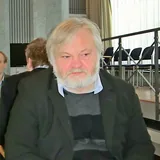
Three times he climbed to within two matches of the world title, and three times the last door held shut against him. Artur Yusupov was never world champion, yet for a decade he was one of the very strongest players alive — a methodical, deep-thinking craftsman who reasoned his way through positions rather than gambling on them. He survived a burglar's bullet, rebuilt his life in a new country, and then did something rarer than winning a crown: he taught a generation how to think, pouring the discipline of his own play into the finest training books the game has produced.
A Moscow prodigy
Artur Mayakovich Yusupov was born in Moscow on 13 February 1960, into the great Soviet chess machine that was then producing world champions almost on schedule. In the mid-1970s he was one of the pupils of the Botvinnik School, the former World Champion's school for gifted juniors. Garry Kasparov, three years younger, was another, and in My Great Predecessors he recalls a 1975 training game there against Yusupov in which he "only achieved a draw with enormous difficulty".
In April 1977 the two met again in the double-round Soviet junior qualifying tournament in Leningrad. Yusupov won it with 7 points, half a point ahead of the fourteen-year-old Kasparov, as the 1983 book Fighting Chess records. Later that year, at seventeen, he won the World Junior Championship at Innsbruck, a title that carried with it the international master title. Mark Dvoretsky, writing in Attack and Defence, singled out "the very important game Yusupov-Zapata": the Colombian Alonso Zapata scored 6 out of 7 in the second half and took second prize, and his only loss on the run-in was to Yusupov.
The grandmaster title followed in 1980, but the proof of his class had already come a year earlier. On his first appearance in the USSR Championship, at Minsk in 1979, Yusupov finished second with 10½ out of 17, behind only the veteran Efim Geller and ahead of Yuri Balashov and Kasparov.
The partnership with Dvoretsky
The most important relationship in Yusupov's career was with Mark Dvoretsky, the most famous trainer of the time. They met at the Botvinnik School: Viktor Glatman, later director of their own school, writes in Secrets of Chess Training that Dvoretsky worked there, "helping Botvinnik and simultaneously training Artur". Kasparov writes in My Great Predecessors that Dvoretsky "left to work with Yusupov and Dolmatov in early 1978". Their partnership went far beyond ordinary coaching, and Yusupov credited Dvoretsky with a large part in his biggest wins. Thirty years later, in Build Up Your Chess, he still thanked "my chess trainer Mark Dvoretsky, from whose training methods I have learned so much".
In Attack and Defence Dvoretsky tells how he once gave Yusupov an endgame study to solve, and Yusupov spent a long time calculating the rook ending without finding the answer. In Dvoretsky's words: "“Stop analysing!” I said to him at last. “Just look at the position and think what you might have missed.” All at once Artur hit on the solution." Yusupov, for his part, joked in their joint book Attack and Defence about the "pleasure" his "coach and collaborator" would take in his blunders.
Yusupov's own method was to study his games, above all his defeats. In Secrets of Chess Training he describes how in 1979, after a failure at the World Junior Championship, he "spent roughly a month analysing my games, and even filed a special notebook"; later that year came his best USSR Championship result. After a bad championship in 1983, in which Karpov outplayed him, he analysed the reasons again, and he was sure, he wrote, that the work "assisted my future victories in the Interzonal Tournament and the Candidates matches".
Dvoretsky kept a record of his pupil's weaknesses. In Secrets of Positional Play he recalls a note he made when Yusupov "was still just a candidate master": "Artur finds it hard to decide on sharp changes in the character of the play, and in particular on sharp pawn moves and changes in the pawn structure." They analysed every such episode in his games, and Dvoretsky writes that "Artur gradually rid himself of the weakness mentioned, and his play became more dynamic." Of a slip in a game Yusupov won at Skara in 1980, he notes that it "was discovered in home analysis by Yusupov himself".
Together they ran the Dvoretsky–Yusupov school for gifted young players. Glatman dates its founding to the end of 1989. It held two ten-day sessions a year, and each day began with physical exercises, for the teachers as well as the youngsters. Dvoretsky's preface to Attack and Defence gives the rest: the school existed only from 1990 to 1992, its sessions were attended by 10–15 young people, and within five years eight of them had become grandmasters, among them Peter Svidler, Sergei Movsesian and Vadim Zviagintsev. Dvoretsky added that "the successes were gained first and foremost by the students themselves and their regular coaches". At the first session Yusupov taught a "guessing" game: play through a grandmaster's annotated game, trying to predict each move.
Their collaboration shaped the style for which Yusupov became known. The Soviet master Alexei Suetin described him as a player of rational, positional method, with high technical skill in the endgame and detailed mastery of his opening systems — a man whose every move, Suetin wrote, was grounded in industrious study rather than inspiration. Yusupov became a recognized authority on the Petroff Defence and a noted innovator in the old Lasker Defence to the Queen's Gambit. Kasparov credits a sharp Petroff plan to "Makarychev, Dvoretsky and his pupil Yusupov", and says it "was for a long time the main line".
Yusupov wrote about his own weaknesses with unusual candour. His chapter in Attack and Defence, "Missed Brilliancy Prizes", is a tour of games he had played beautifully and then spoiled, several of them in time trouble. Against Robert Hübner at Tilburg in 1987 he "faint-heartedly offered a draw", which was accepted. Only afterwards did he realize that he had finished an extra pawn up: he had been material down for so long that he was simply glad to have won it back. His lecture "Crux of the Position", printed in Secrets of Positional Play, opens with Boris Spassky's remark to him that even Fischer did not always sense the turning points of a game. "What, then, can be said about mere mortals!" Yusupov adds, and he admits how often he had heard or said himself after a defeat: "I didn’t understand what was going on!"
“I actually happen to be a leading expert in this field (I mean an expert in spoiling masterpieces, rather than in critically examining my own games).”
“They may consider my play too solid and boring (unfortunately there is more truth in the latter). I want to turn this image into a positive one: “He plays badly but interestingly.””
“One can pick out two important traits, in which a higher-ranked player is normally superior to one of lower rank: this is a feeling for the critical moment in a game and a more subtle understanding of various positional problems.”
“Possibly I developed quite successfully as a chess player for the reason that I devoted much time to the analysis of my games. I think that the analysis of one's own games is the main means of self-improvement.”
“There is also a widespread opinion that a talented chess player does not need a trainer. I do not share that opinion.”
“A player with a rational, positional style. He boasts high technical skill in the endgame and detailed knowledge of his customary opening systems. Least of all does he rely on inspiration; his every move is based on industrious study.”
“Artur's systematic and professional approach to analysing games was the decisive factor in having him as my second in the World Championship Finals in New York 1995 and Lausanne 1998.”
“The normal explanation is simpler: Yusupov expends too much effort on a game, becomes tired and at the decisive moment it can happen that he no longer sees anything.”
“Each of my pupils also has their own distinctive style, which does not depend on my tastes. Thus Yusupov is especially strong in a complicated strategic struggle, which for me was always a stumbling-block.”
Twice the world's third
Through the 1980s Yusupov was a fixture in the global elite. He reached world No. 3 in July 1986 and would hold that ranking again, and his rating climbed to a peak of 2680 in July 1995. Tournament victories accumulated across the decade and beyond — Esbjerg in 1980, Yerevan in 1982, first place at the Tunis Interzonal in 1985, a share of first at the Montpellier Candidates Tournament that same year, and later wins at Hamburg in 1991 and Amsterdam in 1994.
He was also a regular on the Soviet Olympiad teams of the time. He was a reserve on the team that won at Lucerne in 1982, and at Dubai in 1986 he scored 10 out of 12 for the winning team, "with nine of my games being played with Black", as he later wrote. Kasparov, on top board, wrote that Yusupov "played brilliantly in Dubai". In the match against a strong English team, after two Soviet losses, "Yusupov methodically outplayed Short". Further golds followed at Thessaloniki in 1988 and Novi Sad in 1990.
Kasparov won most of their games. By his count the final score of their official meetings was eleven wins to Kasparov, one to Yusupov and nine draws. That one win came at the World Cup in Barcelona in 1989, in a King's Indian decided in a time scramble. In Garry Kasparov on Garry Kasparov Kasparov called it "My only loss against Yusupov, and a most painful one."
Close to a title match
Three times Yusupov fought his way into the Candidates semifinals — the last barrier before a challenge for the world title — and three times he was turned back: by Andrei Sokolov in 1986, by Anatoly Karpov in 1989, and by Jan Timman in 1992. The World Championship match he so plainly deserved never came.
In 1986 he reached the semifinals by beating Jan Timman at Tilburg. The deciding sixth game, played with the score at 2½–2½, he won with what he called "an impudent plan", explaining in Secrets of Chess Training: "Often the winner is not the stronger player, but the one who is more in a mood for a fight, who displays the greater will to win." During the match with Andrei Sokolov, Dvoretsky recalls, Yusupov asked in surprise, "How is he intending to win even one game, if I don't leave something en prise?" But, Dvoretsky adds, "towards the end of the match Yusupov began leaving pieces en prise".
In 1989 he reached the semifinals by beating Kevin Spraggett at Quebec. Dvoretsky notes that the ninth game, won with a positional queen sacrifice, "brought Yusupov overall victory in their Candidates match". The Karpov match, in London in October 1989, came closest. Kasparov tells it in My Great Predecessors. "Yusupov always found it hard playing against Karpov", but he and Dvoretsky had not staked too much on the World Cup tournaments and had prepared well for the eight-game match. Karpov won the third game. In the fifth, in a time scramble, Yusupov made a bold positional bishop sacrifice and won the game that took the prize for the best of both semifinals. In the sixth he seized the initiative, but "at the very last moment he missed a certain win". After a draw in the seventh, Karpov won the last game and the match 4½–3½.
Yet from that near-miss era came his immortal game. In the 1991 Candidates quarterfinal against Vassily Ivanchuk at Brussels, the classical games could not separate them, and the match spilled into a rapid tiebreak. Botvinnik was at the match, and when Yusupov came out of the opening of the third game in a difficult position, his old teacher, Dvoretsky writes, "caustically remarked: ‘Aha, Yusupov doesn’t know the Botvinnik–Keres game. That’s bad!’" In fact, Dvoretsky adds, "Artur knew this game, of course". In the tiebreak, with the black pieces in a King's Indian, Yusupov launched a thunderous attack on Ivanchuk's king and won a game of such ferocity and beauty that in 1996 a jury of grandmasters and readers for Chess Informant voted it the finest game played in the thirty years from 1966 to 1996. The man celebrated for cool, rational play had produced one of the great attacking masterpieces of the century. Kasparov, who said at the time that "Ivanchuk is now playing stronger than the rest", called the result a sensation.
The 1992 semifinal against Timman at Linares turned on preparation. The Petroff line that Yusupov and Dvoretsky had built had a hole, found by their fellow Dvoretsky pupil Sergei Dolmatov while he was helping Kasparov. Kasparov writes that "Yusupov underestimated this discovery by his friend Dolmatov" and lost the important sixth game. Timman won the match 6–4.
A bullet, and a second life
Around the same time, violence nearly ended everything. Returning to his Moscow apartment one day in the early 1990s, Yusupov came upon burglars; in the struggle that broke out he was shot, and he counts himself lucky to have survived. Soon afterward he left Moscow for Germany, which became his permanent home. Kasparov dates the move to 1992; Dvoretsky, in his preface to Secrets of Positional Play, writes that Yusupov "in 1991 took up residence in Germany" and so missed the last sessions of their school.
He went on playing at the top. At Horgen in 1994 he finished second, half a point behind Kasparov, and that winter he faced Kasparov's Russian team at the Moscow Olympiad as, in Kasparov's phrase, "the ‘new German’ Yusupov".
He also worked as a second at world-title level. Viswanathan Anand, who had beaten him in a Candidates match at Wijk aan Zee in 1994, made him his second for the 1995 world title match against Kasparov in New York, and again for the 1998 FIDE final against Karpov in Lausanne. In his preface to Build Up Your Chess, Anand recalls: "It was his idea that I should play the Trompovsky in the last game in Lausanne. I was 3-2 down, but was able to level the match at 3-3 and thus force a play-off."
In that second career he did at least as much as he had as a player. With Dvoretsky he wrote the five-volume "School for Budding Chess Champions" series, later republished by Edition Olms as the Secrets of... books. Then came his own complete course. It began in 2003, he explains in its introduction, as "a 3-year training programme in my chess academy", which he reworked into Build Up Your Chess, Boost Your Chess and Chess Evolution: nine graded volumes that won wide praise and major book awards, taking readers from the fundamentals to master level. He was named a FIDE Senior Trainer in 2005 and also worked as a second and adviser to Peter Leko.
Legacy
Yusupov never reached a World Championship match, but he has given a great deal to chess. As a player he was twice ranked third in the world and three times a Candidates semifinalist, and his tiebreak game against Ivanchuk was voted the best game of its period. As a teacher, he and Mark Dvoretsky ran a school whose pupils included Peter Svidler and Sergei Movsesian, and his award-winning Build Up Your Chess and Boost Your Chess courses are used by improving players all over the world. He was made a FIDE Senior Trainer in 2005 and was a trusted second to Viswanathan Anand and Peter Leko, and his biggest legacy may be the players he helped rather than the title he never won.
Books
Books Artur Yusupov wrote, co-wrote, edited, or contributed to. Translations and reprints are grouped under the same work.
-
Attack and Defence
Coauthor — Mark Dvoretsky
-
The Petroff Defence
Author
-
Secrets of Chess Training
Coauthor — Mark Dvoretsky
-
Secrets of Opening Preparation
Coauthor — Mark Dvoretsky
-
Build Up Your Chess 1: The Fundamentals
Author
-
Build Up Your Chess 2: Beyond the Basics
Author
-
Secrets of Endgame Technique
Coauthor — Mark Dvoretsky
-
Secrets of Positional Play
Coauthor — Mark Dvoretsky
-
Boost Your Chess 1: The Fundamentals
Author
-
Build Up Your Chess 3: Mastery
Author
-
Secrets of Creative Thinking
Coauthor — Mark Dvoretsky
-
Boost Your Chess 2: Beyond the Basics
Author
-
Boost Your Chess 3: Mastery
Author
-
Chess Evolution 1: The Fundamentals
Author
-
Chess Evolution 2: Beyond the Basics
Author
-
Chess Evolution 3: Mastery
Author
-
Revision and Exam 1
Author