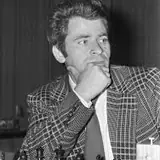
Boris Spassky could attack like Tal one game and defend patiently like Petrosian the next. His range made him a model of the universal player, with a particular gift for the initiative and complex middlegames. From a hungry wartime childhood he rose to take the world title from Tigran Petrosian in 1969. Three years later he lost it to Bobby Fischer in Reykjavík, where his decision to continue a troubled match and his applause for Fischer's sixth-game victory became lasting examples of sportsmanship.
A child of the evacuation
Spassky was born in Leningrad on January 30, 1937, and the war nearly took everything. He learned the moves at five while being evacuated from the besieged city, and some of his first games were played on a train carrying children away from the front. Hunger and displacement filled those early years, and chess became both a refuge and a way up.
The talent was unmistakable. At ten, in 1947, he beat the future World Champion Mikhail Botvinnik in a simultaneous display. Under his first trainer, the Leningrad master Vladimir Zak, he set a string of records as the youngest Soviet player to reach first category, candidate master and then Soviet master. In 1955 he won the World Junior Championship and earned the Grandmaster title at eighteen, then the youngest in the world. A year later he made his Candidates debut in Amsterdam, sharing third through seventh place.
Two trainers, two temperaments
Spassky's chess was shaped by two very different men. From 1952 to 1960 he worked with Alexander Tolush, a fierce attacker who fed the boy's natural taste for sacrifice and the open king. The combinational fire was real — but so were the swings, and the title kept slipping away.
In 1961 he changed hands, turning to Igor Bondarevsky, a calm strategist who taught discipline, balance and the patience to wait. The pairing was the turning point of his career. That same year Spassky won the Soviet Championship outright at Baku, and from the union of Tolush's fire and Bondarevsky's ice came the mature, all-sided style for which he is remembered.
“When you play Bobby, it is not a question if you win or lose. It is a question if you survive.”
“The best indicator of a chess player's form is his ability to sense the climax of the game.”
“The computer age has arrived, and it influences everything: analysis, preparation, information. Now a different talent is required — the ability to synthesise ideas. Here for the moment man is still in front.”
“I thought of doing this, but I was the chess king and I could not go back on my word.”
“He sits at the board with the same expression whether he’s mating or being mated.”
“He was not only one of the greatest players of the Soviet era and the world, but also a true gentleman.”
“In contrast to other celebrities, he never clung to power, did not try to get anything out of it and never tried to squeeze political capital out of his name.”
“Boris Spassky, the loser, enjoyed demonstrating the finale to friends.”
The crown
His first shot at the title came in 1966 against Tigran Petrosian, and he lost it by the narrowest of margins — Petrosian became the first champion since Alekhine in 1934 to defend by winning. Spassky did not break. He fought back through the next Candidates cycle and returned in 1969 to face Iron Tigran again.
This time the result was reversed. Spassky won the match 12½–10½ and became the tenth World Chess Champion. His range mattered: he could challenge Petrosian in positional play as well as in sharp attacking positions.
The Match of the Century
The pressure surrounding the match had been visible a year earlier. In My Great Predecessors, Part IV, Kasparov recounts the Soviet federation's review of Mark Taimanov's 6–0 loss to Fischer in 1971. Spassky asked, “When we all lose to Fischer, will we also be investigated?”
In the summer of 1972, in Reykjavík, Spassky defended his title against the American Bobby Fischer in what the world called the Match of the Century. Their contest became a focus of the Cold War rivalry between the United States and the Soviet Union and attracted worldwide attention.
Fischer demanded changes to the playing conditions and failed to appear for game two. Spassky agreed to play the third game in a separate room. In the recollection quoted by Kasparov, he had resisted Soviet Sports Committee head Sergey Pavlov's demand for an ultimatum that would wreck the match, then spent three hours lying in bed shaking after their telephone argument. He had promised to play and later believed that keeping his word had cost him his fighting mood.
When Fischer won game six, Spassky joined the audience in applauding his opponent. He continued to fight: Fischer himself acknowledged that Spassky played very well in the second half of the match. The final score was 8½–12½.
The universal style
Spassky's universal style combined attacking play, defense and endgame technique. He also had favorite systems, including the Breyer Ruy Lopez and the Tartakower–Makogonov–Bondarevsky Queen's Gambit. He revived the romantic King's Gambit at the highest level; his 1960 win over David Bronstein, a sacrificial storm in that very opening, was so vivid it was reproduced as the chess scene in the James Bond film From Russia with Love. As Black he brought the Marshall Attack back into fashion and developed the Leningrad Variation of the Nimzo-Indian.
In My Great Predecessors, Part I, Kasparov describes the young Spassky as a close student of Chigorin's games and compares their feel for the initiative and readiness to sacrifice material. In Part III he traces Spassky's attacking preference back to Zak and Tolush, alongside the defensive and endgame skills he developed later.
Bronstein supplies a smaller example of his pleasure in chess in The Sorcerer's Apprentice, written with Tom Fürstenberg. During a break at a Soviet chess federation meeting in Moscow in 1961, they played a game with one minute each. Bronstein won with a mating attack; Spassky enjoyed showing the finish to friends afterward.
Spassky defeated six undisputed World Champions — Smyslov, Tal, Petrosian, Fischer, Karpov and Kasparov — across three generations. In “The ten greatest masters in history,” quoted in Kasparov's My Great Predecessors, Part III, Fischer described him sitting with the same expression whether he was mating or being mated.
Exile and the long evening
In 1974 he reached the Candidates semifinal but ran into the rising Anatoly Karpov, who beat him at Leningrad. Two years later Spassky moved to France, settling at Meudon near Paris, and in 1978 he became a French citizen. Kasparov notes in My Great Predecessors, Part III that he continued to represent the Soviet Union until 1984, when he began playing for France.
He reached another Candidates final in Belgrade in the winter of 1977–78. Kasparov describes in My Great Predecessors, Part V how four successive wins in games eleven through fourteen brought him within a point of Korchnoi. Spassky spent much of the match in a stage box away from the board, explaining, “I was oppressed by remaining in public view for a long time, I lost concentration and found it hard to force myself to focus.” Korchnoi eventually won 10½–7½.
Spassky continued to receive a Soviet Sports Committee stipend after his move. Kasparov writes in My Great Predecessors, Part I that he lost it only after winning Linares in 1983 ahead of Karpov. In Part II he also records Spassky's refusal to sign the collective denunciation of Korchnoi after his 1976 defection.
In 1992 he met Fischer once more, in a lavishly funded unofficial rematch in war-torn Yugoslavia. Fischer won again, twenty years after their contest in Reykjavík.
Strokes in 2006 and 2010 slowed him, and in 2012 he went back to live in Russia. He died in Moscow on February 27, 2025, aged 88. FIDE remembered him as one of the greatest players in history and as a true gentleman, a champion who showed that how you lose can matter as much as how you win.
Legacy
Spassky's best games show an attacking player who developed the range to become world champion. He is remembered for his King's Gambit, Marshall Attack and Leningrad Nimzo-Indian, for beating world champions across three generations, and for his conduct in the 1972 match. His own recollections also show the difficulty of that experience and his independence from Soviet officials. Liev Schreiber portrayed him in the 2014 film Pawn Sacrifice. His death in 2025 brought tributes to both his play and his sportsmanship.
Books
Books Boris Spassky wrote, co-wrote, edited, or contributed to. Translations and reprints are grouped under the same work.
-
Second Piatigorsky Cup International Grandmaster Chess Tournament
Contributor — own game annotations
-
The Najdorf Variation of the Sicilian Defence
Coauthor — Svetozar Gligoric, Efim Geller, Lubomir Kavalek