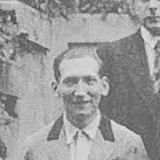
Erich Eliskases shared the Austrian Championship at sixteen, and by the end of the 1930s he was spoken of as a possible challenger for the World Championship. He beat Rudolf Spielmann in three matches and Efim Bogoljubov in a fourth, won at Noordwijk in 1938 ahead of Paul Keres and Max Euwe, and beat Capablanca at his own game, in the endgame. Then, at the Buenos Aires Olympiad of 1939, the Second World War broke out, and he never went back to Europe to live. He spent the rest of his life in South America, played four more Olympiads for Argentina, and became one of four players to have beaten both Capablanca and Bobby Fischer.
Innsbruck
Eliskases was born in Innsbruck on 15 February 1913 and learned chess at twelve. At fourteen he won the championship of his club, at fifteen he was champion of the Tyrol, and at sixteen, in 1929, he shared first place in the Austrian Championship with Esra Glass. The Wiener Schachzeitung wrote that his name would have to be remembered.
His father was a tailor. In his foreword to Mejora tu juego posicional (2007, p. 5), Raúl Grosso recounts how Eliskases began playing with his older brother and studied games published in newspapers before turning to chess books. The same foreword records the advice Eliskases later gave young players: play through games slowly, study each position carefully, and combine that study with games against opponents of comparable strength.
He studied business in Innsbruck and Vienna, but chess took over. He played for Austria at the Olympiads of 1930, 1933 and 1935, and at Warsaw in 1935 he made the best individual score on third board.
Spielmann, Euwe and Capablanca
In 1932 he beat Rudolf Spielmann, one of the great attacking players of the age, in a match, +3 −2 =5, and he beat him again in 1936 and 1937. He won the Hungarian Championship at Budapest in 1934 and finished first or shared first at Linz 1934 and Milan 1937. In 1935 he won both games of a training match with Max Euwe, a few months before Euwe took the World Championship from Alekhine, and in 1937 he was a second to Alekhine in the return match in which Alekhine won the title back.
In Mejora tu juego posicional (chapter 4, p. 46), Eliskases recalled a conversation with Alekhine after one of his wins over Euwe in that return match. Alekhine explained that the plan critics had admired — advancing his pawns to a5 and b4, then bringing a knight to c5 — had one purpose: to free the bishop he had left cramped in the opening. Exchanging the knight and recapturing with the d-pawn opened the bishop's diagonal. Eliskases used his recollection to explain how a player's plan could grow from the needs of a single piece.
Eliskases was known as an endgame player. At Semmering–Baden in 1937 he beat Capablanca in a long bishop ending, the phase of the game that was the Cuban's own forte, and in the same tournament he beat Paul Keres, its winner.
“Particularly remarkable is the success of the sixteen-year-old Tyrolean champion Eliskases, who has shown a sound conception of the game and mature ability. His name will need to be remembered well.”
Noordwijk and the title that never was
His best two years were 1938 and 1939. In June 1938 he won at Noordwijk ahead of Keres and Euwe, the best result of his career and the start of eight tournaments in a row without a loss. After the Anschluss he won the German Championship in 1938 and 1939, and in 1939 he beat Efim Bogoljubov, who had twice played Alekhine for the world title, by +6 −3 =11.
There was talk of a World Championship match with Alekhine. German chess officials planned one for 1941 and dropped the idea, and in 1941 Alekhine wrote in favour of a match with Eliskases or Keres. The Dutch grandmaster Hans Ree has pointed out that the article was one of the antisemitic pieces attributed to Alekhine, and that the preference for a German challenger was probably political.
Stranded
Eliskases led the German team at the Buenos Aires Olympiad in 1939, and the team won it. The Second World War began during the Olympiad, and he and his teammates did not go back to Europe. The war years were hard: he struggled to make a living, and in Brazil he was threatened with internment and expulsion until Brazilian chess players hired him as a teacher.
He won at São Paulo in 1941 and 1947, Mar del Plata in 1948, Punta del Este in 1951 and Córdoba in 1959. In 1951 he returned to Argentina, where he settled in Córdoba and later took Argentine citizenship. He played for Argentina at the Olympiads of 1952, 1958, 1960 and 1964, making him perhaps the only player to represent three countries at Olympiads. He qualified for the Stockholm Interzonal of 1952 and finished tenth, and FIDE made him a grandmaster that year.
Writing and teaching
Eliskases continued writing during his years in Brazil. In the author's foreword to Mejora tu juego posicional (p. 6), dated Rio de Janeiro, 24 October 1943, he described the book's origin in an unpublished manuscript, Stellungspiel. He had prepared a Spanish version in Argentina, but that edition had fallen through; the work instead became the basis of a Portuguese edition. He thanked Geraldo Acerete of Mendoza for helping with the first chapters and Milciades A. Lachaga of Buenos Aires for reviewing the manuscript.
He chose the games for what they could teach about a position and wanted the book to thank the Brazilian chess friends who had welcomed him. In Grosso's foreword (p. 5), Eliskases recalled that an invitation to play a tournament in Córdoba led to an opportunity to teach at the university; he met his future wife there and stayed.
Legacy
Eliskases married María Esther Almeda in Córdoba in 1954, and they had a son, Carlos Enrico. In 1976 the couple tried to settle in the Tyrol again, but went back to Córdoba, and he died there on 2 February 1997. He had also been a strong correspondence player. Hans Ree counts him with Keres, Reshevsky and Euwe as the only players to have beaten both Capablanca and Fischer, and his scores against Euwe, Capablanca and Fischer were all even.
Books
Books Erich Eliskases wrote, co-wrote, edited, or contributed to. Translations and reprints are grouped under the same work.