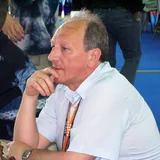
Most players spend their lives memorizing opening theory. Evgeny Sveshnikov wrote it. From an industrial city in the Urals came a stubborn, brilliant theoretician who took a line every authority of his day had condemned as unsound, believed in it when no one else did, and through sheer depth of analysis turned it into one of the most popular openings in chess, a variation now played under his name by world champions. He saw chess less as a contest of nerves than as a mathematical problem to be solved, and he gave his life to solving it: as a grandmaster, as a writer, as a trainer of champions, and, into his seventies, as a player who could still beat former world champions.
A boy from Chelyabinsk
Sveshnikov was born in 1950 in Chelyabinsk, an industrial city on the eastern slope of the Urals. He took to games almost before he could read, learning checkers at two and chess at five, and by eight he had already won a tournament. Unusually for a player of his eventual standing, his main childhood teacher was Leonid Gratvohl, who also coached Anatoly Karpov. Karpov recalled their shared teacher and junior-team days in his foreword to French Defence Advance Variation, Volume 1: Basic Course (2007, p. 6).
The titles came in the middle of the 1970s — International Master in 1975, Grandmaster in 1977 — and by 1978 he had climbed into the world's top twenty-five. But the conventional markers of a chess career never told Sveshnikov's real story. His true work was not winning tournaments. It was finding the truth in a position, and defending it against the whole weight of received opinion.
In French Defence Advance Variation, Volume 1: Basic Course (p. 133, Game 80), he recalled a drawn game against Araslanov in Chelyabinsk in 1965. He had worked out a double pawn sacrifice to establish a blockade before he had even heard of the concept. That tournament earned him his first-category norm. Years later he included the game to encourage readers to experiment and trust their own abilities.
The line nobody believed in
In the late 1960s and early 1970s, Sveshnikov and his friend Gennadi Timoshchenko fell for a disreputable corner of the Sicilian Defense, the old Lasker–Pelikan line, where Black plays the provocative 5...e5, accepting a backward d-pawn and a hole on d5 in return for active pieces and dynamic chances. Every authority of the day judged it dubious, even bad. The two young men disagreed, and they kept playing it at the highest level, with a lot of success, refusing to give up a line they had analyzed more deeply than anyone alive.
Slowly, opinion changed. The curiosity became respectable, then fashionable, then a main line of the world elite. Today it is simply the Sveshnikov Variation, and it is in the repertoires of players up to and including world champions Magnus Carlsen and Vladimir Kramnik. The work of Sveshnikov and Timoshchenko helped establish an opening that earlier theory had dismissed.
Even Karpov tried to talk him out of it. In the foreword to French Defence Advance Variation, Volume 1: Basic Course (p. 6), he recalled advising Sveshnikov during a Soviet Championship to choose an easier Sicilian instead of persisting with ...e5. Looking back, Karpov admitted that Sveshnikov had been right to ignore his advice.
“I got into the habit of self-reliance, trusting solely my own ideas.”
“Chess is not just a sport - it is also an element of culture, which is why I usually begin my opening studies with a historical review.”
“I shall remember the praise of that attacking genius for the rest of my days!”
“I have never in my adult life had a trainer, but now one has appeared – I have several times employed ideas suggested by Volodya.”
“Today I have to admit that I was wrong: he was right not to listen to me: today everybody plays the Sveshnikov Variation!”
“What a great attack on the h-file!”
“Grandmaster Sveshnikov is well-known for his principled stubbornness in defence of his favourite opening lines.”
More than one opening
The Sicilian line that bears his name was never the whole of Sveshnikov's contribution. He was a theoretician across the board, pouring decades of work into the c3 Sicilian (the Alapin), the Advance Variation of the French Defence, and other systems, always seeking the same thing: clarity, structure, a position whose logic he could trust. He shared the 1983 Moscow Championship title with Sergey Makarychev and won Hastings in 1984/85. By his own account, he won more than a hundred tournaments over his career.
His opening choices were practical as well as theoretical. In the introduction to French Defence Advance Variation, Volume 1: Basic Course (p. 8), he explained that he did not consider 3.e5 objectively the strongest move. He chose it partly to avoid competing with specialists such as Rafael Vaganian in the long, heavily analyzed lines after 3.Nc3. The same reasoning helped him choose 2.c3 against the Sicilian: he expected opponents to spend more time preparing the popular main lines.
One French Advance win meant more to him than its point in the standings. After he beat Boris Gulko at the 1985 Soviet Championship in Riga, Tal came over to praise his attack on the h-file. Sveshnikov recalled the encounter in French Defence Advance Variation, Volume 1: Basic Course (p. 28, Game 13), saying that he would remember the attacking champion's praise for the rest of his life.
The senior champion
Where many grandmasters fade, Sveshnikov simply kept competing. Through the 2000s he represented Latvia, winning the Latvian Championship in 2003 and again in 2010, and playing for the country at four Olympiads. Age took nothing from his appetite for the fight: in 2016 he led Russia's 65+ team to gold at the World Senior Team Championship, and in 2017 he became individual World Senior Champion in the 65+ section.
And he could still draw blood against the very best. In 2015, at the age of sixty-five, he sat down across the board from former world champion Anatoly Karpov in a rapid game in Riga — and won. The opening theorist had become a living monument, but he never once played like one.
The advocate
Sveshnikov was famously outspoken, and his principles ran deeper than chess. He campaigned, against the indifference of the whole chess establishment, for the idea that the players who create a game are its intellectual authors and ought to hold a form of copyright in it. He objected to publishers and database owners profiting from games while their players received nothing. The proposal did not win acceptance, but his books expressed the same concern for chess as a cultural activity: in the introduction to French Defence Advance Variation, Volume 1: Basic Course (p. 9), he explained why he began his opening studies with the history of those who had developed them.
He gave much of himself to others. Over the years he worked as a trainer with players including Anatoly Karpov, Lev Polugaevsky, Alexei Shirov and Alexandra Kosteniuk, and he wrote a series of respected books passing on his theoretical discoveries. He married twice and raised four children; his son Vladimir Sveshnikov became an International Master, carrying the family name back to the board his father had loved his whole life.
Teaching also shaped his writing. In the introduction to French Defence Advance Variation, Volume 1: Basic Course (p. 8), he recalled giving a lecture on the opening to more than a thousand pupils over time. Lists of variations left weaker players bored and remembering little; explaining an idea through a game stayed with them. He built the book around those annotated examples, then checked the analysis with computers.
By The Complete French Advance (2017), written with Vladimir, the teaching ran both ways. In his own introduction, Evgeny explained that his son checked the older analysis with engines, corrected it and contributed new ideas. Having managed without a trainer in adult life, he now found himself using ideas from Vladimir. He also acknowledged that his son had long been skeptical of 3.e5, although their work on the book had begun to change that opinion.
Legacy
Sveshnikov died in 2021, but his name comes up at chessboards all over the world every day. Every time 1.e4 c5 2.Nf3 Nc6 3.d4 cxd4 4.Nxd4 Nf6 5.Nc3 e5 appears on a board, in a club game or a World Championship, it is called the Sveshnikov. He left a body of theory, a shelf of books, a generation of grandmasters he helped train, and an example of intellectual honesty the chess world hasn't forgotten. Few players have a single great idea named after them, and Sveshnikov built his from a line the textbooks had thrown away.
Books
Books Evgeny Sveshnikov wrote, co-wrote, edited, or contributed to. Translations and reprints are grouped under the same work.
-
The Sicilian Pelikan
Author
-
The Complete French Advance
Coauthor — Vladimir Sveshnikov (revised edition)
-
Сицилианская для любителей, том 1 (The c3 Sicilian, original volume 1)
Author
-
Сицилианская для любителей, том 2 (The c3 Sicilian, original volume 2)
Author
-
Sveshnikov vs the Anti-Sicilians
Author
-
A Chess Opening Repertoire for Blitz and Rapid
Coauthor — Vladimir Sveshnikov
-
Victor Kupreichik: The Maestro from Minsk
Contributor — written tribute