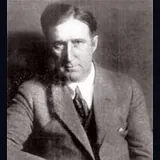
Frank Marshall played chess like a conjurer: just when you thought the trick was over, he would pull one more impossible resource out of a ruined position. For twenty-seven years he was the US champion, and in the great European tournaments of the early 1900s he was among the best players in the world. He lost more than his share to the top players of his time, but he went down swinging, always looking for a trick. He was famous for the swindle, the saving resource hidden in a lost position, and for at least one move so beautiful that, according to legend, the spectators showered the board with gold coins.
The breakthrough at Cambridge Springs
Marshall was born in New York City in 1877, learned chess from his father, and gained his first experience of serious play in Montreal. There in 1893, at sixteen by the account in his own Marshall's Chess "Swindles" (1914), he beat Harry Nelson Pillsbury, who was playing blindfold in a simultaneous exhibition. The biographical sketch in his Chess Openings (1904) follows his progress from Canadian clubs to the international circuit: he won the minor tournament in London in 1899, then tied for third at Paris in 1900. In Paris he beat both Pillsbury and World Champion Emanuel Lasker, inflicting Lasker's only loss of the tournament. Cambridge Springs in 1904 established him among the leading masters.
Against a field that included World Champion Emanuel Lasker, Marshall scored 13 out of 15 and finished clear first — undefeated through the entire tournament, two points ahead of Lasker and David Janowski. He beat the great Harry Nelson Pillsbury along the way. It was one of the finest tournament results an American had ever produced, and it carried him onto the European stage as a player the champions had to reckon with.
The same book records a lesson he learned shortly before that victory. At Monte Carlo in 1904, he declined a draw against Géza Maróczy, lost, and wrote to an English friend: "When shall I learn that a draw (½) counts more than a loss (0)." At Cambridge Springs he won eleven games and drew four. Afterward, the Manhattan Chess Club presented him with a gold watch and chain inscribed to commemorate his victory.
The challenger
Kasparov’s account in My Great Predecessors, Part I traces the challenge back to Cambridge Springs in 1904. Lasker required each side to provide a $2,000 stake. Marshall then beat Janowski in a match, lost heavily to Tarrasch, and won Nuremberg 1906; that tournament success helped secure the funding for the eventual championship match.
In 1907 Marshall did what every ambitious master of the time hoped to do: he challenged Emanuel Lasker for the World Championship. The match moved across America, New York, Philadelphia, Washington, Baltimore, Chicago and Memphis, from January to April. It was one-sided. Lasker won eight games, drew seven and lost none; Marshall didn't win a single game.
He never reached that height again, but for a decade and more he stayed among the world's elite. At the huge St. Petersburg 1914 tournament he finished fifth, behind only Lasker, José Raúl Capablanca, Alexander Alekhine and Siegbert Tarrasch, four of the biggest names in chess history. Marshall belonged in that company, and everyone knew it.
“It is not a game of “stacked cards,” but a contest of mind with mind and of will with will.”
“In many of my own games I have not hesitated to sacrifice a Pawn to gain two moves.”
“When shall I learn that a draw (½) counts more than a loss (0).”
“There was attack and counter-attack galore, and I look back upon it as one of my greatest victories.”
“Mr. Marshall is no ordinary strong player, he is a man of clever original ideas, and does not fear to carry them into practice even with the most formidable of his opponents.”
“chess which, though perhaps not of the soundest, taxes the nerves of the most experienced of the masters.”
“In spite of his enterprising style against over-cautious rivals, he never lost a game, nor is there a game in his list that he should have lost.”
“Marshall seems to be temperamentally unable to do himself justice in match play.”
The art of the swindle
Marshall's name is tied to the swindle, the trap sprung from a position that looks already lost, and the historian Andrew Soltis described his recoveries as almost magical. Marshall used the word in a narrower sense when he made it the title of his 1914 collection, Marshall's Chess "Swindles". He explained in its introduction: "The title of “swindle” is one of derision, which has been applied to my victories over certain disappointed gentlemen, who did not enjoy seeing their fond pre-conceived notions demolished over the open board." When their theories failed against a player "not tied to book chess," they called his unexpected move a "Marshall swindle." He asked readers to judge whether the line he had refuted deserved instead to be called "a busted conceit".
Some of those wins were close. At Karlsbad in 1911, by Leopold Hoffer's account in the Field, reprinted in the book, Dus-Chotimirsky made his twelfth move and ran into the next room exclaiming "Poor Marshall dead! must be mate!" Marshall added his own note: "In the excitement, for the moment I saw nothing, as I stood for a high prize." He then took the knight with his queen, and Dus-Chotimirsky resigned.
His chess was tactical, sharp, restlessly inventive — and unafraid to gamble. In Chess Openings he explained the value he placed on time: "In many of my own games I have not hesitated to sacrifice a Pawn to gain two moves." His advice emphasized active development and counterattack. Less celebrated, but real, was a fine technical touch; behind the fireworks stood a strong endgame player who simply preferred the spectacular when it was on offer.
Chess Step by Step, which he wrote with J. C. H. Macbeth, explains the practical side of that approach. Discussing Marshall's unusual king move against Amos Burn at Ostend in 1905, the authors questioned its soundness but noted that it kept the attack going and might surprise his opponent: "The time limit is a valuable ally to surprise moves."
He remembered his 1903 cable-match win against Henry Atkins for its sustained fight. David A. Mitchell's Mitchell's Guide to the Game of Chess (1920) reproduces his notes and his verdict: "There was attack and counter-attack galore, and I look back upon it as one of my greatest victories." In Marshall's Chess "Swindles" his notes to a cable-match game against Joseph Blackburne end with a mate announced in five moves, and the report that "Blackburne had left the hall on the other side and the committee cabled: “Saw it; gone home.”"
Gold coins at Breslau
The single most famous moment of Marshall's career came at Breslau in 1912, against Stepan Levitsky. With the Black pieces, Marshall finished the game with 23...Qg3 — a queen planted in the heart of White's position on a square attacked three different ways. Whichever way White captured, he was lost; declining the sacrifice could not save the game either. It is one of the most beautiful moves ever played, ranked third by the chess writer Tim Krabbé in his catalogue of the game's most fantastic moves.
The story of spectators showering the board with gold coins has several versions. Marshall's own collection, Marshall's Chess "Swindles" (1914), prints Hermann Helms's notes on the game from the Brooklyn Daily Eagle, followed by the line: "After the game a number of enthusiastic spectators presented Mr. Marshall with a handful of gold pieces, saying the game had given them great pleasure." In Mitchell's Guide to the Game of Chess (1920), an account after the game notes also says that spectators presented Marshall with a handful of gold pieces. In Chess Step by Step (1924), Marshall and Macbeth wrote that the spectators "enthusiastically made up a gold collection and presented a handsome purse to the victor." Each of these accounts describes a presentation after the game. Edward Winter's study of the story distinguishes such accounts from the later claim that coins were showered onto the board. The win lives in this archive.
The Marshall Attack, and a debt repaid by Capablanca
Several openings carry Marshall's name. The boldest is the Marshall Attack in the Ruy Lopez, 8...d5, a pawn sacrifice in the center to launch a fierce kingside attack. By the most popular account he kept the idea in reserve for years and finally sprang it on Capablanca in their 1918 New York game. Capablanca, calculating at the board, found the narrow path and won, but the line has carried Marshall's name ever since, and at the top level White players still choose "Anti-Marshall" systems rather than face it.
His relationship with Capablanca ran deeper than that one famous loss. Marshall was among the very few players ever to beat the Cuban with the Black pieces, a feat he managed at Havana in 1913, where he took first place. His notes in Marshall's Chess "Swindles" record that the game was adjourned for two days and that Capablanca went wrong after the resumption: "at this stage of the tournament it was necessary for Capablanca to win; I being half a point ahead, a draw was all I needed; and perhaps his anxiety cost him the game." That game survives here. And it was Marshall who, in an act of generosity that helped change chess history, insisted on the young, untitled Capablanca being included in the great San Sebastián tournament of 1911 over the objections of established masters. Capablanca won it.
The dean of American chess
From 1909 to 1936 Marshall reigned as Champion of the United States — a span of twenty-seven years, the longest any American has ever held the title. He gave it up only when he chose to, ceding it to a championship tournament won by the young Samuel Reshevsky.
In 1915 he founded the Marshall Chess Club in New York, which became a home for American chess and remains so today. In the 1930s he captained United States teams to four consecutive gold medals at the Chess Olympiads, driving his squads with a competitor's ferocity — when he found teammates had taken easy draws, he is said to have lectured each in turn that draws do not win matches. He set down his life in My Fifty Years of Chess (1942), and gave countless thousands their first sight of master play through his tireless simultaneous exhibitions — including a marathon of 155 games at once in Montreal in 1922.
Legacy
Marshall died on November 9, 1944. The Marshall Chess Club he founded in 1915 is still in its Greenwich Village townhouse, one of the oldest and best-known chess clubs in the United States. His name is fixed in the openings: the Marshall Attack in the Ruy Lopez and the Marshall Gambit in the Semi-Slav are still played at the highest level more than a century later. He bridged two eras, learning the game in the dashing Romantic tradition of Morphy and carrying that daring into modern chess, and he is remembered as the swashbuckling American who, in a Europe full of champions, was always worth watching.
Books
Books Frank Marshall wrote, co-wrote, edited, or contributed to. Translations and reprints are grouped under the same work.
-
Chess in an Hour
Coauthor — Irving Chernev
-
Chess Openings
Author
-
Chess Step by Step
Coauthor — J. C. H. Macbeth
-
Marshall’s Chess Swindles
Author
-
Mitchell’s Guide to the Game of Chess
Contributor — game annotations
-
My Fifty Years of Chess / Marshall’s Best Games of Chess
Author