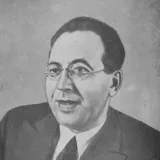
Grigory Levenfish combined a career in the glass industry with chess at the highest level. He defeated Alekhine and Lasker, won two Soviet championships, and drew his 1937 title match with Botvinnik. His memoir describes the work behind those results: study squeezed around engineering, preparation with younger masters, and the disappointment of being passed over for AVRO in 1938. He continued to teach and write, and at sixty defeated the future World Champion Vasily Smyslov. Their collaboration on rook endings became one of his best-known contributions to chess.
A master of the old empire
Levenfish was born in 1889 in Piotrków Trybunalski to a Jewish family and grew up in Lublin. In Selected Games and Reminiscences (pp. 5–13), he recalled learning chess from his father at six and entering the chemical department of the Saint Petersburg Institute of Technology in 1907. The institute's chess circle helped him develop. His first game in a public tournament in 1909 was against the student musician Sergei Prokofiev. That year he won the Saint Petersburg City Championship; in 1911 he played at Carlsbad.
He belonged, by temperament, to the imaginative school: a player of deep positional understanding with a keen eye for the brilliant, unexpected move. In 1913, still a young master, he sat down against the rising Alexander Alekhine — a future World Champion then carving his name into the European elite — and beat him. It was the first of the champions he would topple.
On his way to Carlsbad, he stopped at Berlin's café Kernau and won five blitz games for money against a stranger who could not pay. When the loser learned that he was a tournament entrant and asked why he had not said so, Levenfish replied, “You did not ask.” The stranger was Bernhard Kagan, the future chess publisher, who settled the debt with a draft of a chess book. Levenfish tells the story in Soviet Outcast, Douglas Griffin's published translation of his memoir (p. 24).
Chess in a country remade
The Revolution of 1917 swept away the world Levenfish had been born into. Many of his peers fled west; he stayed. Through the hungry, dangerous years of the early Soviet state he became one of its strongest players, winning the Leningrad championships of 1922, 1924 and 1925 and placing near the top of the early USSR Championships.
The proof came at the great Moscow International of 1925, the first tournament to bring the world's elite to the new Soviet Union. There Levenfish beat Emanuel Lasker, the second World Champion and still a formidable player. He had now beaten two world champions, and the chess world was starting to see that the engineer from Piotrków was no provincial talent.
The Lasker victory was less straightforward than Levenfish thought. In Rook Endings (pp. 148–149), he and Smyslov recalled that he could not understand why Lasker kept playing. Their later analysis showed a drawing plan based on sacrificing two pawns. Lasker found the idea one move too late: after the game he explained that he had instinctively avoided a discovered check, losing the decisive tempo.
“I was completely unprepared for such a chess marathon…”
“He is an exceptionally capable tactician and he calculates combinations with staggering rapidity.”
“An unusual individual, a highly erudite man…”
“his name can be found only in footnotes.”
“Levenfish tried to insist that he should represent the Soviet Union, but they did not agree with him, and I was entrusted with playing in the AVRO tournament”
Two crowns at home
He shared the 1934/35 Soviet Championship at Leningrad with Ilya Rabinovich and won the 1937 championship at Tbilisi outright. Botvinnik, who had missed both events, then challenged him to a match for the title. As Kasparov explains in My Great Predecessors, Part II, victory required six wins, with draws not counting; at five wins each, Levenfish would retain his championship.
Levenfish's memoir (pp. 160–164) describes two months of rest and preparation supported by the sports society Zenit, including a month with Sergei Belavenets at Koktebel in Crimea. They analyzed on the beach between swims. After losing three consecutive games, Levenfish recovered during the break when the match moved cities. He won games 10, 11 and 13 to draw 6½–6½ (+5 −5 =3), retain his championship and receive the title of Soviet Grandmaster.
The outcast
His results did not secure the foreign opportunities he sought. In Selected Games and Reminiscences (p. 176), Levenfish wrote that he believed his two championships and drawn match entitled him to play at AVRO in 1938, but he was not sent. He described the refusal as a severe personal blow and said that it ended his ambitions for his chess career. Kasparov supplies Botvinnik's recollection: Levenfish pressed to represent the Soviet Union, but the authorities chose Botvinnik instead.
He also lacked the financial support given to other leading Soviet players. Sosonko's Russian Silhouettes, discussed by Douglas Griffin, remembers his independence and interests in politics, science and art, while Griffin records his work designing, building and rebuilding eighteen glass factories and his civilian rank of engineer-major. Sosonko also records acquaintances who said that he did not complain about his difficult living conditions. His own memoir shows that industrial work remained demanding: during the war he was evacuated to the Urals with his factory and nearly died of cold while traveling to Kuibyshev. He later visited England as a reserve member of the Soviet team, without playing in the match; Carlsbad remained his only major tournament abroad.
The endgame scholar
Levenfish's teaching reached well beyond master chess. In the preface to Chess for Beginners (1953, p. 4), he said that the book's method grew from thirty years of teaching hundreds of young and adult pupils. Teachers in Leningrad's Pioneer Houses, readers and Pyotr Romanovsky had tested or criticized the earlier edition; their feedback led him to rework the pawn and rook endings.
In 1957 he and Smyslov published The Theory of Rook Endings, later translated into English as Rook Endings. Smyslov became World Champion that same year. In his essay for the 1986 Russian edition (p. 5), Smyslov credited Levenfish with first proposing the study and persuading him to join it. The algebraic English edition appeared in 1989, translated by Philip J. Booth. His work on rook endings began long before that book: The Chess Creativity of N. D. Grigoriev (1954), which opens with his essay on Grigoriev's career, reprints Grigoriev's 1936 study of Chéron-type positions, which ends with thanks to Levenfish for his advice, and part of Levenfish's 1937 article in Shakhmaty v SSSR, which concluded that Grigoriev, the only analyst to solve one position correctly, should be counted its author. The same book reprints the newspaper 64's special-prize decision naming his win over Erich Eliskases the best endgame of the Moscow 1936 tournament.
He remained attentive to new talent. Kasparov quotes his praise of the nineteen-year-old Mikhail Tal at the 1956 Soviet Championship, especially Tal's speed of calculation and appetite for complicated positions. Boris Spassky recalled meeting him in the Moscow subway shortly before his death, visibly frail. Levenfish died in Moscow in 1961. His Selected Games and Reminiscences, with seventy-nine annotated games, appeared in 1967; Douglas Griffin's English translation, Soviet Outcast, followed in 2019.
Legacy
Levenfish's career joined tournament play, engineering, teaching and scholarship. His victories over four world champions and his drawn match with Botvinnik show his competitive strength; his beginner manuals and work with Smyslov carried his ideas to later generations. His memoir preserves both the pleasures of chess and his disappointment at opportunities denied. Rook Endings remains the work through which many readers first encounter his name.
Books
Books Grigory Levenfish wrote, co-wrote, edited, or contributed to. Translations and reprints are grouped under the same work.
-
Third International Chess Tournament, Moscow 1936
Editor and annotator
-
Rook Endings
Coauthor — Vasily Smyslov
-
Избранные партии и воспоминания (Selected Games and Reminiscences)
Author
-
Книга начинающего шахматиста (The Beginner’s Chess Book)
Author
-
Шахматы для начинающих: 30 уроков шахматной игры (Chess for Beginners: 30 Lessons)
Author
-
Матч Алехин – Капабланка на первенство мира (Alekhine–Capablanca World Championship Match)
Coauthor — Peter Romanovsky
-
Шахматный ежегодник (Chess Yearbook)
Contributor — chapter on the Queen’s Gambit
-
Шахматное творчество Н.Д. Григорьева: Анализы, теоретические работы, этюды, избранные партии
Substantial biographical essay,printed7–19