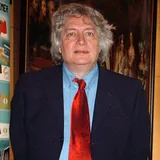
For fifteen years, when the rest of the world looked for someone to stand up to the Soviet school, the answer was a Dutchman with a fighter's heart. Jan Timman was the Best of the West: the strongest player outside the Soviet Union through the long Karpov years, a man who would walk straight into an opponent's best opening just to test himself against it. He got as far as a world title match, edited the game's best magazine, and in the end gave his heart to the most concentrated beauty in chess, the composed endgame study.
The boy from Amsterdam
Jan Hendrik Timman was born in Amsterdam on 14 December 1951 and grew up inside the small but proud Dutch chess tradition that Max Euwe had carried to a world title. In 1974 Timman earned the grandmaster title, becoming only the third Dutch grandmaster in history, after Euwe and Jan Hein Donner.
His family moved to Delft when he was six months old, and he grew up there; his father worked at the University of Technology in Delft. In Timman's Titans (2016) he wrote that he "learned the rules of chess when I was eight years old", taught by his father and his elder brother Ton, who played through Euwe's games at home. In December 1962 the two brothers played in a Euwe simultaneous display in The Hague. When Ton, standing better, offered a draw, Euwe declined: "No, because you won’t get many more chances to play against me." Ton won. Jan reached a queen ending and accepted Euwe's draw offer.
In the preface to The Art of the Endgame, Timman recalled building Lego cities and castles as a child, then becoming absorbed in Euwe's chess books. Herbstman's book on endgame studies introduced him to a form of chess in which the competition gave way to scientific and artistic questions. He began composing studies in the early 1970s, just after finishing secondary school.
His father, an applied mathematician, recognized a similar commitment in his son's chess. In Studies and Games, Timman recalled his father comparing the time he spent on chess during his school years with his own devotion to mathematics. His father died suddenly in his sleep in 1975, shortly before a planned two-game match between Timman and Euwe in Hilversum, and Timman withdrew from the match.
Timman also described a failed experiment in preparation in the preface to The Art of Chess Analysis. Before the Amsterdam IBM tournament in 1971, he and Hans Böhm spent three months in the Friesland countryside with chess books and tracksuits, following Botvinnik's advice about fitness and fresh air. He lost his first five games, feeling too energetic to sit still. Returning to his usual way of life helped him recover; his conclusion was that an important tournament was a poor moment to change his normal routine.
At home he had no rival. Timman won the Dutch Championship nine times, and from his first years on the international circuit it was clear that the Netherlands had produced a player who would lead the world's elite, not just make up the numbers.
The Best of the West
Through the late 1970s and into the 1990s, Timman was the strongest player outside the Soviet Union, and the chess world gave him a name to match: the Best of the West. By January 1982 he stood second in the world rankings, behind only Anatoly Karpov, and his rating peaked at 2680 in January 1990 — figures that placed him squarely among a handful of genuine title contenders.
His second grandmaster norm came at Hastings 1973/74, where he shared first place with Tal and two others. He needed 2½ points from his last three games, and the day before their game Tal told him he would accept any draw Timman offered in the first twenty moves. Timman declined, because "it seemed necessary to fight in every game if you wanted to achieve such a high score". He drew with Tal and won his last two games. He called Bugojno 1978, where he finished third, a point behind Karpov and Spassky, and beat Karpov for the first time, "my first great tournament success".
One of his strongest runs came at Mar del Plata in February 1982. Kasparov records in My Great Predecessors, Part V that Timman won eight successive games from the third round, including a win with Black against Karpov. His 9½/13 put him a point and a half ahead of Portisch; Karpov, Polugayevsky, and Seirawan shared third.
The tournament wins came thick and fast: Hastings, Wijk aan Zee in 1981 and 1985, Bugojno in 1984, Linares in 1988 and many more over two decades. Perhaps the most satisfying came at the 1991 Immopar rapid in Paris, a knockout in which he beat Gata Kamsky, Karpov, Viswanathan Anand and Garry Kasparov one after another, four of the strongest players in the world.
“The only lesson I really learned is that you must never change your normal rhythm just because you are faced with an important tournament.”
“It took me five months to face the truth. The mistake which resulted in my failure to qualify for the Candidates was not due to nervousness but to impatience and lack of discipline.”
“It only took three quarters of an hour to compose, but I should mention in all honesty that Karpov and Tal, who were still hanging around, found the solution in less than a minute.”
“As for me, I saw mainly romance and mystery in the chess pieces, and this has never substantially changed.”
“I have often felt the same dizziness after crucial defeats. Also, when you are young, you tend to look upon a defeat as a terrible disaster. With the years, your ability to see things in perspective increases.”
“A fighter, in the mould of Emanuel Lasker.”
“He will be remembered for his imaginative playing style, outstanding competitive achievements and rich literary legacy.”
“Probably the decisive game was the fourteenth game where he missed a clear win with Black. This upset him and he couldn’t recover.”
A fighter in the mould of Lasker
Timman played chess the hard way, on purpose. Where others steered toward their own comfort, he sought out an opponent's strongest ground and met him there, carrying a wide and varied opening repertoire at a time when such breadth was still unusual at the top. Raymond Keene called him "a fighter, in the mould of Emanuel Lasker."
Yasser Seirawan observed that this fearlessness — a readiness to plunge into the most complicated positions — cost Timman games that a more cautious man would have drawn, but it made him a deeply feared competitor: nobody, Seirawan noted, enjoys being beaten from their own favourite positions. The boldness was the point; it was how Timman wrung beauty and danger out of the board.
His own accounts bear this out. At Montreal 1979, when Spassky offered a draw as soon as the clocks were started, Timman, who had Black, answered that he did not think "a draw without a struggle" would help either of them back into the tournament; the game was fought out to a draw. In KRO matches in Hilversum, first Lajos Portisch and later Tal offered to draw the last two games after Timman had lost the fourth. He refused both times: "I couldn’t do it, and didn’t want to." He won the match against Portisch and lost the one against Tal.
The road to the title
The route included a painful setback at the Rio de Janeiro Interzonal in 1979. A final-round draw against Garcia left him outside the Candidates. In Studies and Games, Timman described waiting five months before he could face the analysis again. He eventually concluded that the decisive mistake came from impatience and a lack of discipline, rather than nerves.
Twice Timman fought to the very edge of the world title. He won the Taxco Interzonal in 1985, then shared fourth place with Tal in the Montpellier Candidates tournament; a 3–3 tie in their six-game playoff was enough for him on tie-break. In the next cycle he beat Valery Salov, Lajos Portisch and Jonathan Speelman to meet Karpov in the 1990 Candidates final in Kuala Lumpur, which he lost. In the cycle after that he defeated Robert Hübner, Viktor Korchnoi and Artur Yusupov before falling to Nigel Short in the decisive Candidates match.
Then history handed him the chance directly. When Kasparov and Short broke away to play their 1993 title match outside FIDE, the federation staged its own World Championship match between Karpov and Timman. A 24-game match with Karpov was, he wrote, "something I couldn’t have dreamed of after my defeat by Short", though he was criticized in the Dutch press for agreeing to play. A planned second leg in Oman fell through, and the match was played in Zwolle, Arnhem, Amsterdam and Jakarta. Karpov won 12½–8½. Karpov later named the fourteenth game, in which Timman missed a clear win with Black, as the decisive one; Timman agreed, and lost the next two games.
By Timman's count they played 91 games between 1967 and 2003, not counting rapid and blitz, the first at the European junior championship in Groningen when he had just turned sixteen: "He won 28 games, I won 8, with 55 draws." His own explanation: "Too often, it happened that I failed to keep a cool head during the critical stage of the game."
Among the champions
As a teenager, Timman wrote, he "had a mythical admiration for Fischer, but Botvinnik was my teacher"; he found Botvinnik's annotated games more instructive than anything else he read. He came to know Botvinnik in 1988, when he and the Dutch businessman Bessel Kok "determined the policy" of the Grandmasters Association (GMA). At a dinner in Moscow, after Timman said in a speech that Botvinnik had been his great example, Botvinnik stood up and thanked him in Dutch. In early 1989 Timman and Kok negotiated a draft agreement between the GMA and FIDE.
He met Bobby Fischer in May 1990, when Kok invited Fischer to Brussels with Spassky's help. Fischer spent hours showing him positions on a pocket chess set. Over dinner Spassky mentioned Stalin, and Fischer remarked, "Under him, at least you knew where you stood". Timman answered, "It’s just that you didn’t stand for long", and Fischer "laughed heartily at this."
The pen and the studies
Away from the board, Timman shaped how the game was written about. As one of the chief editors of New In Chess, he helped make it the leading magazine for serious players, and his own books became classics: The Art of Chess Analysis (1980) is one of the modern standards, and Timman's Titans (2016), his portraits of the world champions from Alekhine to Kasparov, won the English Chess Federation's Book of the Year award. In 1972 he stayed away from Reykjavik to write a book on the Fischer–Spassky match, analysing for a little more than a month in an empty house in Wageningen that his publisher, Wim Andriessen, had bought; Euwe wrote the part on the match's prehistory, and the English edition appeared as Fischer World Champion.
Composition accompanied his playing career. He later devoted more time to endgame studies, which had fascinated him since youth. He composed prolifically, many of his studies winning awards, and gathered them in works such as The Art of the Endgame and Timman's Studies. In 2022 he was recognized as a FIDE Master of Chess Composition, one of the strongest practical players ever to excel at composition. He remained an artist of the sixty-four squares until his death in February 2026.
In 100 Endgame Studies You Must Know (2024) he recalled solving a Mattison pawn study given to him as an exercise when he was eleven, and called Leonid Kubbel his favourite composer. Pal Benko, with whom he exchanged ideas about studies in the 1970s and 1980s, "always stimulated me to continue composing." Timman composed one study in five days and a year later sent it to the 2019 jubilee tourney for Benko's 90th birthday; it is, he wrote, "probably my best study."
The Art of the Endgame explains how he worked backward from a final position with a hidden point, looking for the moves that could lead to it. Computers helped him find defects, but he also used them to repair studies while preserving their ideas. "An impressive work of art that has been damaged, must be repaired with great care," he wrote in the preface.
Some ideas took years to finish. In 1992, in southern France, Tim Krabbé showed him a scheme that doubled a pawn-stopping device known as the Prokes maneuver. Timman could not make it work correctly; the versions he published in the 1990s proved unsound. The Art of the Endgame records their eventual successful collaboration in 2010: "Not until 18 years later did I manage to make a good, solid version."
Legacy
Jan Timman died on February 18, 2026, aged 74, and the chess world lost one of its great figures. FIDE remembered him for his imaginative style, his outstanding results and his large body of writing. He was the West's great hope in the Soviet era, twice close to the world title and finally the FIDE challenger in 1993; an editor and author whose The Art of Chess Analysis and Timman's Titans became classics; and, in his last decades, an award-winning composer of endgame studies who earned the title FIDE Master of Chess Composition. He is remembered as the Best of the West, a fighter in the tradition of Lasker and an artist to the end.
Books
Books Jan Timman wrote, co-wrote, edited, or contributed to. Translations and reprints are grouped under the same work.
-
Learn from the Grandmasters
Contributor — own game annotations
-
Het matchboek Karpov-Kortsjnoj
Author
-
Schaakwerk I: Analyses en studies
Author
-
Het smalle pad
Author
-
Schaakzaken
Author
-
Schaakwerk II: Aanvalswendingen en eindspelfinesses
Author
-
Chess the Adventurous Way: Timman's Selected Games
Author
-
Studies and Games
Author
-
Een sprong in de Noordzee
Author
-
Fischer World Champion!
Coauthor — Max Euwe
-
The Art of Chess Analysis
Author
-
Power Chess with Pieces
Author
-
Curaçao 1962: The Battle of Minds That Shook the Chess World
Author
-
Botvinnik's Secret Games
Author
-
On the Attack
Author
-
64 + 1
Author
-
Schakers
Author
-
Timman's Titans: My World Chess Champions
Author
-
The Longest Game
Author
-
The Unstoppable American
Author
-
From Ukraine with Love for Chess
Contributor — Ukrainian study composers
-
Timman's Triumphs: My 100 Best Games
Author
-
Max Euwe's Best Games
Author
-
The Art of the Endgame
Author
-
100 Endgame Studies You Must Know
Author
-
Timman's Studies
Author
-
Herinneringen van twee schaakvrienden
Coauthor — Hans Böhm