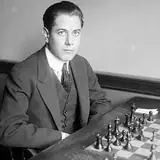
He made the hardest game in the world look like something he did while thinking about other things. José Raúl Capablanca seemed to see the right move more than calculate it, and the winning line looked obvious once he played it. Opponents who had prepared for weeks watched their positions fall apart after a few quiet, precise moves and walked away unsure where they had gone wrong. They called him the chess machine, but that undersells him: he showed that some of the deepest beauty in chess is simplicity, and that an endgame with two pieces can be as profound as any sacrifice.
The boy who beat his father
By his own account in My Chess Career (1920), he was "not yet five years old" when he wandered into his father's office in Havana and found him playing a game. On the third day of watching he saw his father, "a very poor beginner," move a knight from one white square to another. "My father won, and I proceeded to call him a cheat and to laugh." He said he could beat his father, who answered that the boy could not even set the pieces up correctly. "We tried conclusions, and I won. That was my beginning." Doctors then decided that playing would harm him, and for several years he played only occasionally at home. At eight he was back at the Havana Chess Club on Sundays, and soon Celso Golmayo, the strongest player there, could not give him a rook.
He later said two things fired his passion for the game: the 1892 Steinitz–Chigorin match, which Havana discussed for years, and Harry Pillsbury's blindfold display there in 1899, sixteen or more blindfold games at once. "The effect of Pillsbury's displays was immediate," he recalled. "They electrified me."
When he lost two trial games to Juan Corzo, the champion of Cuba, friends urged him to study and gave him some books. "I liked the endings and studied some of them," he wrote. In late 1901 he played Corzo a match to four wins. As he remembered it, Corzo won the first two games and then won no more, and the result made Capablanca, in his words, "morally at least, the champion of Cuba. I was then twelve years old." The recorded score, which Garry Kasparov gives in My Great Predecessors, was four wins to three, with six draws.
In 1904 he went to the United States to learn English. Two years later he won a rapid-transit tournament at the Manhattan Chess Club from a field of thirty-two that included the world champion, Emanuel Lasker, and entered Columbia to study chemical engineering. A 1935 magazine profile has him playing shortstop on the freshman baseball team; he seemed more interested in baseball than in chess, which he described as "not a difficult game to learn and it is an enjoyable game to play." After two years he left the university and, he wrote, "dedicated most of my time to chess."
Conquest of the old world
Early in 1909 he toured twenty-seven American towns and gave thirty-one simultaneous displays: 602 games, of which he lost thirteen and drew eighteen. Then he played a match against Frank Marshall, the United States champion. Marshall agreed readily; as Capablanca put it, "he naturally discounted his victory. How far he was wrong the result proved." Capablanca won eight games, lost one and drew fourteen, and he did it, he wrote, "without having ever opened a book to study the openings." When admirers then suggested a world championship match with Lasker, he refused "for the simple reason that he was a much better player."
The Marshall result got him into San Sebastián in 1911, his first international tournament. Entry, as he described it, was limited to players who had won at least two third prizes in first-class international events. An exception was made for him, and some masters objected, Ossip Bernstein among them. Capablanca beat Bernstein in the first round and won the Rothschild prize for the most brilliant game. After that game, he wrote, the masters' attitude toward him changed "to something more akin to awe than anything else." He won the tournament half a point ahead of Akiba Rubinstein, who had beaten him in their game and lost none, with Vidmar and Marshall behind. He challenged Lasker at once. Lasker's terms included a $10,000 purse and a thirty-game limit, after which the leader needed a margin of two points to win; Capablanca called that clause "unfair," Lasker demanded an apology, Capablanca refused, and the negotiations stopped.
On his exhibition tours he won games by the hundred: in Cleveland in 1922 he faced 103 opponents at once and finished with 102 wins and a single draw. In 1913 he joined the Cuban Foreign Office, which made him financially secure for life and sent him, he wrote, "to the Consulate at St. Petersburg, where I arrived in November of 1913." Alekhine recalled his speed there in 1913–14: in blitz "he gave all the St Petersburg players odds of five minutes to one – and he won." Early in 1914, after a quick exhibition win over Bernstein in Moscow, he looked at his watch and exclaimed, "Excellent! I will still be in time for the ballet!", and took a cab to the Bolshoi Theatre.
At the great St. Petersburg tournament that spring he led by a point and a half after the preliminary stage. In the final he lost to Lasker, and, as Kasparov tells it, was so shaken that the next day he collapsed against Tarrasch; he finished half a point behind Lasker. At the closing banquet he apologised to Lasker for his sharp letter of 1911, and the two shook hands. He still wanted the title match: "I hope the match will come, the sooner the better, as I don't want to play an old man, but a master in the plenitude of his powers."
“Nothing is so healthy as a thrashing at the proper time, and from few won games have I learned as much as I have from most of my defeats.”
“Conceit I consider a foolish thing; but more foolish still is that false modesty that vainly attempts to conceal that which all facts tend to prove.”
“White should have considered that a player of my experience and strength could never allow such a move if it were good.”
“There has been no change in the fundamentals. The change has been only a change of form, and not always for the best at that.”
“When you sit down to play a game you should think only about the position, but not about the opponent.”
“I have known many chess players, but only one genius—Capablanca.”
“Capablanca was snatched too early from the chess world. With his death we have lost a great chess genius, the like of whom we will never see again.”
“His simplicity is a myth. His almost complete lack of book knowledge forced him to push harder to squeeze the utmost out of every position.”
“This game is one of the most beautiful games played in London and it proves that Capablanca is not only a fine position player, but that he is also a fine combinative player when occasion demands.”
“In fact, he devotes much less time to chess, I should say, than many an enthusiastic amateur.”
The crown, and eight years unbeaten
On 10 February 1916 he lost to Oscar Chajes in New York. In Chess Fundamentals he explained why he had played on in a lost position: "Most players will be wondering, as the spectators did, why I did not resign." He was hoping for a line that would still be hard for White to win, and Chajes nearly played it. It was his last defeat for more than eight years. Until 21 March 1924 he did not lose a serious game: sixty-three games, forty wins, twenty-three draws.
Illness kept him in Havana from 1917 into 1918. There he gave lessons to a girl of twelve to fourteen; by 1920 he thought she "probably is the strongest lady player in the world." To teach her he had to study, "so it came about that, for the first time in my life, I devoted some time to the working of the openings." Back in New York in 1918, Marshall let him play a Ruy Lopez for the first time in ten years, because he had prepared a pawn sacrifice for him and kept it for two years. Capablanca knew a heavy attack would follow and took the pawn anyway: "The lust of battle, however, had been aroused within me." He won the game.
The Lasker match was finally played in Havana from 15 March to 20 April 1921. Lasker, who had held the world title for twenty-seven years, did not win a game. Capablanca won four and drew ten, and Lasker resigned the match on his doctor's advice: "I was looking at the board as though through a mist, and my head ached suspiciously." Capablanca annotated the games himself. He called the tenth, a long ending he won with Black, "the finest win of the match," and of the short thirteenth game he wrote, "With three points to the good, I took matters too easy." He was the third World Chess Champion. In his book on the match Lasker paid him tribute: "The depth of his play is the depth of a mathematician, not of a poet."
His first tournament as champion was London 1922. He won his first six games and finished with thirteen points from fifteen, eleven wins and four draws, a point and a half ahead of Alekhine. On 9 August, a free day, he invited the other leading players to a London hotel and set out the rules he wanted for world championship matches: the first player to win six games would take the title, and a challenger had to raise a purse of at least $10,000. Andy Soltis tells the story in his foreword to the tournament book. Eight masters, Capablanca and Alekhine among them, signed what became known as the London agreement. As Kasparov summarises it, the champion had to defend the title within a year of a challenge, but was "not obliged to play a match if the prize fund does not reach $10,000 US in gold," and a new champion had to defend under the same conditions.
The chess machine
His genius was lucidity. Where others hacked through complications, Capablanca steered toward clarity, trading down into endings he understood better than anyone and winning them with a technique so smooth it looked like no effort at all. Bobby Fischer called it a "real light touch." In 1920 he predicted that his style would "tend in the future to apparently ever increasing simplicity, without losing, as some games will show, the former brilliancy when the occasion demands it." In a won position, he wrote, the move to play is "the most effective one, the move that will make your opponent resign soonest."
The ease bred legends. Kasparov writes that it was thanks to his games of 1913 and 1914 that "rapturous legends grew up around Capablanca and an almost mystical worship developed: that this was a chess machine." Capablanca knew better. Of one move against Bernstein at St. Petersburg, in the game that won the first brilliancy prize, he wrote, "Before making it I had to plough through a mass of combinations which totalled at least one hundred moves." Kasparov's own explanation is that he "knew everything about blockade, about weak points, and about manoeuvring, sensing a position with the tips of his fingers."
Chess Fundamentals (1921), which Mikhail Botvinnik called the best chess book ever written, starts with simple mates and endings. The advice to study the endgame before everything else comes from the radio lectures of his last years, published after his death as Last Lectures. In A Primer of Chess (1935) he recalled his game against Siegbert Tarrasch at San Sebastián, after which Tarrasch told him that he not only knew the opening books but had improved on them. "The fact was that I did not know a single book on the openings at the time."
The only thing he worried about at the board was that perfect play would drain the life out of the game. To save it from a "draw death," he proposed a larger variant in 1925: a 10×8 board with two new pieces, the chancellor and the archbishop, so that opening theory couldn't, as he put it, settle the game before it began. It was the worry of a man for whom ordinary chess had become almost too easy.
Buenos Aires, and the rematch that never came
In 1927 he went to Buenos Aires to defend the crown against Alexander Alekhine — a man he had never lost to, in a year he had just won the great New York tournament ahead of him. He arrived without serious preparation; Alekhine arrived having studied Capablanca's every game and trained his body like an athlete. Even so, Alekhine said before the match, "I cannot imagine how I will be able to win six games against Capablanca. However, I can imagine even less how he will win six games against me." The match lasted seventy-three days and thirty-four games, the longest world championship match for nearly sixty years, and thirty-two of the games were Queen's Gambits. Alekhine won six to three and took the title. Capablanca did not resume the adjourned last game; he sent a letter: "Dear Mr Alekhine! I resign the game. You are therefore the world champion." The chess world was stunned. Kasparov puts the defeat down to "excessive self-confidence and, as a consequence, weak preparation."
Capablanca wanted the rematch, and never got it. The 1927 match was the only one ever played under his own London Rules. Instead of challenging at once, in February 1928 he wrote to the president of FIDE proposing new rules, among them a limit of sixteen games; Alekhine answered with an angry open letter, and Kasparov calls the delay fatal. When Capablanca did challenge "under the London rules of 1922," in October 1928, Alekhine had already accepted a challenge from Efim Bogoljubow. After the 1929 crash, Soltis writes, it was "virtually impossible to raise $10,000." In 1937 Capablanca admitted the flaw in his own rules: "I did not take into consideration the fact that the world champion, if he desires, is able to delay the moment when he meets a dangerous, in his opinion, opponent." The money, the bitterness between the two men, and finally the war all worked against a second match; they did not even meet over a board again until Nottingham 1936.
Yet the autumn years held real triumphs. Kasparov thinks that Alekhine's loss of the title to Euwe in 1935, which reopened the road to a title match, and his young second wife, the Russian émigré Olga Chegodaev, "inspired Capa with new strength": first at Moscow 1936 ahead of Botvinnik, a share of first at Nottingham, a gold medal on top board at the 1939 Buenos Aires Olympiad. In between, at AVRO 1938, he finished seventh of eight, for the first time in his life outside the prizes. By then an undiagnosed, savage hypertension was already at work. On 8 March 1942, after collapsing the night before at the Manhattan Chess Club, he died of a cerebral hemorrhage in New York, in the same hospital where Lasker had died in January 1941.
Legacy
Capablanca founded no school and wrote no sprawling treatise, yet his influence runs through everyone who came after. Fischer, Karpov and Botvinnik all studied the way he simplified, the way he made a won position safe and a drawn one winnable. Computer analysis of the world champions' match play has rated him the most accurate of them all; Spassky thought him simply the best who ever lived. Kasparov marvelled that "he worked much less than other players – and he contrived to win the most important tournaments and matches"; of all the world champions, he lost the fewest games. Since 1962 Havana has held the Capablanca Memorial in his honour. He remains chess's great argument for clarity — proof that the highest art is not the move nobody understands, but the move everybody wishes they had found.
Books
Books Jose Raul Capablanca wrote, co-wrote, edited, or contributed to. Translations and reprints are grouped under the same work.
-
Chess Fundamentals
Author
-
A Primer of Chess
Author
-
Havana 1913
Author
-
Last Lectures / Letzte Schachlektionen
Author
-
My Chess Career
Author
-
Schaken
Coauthor — Max Euwe
-
The World’s Championship Chess Match Played at Havana 1921
Author
-
Third International Chess Tournament, Moscow 1936
Contributor — game annotations