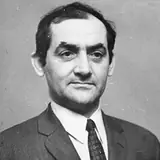
Leonid Stein was one of the great attackers never to play for the world title. In an age when the road to the title ran through the Soviet Championship, he won it three times in four years. Twice a country quota excluded him from the Candidates despite his Interzonal results; a third attempt ended in a tied playoff decided in Samuel Reshevsky's favor. He played fierce, intuitive chess, and Bobby Fischer became a friend and proposed a match. At thirty-eight, preparing for another Interzonal, Stein died of a heart attack. His games preserve both the attacking imagination that made his name and the positional skill of his later years.
A late breakthrough
Stein was born in Kamianets-Podilskyi, in the Ukrainian SSR, in November 1934. He came to serious chess late by Soviet standards. Garry Kasparov's My Great Predecessors, Part III records that he joined the Pioneers Palace chess club at thirteen, with Alexey Sokolsky as his first teacher, became a candidate master at eighteen and a master at twenty-four. While serving in the Soviet Army, he tied for first in its individual championship in 1955 and 1956.
He took the Ukrainian title in 1960 and again in 1962. His first Soviet Championship final was Moscow 1961, where he shared third–fourth place, inflicted the tournament winner Petrosian's only defeat and qualified for the Interzonal. The Grandmaster title followed in 1962.
Champion of the Soviet Union — three times
Winning the Soviet Championship in the 1960s was widely considered harder than winning most international tournaments: the field was full of world champions, challengers and Candidates. Stein won it three times. At Leningrad in 1963 he finished level with Boris Spassky and Ratmir Kholmov and won the title in a playoff. At Tallinn in 1965 and Tbilisi in 1966 he won it outright, back to back.
Three Soviet crowns in four years placed him, beyond argument, among the very best players alive — and he held a station inside, or just outside, the world's top ten from 1963 until his death.
“In my view, the present system is a poor one. A match for the world championship should take place every two years. The champion’s opponent should be determined in a Candidates tournament.”
“In 1967 I or, I think, any of the Soviet grandmasters will be ready to accept Fischer’s challenge.”
“At the age of 38, possibly all is not yet lost?!”
“When he began to demonstrate the variations that he had seen, the board would appear to move...”
“Furman endeavoured to give generalising evaluations, while Stein “fired out” a machine-gun-like stream of variations... He had a fantastic talent!”
“I am shocked by the untimely death of Leonid Stein — a brilliant grandmaster and a good friend. I express my sympathy to his family and to the chess community.”
“You know, in 1973 Stein was stronger than Karpov!”
Twice excluded from the Candidates
FIDE then limited the eight-player Candidates field to five players from one country. With Soviet players already admitted, only three more could qualify through the Interzonal. Stein fell outside that quota in both 1962 and 1964, although his results would otherwise have been sufficient to advance.
At Stockholm in 1962 he tied for sixth–eighth with Pal Benko and Svetozar Gligorić. He then won their additional playoff with 3 out of 4, yet Benko received the last Candidates place because Stein was the fourth Soviet qualifier. At Amsterdam in 1964 he scored 16½ out of 23 for fifth, behind Tal, Smyslov and Spassky, and was excluded again. Kasparov records in Part III that the country restriction was abolished for the next cycle.
Sousse in 1967 brought a different setback. Stein tied for sixth–eighth with Reshevsky and Vlastimil Hort, and all three again finished level, with 4 out of 8, in their Los Angeles playoff in February 1968. Reshevsky advanced on his superior Berger tiebreak score from Sousse. The country quota no longer applied.
Stein wanted the championship system changed. In the survey taken after the 1970 USSR–Rest of the World match, reproduced in Kasparov's My Great Predecessors, Part IV, he favored a world-title match every two years and a Candidates tournament to determine the challenger.
Moscow 1967, and the chess of an attacker
His masterpiece as a tournament player came at Moscow in 1967, the great international staged for the fiftieth anniversary of the October Revolution. Stein won it — ahead of the reigning World Champion Tigran Petrosian, the former champions Vasily Smyslov and Mikhail Tal, and Boris Spassky and Paul Keres besides. There were other triumphs: a share of first with the young Anatoly Karpov at the 1971 Alekhine Memorial in Moscow, and a share of first with Petrosian at Las Palmas in 1973. He was a feared team player too, taking individual gold on first reserve at the 1964 Tel Aviv Olympiad with 10 out of 13.
His chess drew on Chigorin and Alekhine: a highly intuitive, natural attacking style, willing to risk material for activity. He played the King's Indian, the Grünfeld and the Sicilian as attacking weapons. His head-to-head records included even scores against Botvinnik, Smyslov and Petrosian, and plus scores against Tal, Spassky and Keres. Kasparov describes his later chess as increasingly positional and technical, while retaining its tactical sharpness; the English, Catalan and King's Indian Attack became important parts of his play with White.
Karpov recalled meeting Stein through his teacher Semion Furman after Stein and Furman's game at the 1969 Soviet Championship. Watching them analyze, he saw Furman offer general evaluations while Stein produced variations in rapid succession. In My Great Predecessors, Part V, Karpov also singled out Stein's games as examples of how sacrificing a rook for a knight in the Sicilian Dragon could yield compensation that lasted into an endgame, even without an attack on the king.
Stein's games became teaching material for a younger generation. In My Great Predecessors, Part II, Kasparov recalls a 1975 training game at Botvinnik's school in which his handling of the King's Indian disappointed his teacher. Botvinnik told him to collect and study the best games of Bronstein, Boleslavsky, Geller, Petrosian, Gligorić and Stein. Kasparov entered them in a card index and worked through them.
Fischer's friendship and one more attempt
Kasparov's account in Part IV traces the friendship with Fischer to Stockholm in 1962. Geller introduced them, and they played blitz together almost every evening. At an official reception during the 1966 Havana Olympiad, Fischer lost a casual game to Stein and proposed a match. Stein agreed, and Fischer approached Fidel Castro about hosting it in Cuba. Castro did not object, but Fischer wanted to play immediately after the Olympiad. Stein had to return for the Soviet Championship, a qualifying event for the Interzonal, and offered to accept the challenge in 1967. The match never took place.
After sharing first with Karpov at the 1971 Alekhine Memorial, Stein received a personal invitation to the next Interzonal. Kasparov quotes his hopes in Part III: “At the age of 38, possibly all is not yet lost?!” He was due to play in Brazil in the summer of 1973.
The end came without warning. On 4 July 1973, at the Rossiya Hotel in Moscow, as he prepared to leave with the Soviet team for the European Team Championship in Bath, England, Stein died of a heart attack. He was thirty-eight. Fischer sent a telegram to Moscow expressing his shock and sympathy for Stein's family and the chess community. His widow and children later settled in the United States.
Legacy
Stein's three Soviet titles and victories in Moscow's great international tournaments established his place among the leading players of his generation. His friend and second Eduard Gufeld, with Efim Lazarev, collected his best games in Leonid Stein: Master of Risk Strategy. Kasparov remembers Gufeld enthusiastically discussing his earlier book on Stein at Baku in 1980, then looking around and whispering his opinion that Stein had been stronger than Karpov in 1973. Stein never reached the Candidates, but his games remained models for players and teachers long after his death.
Books
No authored or contributed books are documented in the available sources.