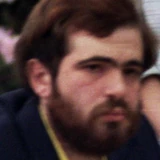
Lev Psakhis grew up in Krasnoyarsk, in Siberia, and won the championship of the Soviet Union in 1980 while he was still an International Master, sharing the title with Alexander Beliavsky. A year later in Frunze he beat Garry Kasparov in the second round and finished level with him on 12½/17, sharing the title again. In July 1982 he was seventh in the world. After moving to Israel he played seven Olympiads for his new country, won the Israeli championship, and became a trainer whose pupils included Judit and Susan Polgar.
Krasnoyarsk
Psakhis was born in Kalinin, now Tver, on 29 November 1958, and grew up in Krasnoyarsk, where his family moved when he was at school. When Salo Flohr came to Krasnoyarsk for a simultaneous exhibition in 1973, the fourteen-year-old Psakhis named the players in every diagram of the Informant volumes Flohr had brought with him.
He was then invited to the school run by Mikhail Botvinnik, which Garry Kasparov joined in the summer of 1973, but he was dropped from it after sacrificing a knight on f7 in a training game. In 1979 he won the Soviet young masters' tournament.
In My Great Predecessors, Part II, Kasparov remembered Psakhis among the young players who gathered at the school three times a year for ten-day sessions. Each pupil presented recent games and described the work done between sessions; the group then analyzed the games together and received new homework.
In Advanced Chess Tactics he recalled that in the mid-1970s a master title was almost out of reach for a young player in Siberia: “There were only a few masters and not a single grandmaster living in all the Siberian vastness!” Early in 1977 he finished second in a semi-final of the Russian men's championship, and the same year he was shown into a room with Mikhail Tal to play him a blitz match. He had taken up the Benoni as a child after reading a short monograph on it by Isaak Boleslavsky, and played it for more than thirty years.
Two Soviet championships
In 1980 Psakhis won his first international tournament, at Nałęczów in Poland, after scoring one point from his first three games. He then won the Krasnoyarsk semi-final of the Soviet Championship and, in the final at Vilnius, shared first place with Alexander Beliavsky on 10½/17. He was still an International Master.
Early in 1981 he played board three, behind Kasparov and Yusupov, for the youth team in a four-team match-tournament in Moscow whose first team was led by World Champion Anatoly Karpov. “Only a month before, I had gained the title of USSR Champion for the first time in my career; I was young, absolutely sure of myself, and eager for battle!” he wrote. He beat Mark Taimanov there, and judged in his notes that Taimanov's games and his own shared “a certain artistic negligence”. Around this time he was, by his own account, a Hedgehog fanatic, and he claimed a share in popularizing that set-up in Russia.
In the 1981 championship at Frunze he played 1.d4 against Kasparov in the second round and won after a long and complicated game. The two of them finished level on 12½/17 and shared the title. Psakhis became a grandmaster in 1982 and reached seventh place in the world rankings that July.
In My Great Predecessors, Part V, Kasparov records Karpov discussing Psakhis, Kasparov, Artur Yusupov and Sergey Dolmatov as young players who, alongside the best players in their thirties, might contest the coming Candidates matches and perhaps a world championship match. Psakhis qualified for the Las Palmas Interzonal of 1982, but his score there did not take him on to the Candidates.
“Attack is the continuation of strategy by other means.”
“The principle of my play [at that time] was analogous to the Brazilian approach to soccer: our opponents will score as much as they can, and we will score as much as we have to.”
“One can never change anything in one's life. ... Even if I had played the Caro-Kann, instead of the French, it would not have changed anything in my life.”
“Passivity and its close relation, cowardice, are in my view the cardinal chess sins.”
“The French is like a proud woman who does not give her heart away easily.”
“I found his enthusiasm infectious.”
“Just wait — in the future you will remember this tournament as one of the best in your life.”
The 1980s
Psakhis won or shared first place at Sarajevo in 1981 and 1986, Cienfuegos 1983, Troon and Sverdlovsk 1984, and Szirak and Sevastopol 1986. At the 1983 European Team Championship in Plovdiv he won team and individual gold medals for the Soviet Union. In the late 1980s he worked with Kasparov and Artur Yusupov, and in 1990 he played a training match with Kasparov at Murcia, which he lost 1–5.
Israel
Psakhis emigrated to Israel and played for it at seven Olympiads between 1990 and 2002. He won the Israeli championship in 1997 and shared it in 1999, the year he won the board four gold medal at the European Team Championship in Batumi. He also won at Tel Aviv in 1990 and 1999, London in 1999 and Andorra in 2002, and in the 2001 FIDE knockout championship in Moscow he eliminated Viktor Korchnoi in the first round. His highest rating, 2625, came in January 1995.
He played his last game against Tal at Tel Aviv in 1990. In Advanced Chess Tactics he wrote that he played at Andorra ten times from 1994 “without suffering a single defeat – although there was no shortage of lost positions in my games”, and that his win there in 2002 was his last tournament victory. At the Bled Olympiad that year he knew that, “owing to the state of my health as well as my age”, it would be his last, and he won his final-round game with Black.
The trainer and author
Around 1992 Psakhis began working with Judit and Susan Polgar, and over time coaching replaced much of his tournament work. His pupils have included Emil Sutovsky, Maxim Rodshtein, Daniel Naroditsky and Parimarjan Negi, and he coached India's teams at the 2008 Olympiad in Dresden. He wrote The Complete French and The Complete Benoni for Batsford, and in 2003 and 2004 a four-volume series on the French Defense. In the preface to The Complete French, signed at Herzliya in April 1992, he dated his turn to the French to 1982, when “the question of what to play against 1 e4 became a torment to me”; in the same book he admitted that if one Winawer system were judged on his own results, “it would have to be prohibited by law”. In 2011 he had a liver transplant, recovered, and returned to chess.
In the preface to Advanced Chess Tactics, dated October 2011, he recalled spending six to eight months of the year at tournaments before retiring as a player in 2006. Coaching had exposed gaps in even strong pupils' knowledge of classical chess. For the book he returned to underexamined games by Tal, Spassky, Stein, Korchnoi and Petrosian, adding his own analysis instead of repeating published notes. The second edition added a chapter on attacking in the French Defense.
Legacy
Psakhis won the Soviet Championship in consecutive years, as an International Master the first time and alongside the young Kasparov the second. When his own playing career slowed he turned to teaching, and the players he has helped include the Polgar sisters, Emil Sutovsky, Maxim Rodshtein, Daniel Naroditsky and Parimarjan Negi.
Books
Books Lev Psakhis wrote, co-wrote, edited, or contributed to. Translations and reprints are grouped under the same work.