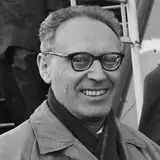
Mikhail Botvinnik was an electrical engineer who became the first Soviet world chess champion, and he approached chess the way he approached engineering: through preparation, discipline and analysis. In Garry Kasparov's account, Max Euwe had been the first to prepare professionally for a title match; Botvinnik turned that preparation into a complete system, and Kasparov called him the first genuine chess professional. He held the world title in three reigns between 1948 and 1963, losing it twice and winning it back twice in return matches, the second time in 1961 at the age of forty-nine. He was known as the Patriarch, and three later world champions, Anatoly Karpov, Garry Kasparov and Vladimir Kramnik, studied in his school.
The engineer's son
Botvinnik was born in 1911 in Kuokkala, a Finnish village then inside the Russian Empire, to a family of Russian Jews; his father was a dental technician and his mother a dentist. He learned the moves in September 1923, at twelve, from his brother's friend Lenya Baskin, Andrew Soltis writes in Mikhail Botvinnik: The Life and Games of a World Chess Champion. He won his school championship the following winter, and on 20 November 1925, aged fourteen, he beat the reigning world champion José Raúl Capablanca in a 30-board simultaneous exhibition in Leningrad.
In 1927, at sixteen, he played in the final of the Soviet Championship, the youngest player to do so up to that time. He took part “rather by accident,” he wrote in One Hundred Selected Games, “as some of those chosen to play in the actual championship declined to take part”; Soltis adds that he had been fifth on the waiting list and that his mentor Yakov Rokhlin lobbied for him. He shared fifth and sixth place and earned the master title. That year he was turned away from higher education because he was not yet seventeen. In August 1928 he passed the entrance examination for the Leningrad Polytechnic Institute, but, Soltis writes, he was refused as the son of a dental technician; Rokhlin's appeal got him into the university's mathematics faculty instead, and he moved to the Polytechnic in February 1929. He became a postgraduate in its electro-mechanical department in 1932, defended his first dissertation in 1937 and his doctoral dissertation in 1951, between title matches. “For me the question of whether to study or play chess did not arise,” he wrote, as Kasparov quotes him in Garry Kasparov on My Great Predecessors, Part II.
The first Soviet champion of the world
By the mid-1930s he was the leading Soviet player. He shared first place with Capablanca at Nottingham 1936, and at AVRO 1938 he beat both Alexander Alekhine, the reigning champion, and Capablanca; the Capablanca game is in the archive below. Of his fourteen games at AVRO, Alekhine said, “only in one did I feel that I was outplayed by my opponent – that was the game with Botvinnik in the seventh round.”
When Alekhine died in 1946 still holding the title, the championship was vacant for the first time in history. FIDE settled the succession with a match-tournament of the world's best, played across The Hague and Moscow in 1948. Botvinnik won it with 14 points from 20 games, three points clear of the field, and on 9 May 1948 he became the sixth world chess champion and the first Soviet player to hold the title.
“You will never become an Alekhine if the variations control you, and not the other way round.”
“What is the essence of a chess master’s art? Fundamentally it consists of the ability to analyse chess positions. … chess is the art of analysis.”
“I was always underestimated as a master of attack.”
“By blood I am Jewish, by culture – Russian, and by education – Soviet.”
“Botvinnik removed the shroud of mystery from chess and constantly compared it with everyday situations. He called chess a typical inexact problem, similar to those which people have to solve in their daily lives.”
“Playing against Botvinnik, I all the time felt myself to be at best a student. We are all schoolchildren, students, postgraduates perhaps, but he is the professor.”
“I’d call him the first real professional, who understood that a result in chess depends not only on skillful playing.”
“For a certain time I was on friendly terms with Botvinnik and I knew that, while outwardly cold, in reality he was a warm and sympathetic person.”
Fifteen years, and the men who came for the crown
The rules for the title cycle, which Botvinnik had drafted himself and FIDE approved in 1949, let a champion keep the title if a 24-game match was drawn. That rule kept him champion twice: David Bronstein drew with him 12–12 in 1951, and Vasily Smyslov did the same in 1954. In 1956 FIDE gave a defeated champion the right to a return match, a change Kasparov says was made “not without the participation of Mikhail Moiseevich.” Smyslov beat him in 1957. Botvinnik spent two months deciding whether to use the new right, then won the 1958 return match 12½–10½ and regained the title on 9 May 1958, ten years to the day after he first won it. “The partner in the match-revansh remained the same one as in the first struggle. But I turned out to be different,” he later told the editor Boris Turov.
Mikhail Tal took the title from him in 1960. Botvinnik told Kasparov that during that match he decided “that the return match definitely had to be played,” and he prepared to meet Tal as a more practical player. At the Leipzig Olympiad later that year he discovered, he said, “that when I drink coffee during a game, I can last the full five hours,” and from then on he brought a thermos of coffee to his games. He won the 1961 return match 13–8, with ten wins and five losses, at forty-nine. When friends tried to carry him out of the hall, he told them, “No, no, I’m not a patriarch that you carry on your hands,” Soltis writes; but a radio commentator called him the Patriarch, and the name stayed with him.
Tigran Petrosian beat him 12½–9½ in 1963. Botvinnik later wrote that Petrosian “created positions where events developed as though in a slow-motion film,” Kasparov records in Garry Kasparov on My Great Predecessors, Part III: “If you finally succeed in creating a dangerous attack, you either have little time left, or fatigue sets in.” In 1959 FIDE had abolished the return match from 1963 on, a change Botvinnik wrote he chose not to protest, and he left the championship cycle. At the closing of that match Petrosian said, “We all regard ourselves as pupils of Botvinnik, and subsequent generations will learn from his games.”
The scientific method
Kasparov credits Euwe with being the first to prepare professionally for title matches, adding that “later Botvinnik was to create an entire system on this basis.” He first described it in his book on his 1933 match with Salo Flohr: time off work to rest, close study of about 110 of Flohr's games, and a narrow, well-prepared repertoire. His account of the 1939 Soviet Championship added two or three weeks in the fresh air before an event and a fixed routine on playing days. “For one competition three or four opening systems for White and the same for Black are quite sufficient,” he wrote in One Hundred Selected Games; elsewhere he advised, “Lying down before a game is very beneficial.” He tested his openings in private training games and trained against distractions. Before the 1941 Absolute Championship, he recalled in One Hundred Selected Games, “during our training games Ragozin ‘smoked’ me for five hours in succession,” and years later Yuri Averbakh sat through training games beside a radio Botvinnik had put on the table.
With White he favored closed, strategic openings, though as Black in the 1930s, he wrote, he often played the sharp Grünfeld Defense. Before their 1960 match Tal noted, in Tal–Botvinnik 1960, that “Botvinnik, in his preceding matches, had not opened once with his e-pawn.” He was frank about his weaknesses. After a poor finish in the 1940 Soviet Championship he wrote, “Presumably I had not been sufficiently thorough in applying the methods of preparation which I myself had written about!” Annotating a game from the 1958 return match in Botvinnik's Best Games 1947–1970, he wrote, “My old ‘illness’ showed itself — a weakness of combinational vision.” His name is on the theory books: the sharp Botvinnik Variation of the Semi-Slav and the Botvinnik System in the English Opening are still played at the highest level.
The school and the engineer
Botvinnik taught long before his famous school. From the late 1930s until the war he led classes for gifted children at the Leningrad Pioneer Palace, where Mark Taimanov was among his students. The school known by his name began in Moscow in 1963 and ran for about eighteen months; Botvinnik wrote that it closed because its strong pupils were wanted for competitions. Grigory Goldberg of the Trud sports society revived it in 1969, and it ran until 1978. Its pupils included three future world champions: Anatoly Karpov, who was twelve in 1963, Garry Kasparov, who joined in 1973 at ten, and Vladimir Kramnik. Karpov remembered Botvinnik's “remarks regarding my completely feeble handling of the opening,” Kasparov writes in Garry Kasparov on My Great Predecessors, Part V; after visiting the family in Zlatoust, Botvinnik decided, “A good family and a serious boy!” Of the young Kasparov he said, “The future of chess lies in the hands of this young man.” Kasparov recalls him warning “against getting carried away by complexity for the sake of complexity.”
In a 1960 lecture at Humboldt University in Berlin, Botvinnik proposed that a chess program should imitate a master's thinking, searching selectively and following only the lines of attack a master would consider. By his own account programming began in 1972, and the program was named Pioneer. Soviet computer time was scarce, and in 1979 the authorities refused to let him take the program to the West; Boris Stilman, who worked on Pioneer from 1972 to 1988, recalled that they claimed it might have defense value. When US officials stopped the program Belle from traveling to Moscow in 1982, he said, “It was the first time in the history of chess that a world champion was arrested.” He later applied the same method to scheduling repairs at power stations, and in 1980 the central dispatch office of the Soviet power grid adopted that program, Pioneer-2; he financed the research partly from lectures and seminars. Stilman told Soltis that Pioneer never reached the point of playing a complete game.
In 1934, at Rokhlin's home, he met Gayane Ananova, a ballerina with the Kirov company in Leningrad. They married in 1935; Capablanca, seeing her in a box at the Kirov Theatre a month before the wedding, pronounced her “Et bonne, et belle.” She went with him to Nottingham in 1936, at a time when Soviet players traveled abroad without their wives, after Nikolai Krylenko obtained special permission from Mikhail Kalinin. After the couple moved to Moscow during the war, Botvinnik arranged her transfer to the Bolshoi. She died in December 1987. In his last years Botvinnik had almost lost his sight, but he kept going to the chess club in Moscow to work on Pioneer.
Legacy
In his last years Botvinnik opposed faster time controls and the growing role of prize money. “I stand for chess remaining chess and not turning into tennis,” he said. In March 1995 he was taken to hospital with pancreatic cancer; after two weeks he insisted on leaving: “I will die at home.” His daughter said he spent his last days dictating ideas for Pioneer. He died in Moscow on 5 May 1995, aged eighty-three, one day short of twenty-five years after his last tournament game. Reuben Fine reckoned he stood at or near the top of the chess world for thirty years, a span matched only by Lasker and Steinitz. Moscow's Central House of Chessplayers now bears his name.
Books
Books Mikhail Botvinnik wrote, co-wrote, edited, or contributed to. Translations and reprints are grouped under the same work.
-
Матч Флор - Ботвинник: Партии матча с предисловием
Author
-
Избранные партии (1926-1936)
Author
-
Матч-реванш Алехин - Эйве на первенство мира (октябрь - декабрь 1937 г.)
Author
-
СССР - США. Международный шахматный матч по радио
Author
-
One Hundred Selected Games / Избранные партии 1926–1946
Author
-
Международный шахматный турнир памяти М.И. Чигорина
Editor — general editor of the Mikhail Chigorin Memorial tournament book
-
Матч-турнир на звание абсолютного чемпиона СССР по шахматам (Ленинград - Москва 1941 года)
Author
-
Советская шахматная школа
Author
-
Матч Ботвинник - Смыслов на первенство мира (Москва 1954 г.): Сборник партий
Author
-
Избранные этюды и партии — Genrikh Kasparian
Contributor — foreword
-
Матч-реванш Смыслов - Ботвинник на первенство мира (Москва 1958)
Author
-
Шахматное творчество Ботвинника. Том 1
Contributor — game annotations and articles; compiled by Viktor Batyrinsky
-
Шахматное творчество Ботвинника. Том 2
Contributor — game annotations and articles; compiled by Viktor Batyrinsky
-
Алгоритм игры в шахматы
Author
-
Шахматное творчество Ботвинника. Том 3
Contributor — game annotations and articles; compiled by Viktor Batyrinsky
-
Botvinnik’s Best Games 1947–1970
Author
-
О кибернетической цели игры
Author
-
Три матча Анатолия Карпова
Author
-
Achieving the Aim / К достижению цели / У цели
Author
-
Защита Грюнфельда
Coauthor — Михаил Моисеевич Ботвинник, Яков Борисович Эстрин
-
О решении неточных переборных задач
Author
-
От шахматиста — к машине
Author
-
Курс дебютов / Comprehensive Chess Openings
Contributor — foreword to Vasily Panov and Yakov Estrin’s sixth edition
-
Эпизоды шахматных баталий
Author
-
Half a Century of Chess
Author
-
Аналитические и критические работы (1923-1941)
Author
-
Botvinnik on the Endgame
Author
-
Аналитические и критические работы (1942-1956)
Author
-
Аналитические и критические работы (1957-1970)
Author
-
Аналитические и критические работы 1928-1986: Статьи, воспоминания
Author
-
Шахматный метод решения переборных задач
Author
-
Метод подготовки к соревнованиям
Author — collected writings compiled by Igor Botvinnik
-
Матч-турнир на первенство мира по шахматам. Гаага — Москва, 1948 г
Coauthor — Paul Keres, Mikhail Botvinnik
-
Портреты
Author
-
Матч на первенство мира Ботвинник — Петросян. Москва, 1963 г
Contributor — own game annotations; compiled by Igor Botvinnik
-
Obsession: A Chess Biography of Vsevolod Rauzer
Contributor — article included in Alexander Konstantinopolsky’s original manuscript