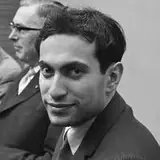
No one made chess look so much like magic. Mikhail Tal played as if the value of the pieces were a rumor he had decided not to believe, throwing pieces into the attack and creating attacks from positions engines still can't fully explain, and dragging opponents, in his own famous image, into a "dense forest" of unexplored variations, onto "a narrow mountain path, where there is room for only one," where a player sometimes had to prove "that two times two is five." He won the world title at twenty-three, the youngest champion the game had yet seen, and though poor health soon cost him the title, it never took away his love of attacking chess. To the end he was what Riga had called him: the Magician, who loved chess as much as anyone and made it beautiful and dangerous at the same time.
The boy from Riga
Tal was born in Riga in 1936 into a Jewish family, a frail and precocious child — he was reading by three, and carried through life a congenital deformity of the right hand (ectrodactyly) that never stopped him from playing the piano. He found the chess club by accident. At ten, he wrote in The Life and Games of Mikhail Tal, he fell for scholar's mate against his cousin and took it as a real tragedy. Soon afterwards he went to the Riga Palace of Pioneers, meaning to join a drama group, noticed a door marked “Chess Section,” and went in. He stayed, and his first teacher there was Yanis Kruzkop. Garry Kasparov, in My Great Predecessors, dates it earlier: he has Tal learning the game at seven from his father, a first-category player, and joining the Pioneers Palace club at nine.
In a 1949 simultaneous exhibition, aged twelve, he beat the master Ratmir Kholmov with a combination already unmistakably his own. Alexander Koblents, a Riga master he met over the board in the city championship at the end of 1950, became his trainer. Then the milestones came fast. Latvian champion in 1953 and a Candidate Master; Soviet Master in 1954; and then, in 1957, at the age of twenty, the youngest player ever to win the Soviet Championship, scoring 14 out of 21. He started with four wins and beat his idols Bronstein and Keres. After losing to him, Alexander Tolush told Boris Spassky, "You know, Borya, today I lost to a genius," and Salo Flohr said, "This boy will go far!" He retained the title in 1958.
He had meanwhile taken a degree in literature at the University of Latvia, which he entered at fifteen, writing his thesis on "Satire in the novel The Twelve Chairs by Ilf and Petrov," and did his probationary year teaching literature at a Riga school, to a class almost entirely of chess fanatics. The first time he walked in, a game stood on the windowsill and White had mate in four. He turned to the blackboard for a few minutes, and when he looked back the boys had played on and White no longer had even an attack. He demanded their mark books, and when he returned them, the boy who had White asked for his autograph. Tal wrote in the mark book: “Failed to find a mate in four during a literature lesson.”
The art of complication
Tal's chess was a refutation of caution. Where others calculated to safety, he sacrificed to create chaos — pouring material into the position not always because it was sound, but because the resulting complications were a maze in which his intuition saw further than anyone alive. Many of his most celebrated combinations have never been fully refuted; many were objectively dubious; almost all of them won. “There are,” he liked to say, “two kinds of sacrifices: correct ones, and mine.” At the 1958 Munich Olympiad Botvinnik asked him why he had sacrificed a pawn. “It was simply in my way,” Tal answered. Kasparov, who knew him, wrote that Tal was "the only player I can remember who did not calculate lengthy variations: he simply saw through them!" He knew what it cost him. Sometimes, he admitted in The Life and Games of Mikhail Tal, “an idea occurs which is so interesting that it proves stronger than me.”
In the same book he described how one of those ideas was born. In a game against Vasiukov at a Soviet Championship he could not calculate the consequences of a knight sacrifice, and his mind wandered to a couplet by Korney Chukovsky about how hard it was to drag a hippopotamus out of a marsh. He started working out how it might be done, with jacks, levers, helicopters and even a rope ladder. Admitting defeat as an engineer, he thought, “Well, let it drown!”, accepted that the sacrifice could only be judged by intuition, and played it. The next day he read in the paper that Tal, “after carefully thinking over the position for 40 minutes, made an accurately-calculated piece sacrifice.”
Only once did he play for a draw from the first move, as White against Korchnoi in the 1955 Soviet Team Championship. He was so ashamed that he swore that to play for a draw, at any rate with White, “is to some degree a crime against chess.” The habit of attack never left him. At the 1974 Olympiad in Nice he sacrificed a rook against Miagmasuren, and when the Soviet team leader, V. D. Baturinsky, came into the hall, Tal quietly told him he was a rook down. “Blundered?” Baturinsky asked indignantly. “Sacrificed!” Tal answered.
“There are two kinds of sacrifices: correct ones, and mine.”
“The time that we don't have is more precious than the piece that we do have.”
“But if there can be a semblance of a contest, if the maze of variations might tire the opponent out—then the master sacrifices . . . .”
“There is no doubt that my opponents in these games had every justification for complaining about their bad luck. I hope, however, that I in some way ‘contributed’ to this bad luck.”
“Expressing it in mathematical language, I prefer it when in chess the side of a triangle turns out to be longer than the hypotenuse.”
“It sounds trite, but few love the game as much as he did. You could just see it. Some players consider it labor. This man loved chess.”
“Misha was perhaps the only great player who was unaware of any feeling of envy.”
“He was loved: isn’t it this that constitutes happiness?”
“Even if I don’t say who made the combination, it is clear all the same: from far off it smells of Tal!”
“Colorful over and away from the board, Tal at his best was an attacking genius.”
The crown at twenty-three
The world title campaign was a comet. He won the 1958 Portorož Interzonal at 13½/20, then the 1959 Candidates Tournament across Bled, Zagreb and Belgrade with 20/28, finishing ahead of Paul Keres and winning every one of his four individual games against the teenage Bobby Fischer. Fischer lost three games with White against the Caro-Kann in that event, and in his preface to Vladimir Bagirov's “White” Fisher (1991) Tal recalled answering his 1.e4 by touching the c-pawn and moving it “for one square only (not taking away my hand, of course)”. Fischer looked at him in amazement, “but afterwards, when the pawn moved a bit further, it seemed to me he felt slightly offended...” Pal Benko, who suspected Tal of hypnotizing him, sat down to one of their games wearing dark glasses. Tal had borrowed an enormous pair from Petrosian and put them on at once, and the spectators, the other players, the arbiters and Benko himself all laughed. In the penultimate round, while Keres won to draw level with him, Tal had Black against Fischer. As Tal told it, Fischer wrote down the strongest move, 22 Rae1, and pushed his scoresheet toward him to watch his reaction. Tal stood up, strolled about, shared a joke and came back looking content; Fischer crossed the move out and played a queen check instead. Asked afterwards why, he said, "Well, you laughed when I wrote it down!" Kasparov, retelling the story in My Great Predecessors, adds that a computer finds a defence to 22 Rae1 anyway. Tal won the game. In the same preface Tal wrote that Fischer had reached a winning position in the opening, but that “the desire to not merely win, but to ‘smash’ his wrongdoer” had cost him his usual prudence. Tal was, he explained, “about the only contestant of his age, and therefore our meetings had some specific colouring.”
In 1960 he challenged Mikhail Botvinnik, “the hero of our generation,” as Tal called him, in a match at Moscow's Pushkin Theater scheduled for twenty-four games. It ended after twenty-one: Tal won 12½–8½, six wins to two, and at twenty-three became the youngest World Chess Champion the game had yet known. The sixth game, in which he sacrificed a knight on f4, became the emblem of the match. The spectators applauded and shouted so loudly that play was moved to a separate room, which Kasparov calls "a rare instance in the history of matches for the world championship." Critics called the sacrifice unsound. In Tal–Botvinnik 1960, his book on the match, Tal called it “a purely positional piece sacrifice” and wrote that he was sure it “was a correct decision.” Kasparov's verdict is in between: "objectively, as shown by a detailed computer analysis, it is losing, but on the other hand this bold sacrifice shocked Botvinnik and to a considerable extent predetermined Tal’s victory in the match."
The morning after he was proclaimed champion, Yuri Averbakh remembered, a reporter asked Tal how he felt, and he answered, "My head is filled with sunshine!", a line borrowed from Yves Montand. Botvinnik commented dryly: "What has chess come to: the world championship has been won by a chatterbox!"
The reign was brief. Botvinnik used his right to a return match in 1961. Beforehand Tal's kidney colic returned and he spent several days in a Prague hospital, and the Soviet Chess Federation began considering whether to defer the match. “To me this all seemed to be very complicated and rather insulting,” Tal wrote, “and I preferred to play.” Kasparov's account has the request coming from Riga, on the advice of Tal's doctors, and Botvinnik answering it by demanding that Tal come to Moscow for an official medical examination. Tal, Averbakh recalled, laughed: "Never mind, I’ll beat him as it is!" Kasparov adds that he had not prepared properly: "He smoked a great deal, he was in poor physical shape." Botvinnik won 13–8, and Tal never held the title again. He blamed no one but the winner: “In the main one must look to the form of the winner to find an explanation for the result of the match.”
The fragile flame
Tal's body betrayed him for most of his life. He suffered chronic kidney disease, smoked and drank heavily, and was in and out of hospitals for decades; Kasparov counts twelve operations in all. The first came a couple of weeks before the 1959 Candidates, for appendicitis, though the pain later turned out to come from his kidneys. In March 1962, less than two months before the Curaçao Candidates, he had a serious kidney operation; he played three of the four cycles and withdrew, and Fischer, who was fond of him, visited him in hospital, where they played a few friendly games. During the attacks of the late 1960s doctors injected him with morphine, and when a fan asked if he was a morphinist, he answered, "What do you mean, I’m a Chigorinist!" In 1969 he traveled to Tbilisi to have his diseased kidney removed, an operation he believed should have been done two or three years earlier. While he recovered, Yugoslav newspapers reported that he had died, and Tal reassured his friends with the classic humorist's line: “The rumours about my death are greatly exaggerated!” About a month later he was playing a tournament in Tbilisi, and when he sacrificed his queen against Suetin, someone reportedly remarked: “Not bad for a dead man, don't you think!”
Between July 1972 and April 1973 he went 86 games without a loss; then, from October 1973 to October 1974, 95 consecutive games unbeaten, a record that would stand for forty-four years, until Ding Liren surpassed it. Kasparov, in My Great Predecessors, counts the two runs as 83 and 93 games; he called the second "an absolute world record!" Tal wrote that he had never made much of the first run, and when it ended he joked, “Fine! Now I can start a new one...”
In 1978 he went to the world championship match in Baguio as one of Anatoly Karpov's three seconds, though officially, as E. B. Edmondson noted in Chess Scandals, he was there as a correspondent for the Soviet weekly 64. A year later, at forty-two, he shared first place with Karpov at the Montreal “Tournament of Stars” on 12 points out of 18, without losing a game. Asked there whether his play had become more positional, he answered: “I'd be glad to get to heaven, but my sins won't allow it!”
He won the Soviet Championship six times across his career and played in twenty-one of them. In February 1988, at the age of fifty-one, he won the first FIDE world blitz championship, a knockout in which Garry Kasparov and Anatoly Karpov went out before the semi-finals; Tal beat Rafael Vaganian 3½–½ in the final. His last tournament game was at Barcelona on 5 May 1992. Unwell and running a temperature, he offered Vladimir Akopian a draw after three moves, was refused, and won. Three weeks later, having slipped out of his hospital bed to play a Moscow blitz event, he sat down across from Kasparov, the reigning world champion, and beat him. It was Kasparov's only loss there; Tal finished third.
He spent those last months on one more book, Attack with Mikhail Tal, written in conversation with the journalist Iakov Damsky. Asked what the Tal of 1960 would have thought, he said: “If you were to give me that Tal now, I would show him what's what.” Damsky recorded that two of its examples were analyzed in a Moscow hospital four days before Tal died, and that what pleased him most in more than a third of a century at the top “was not a point in the tournament table, and not a victory, but a successful attack.”
The man who loved the game
Away from the board Tal was warm, quick-witted and adored. He edited the Latvian chess magazine Šahs from 1960 to 1970, and his books — above all The Life and Games of Mikhail Tal — are counted among the finest ever written, self-deprecating and brilliant in the same breath. Kasparov notes that he did not write them: "he dictated them!" In 1959 he married the actress Sally Landau; the marriage ended in 1970, and his later years brought further companions and constant friends. In 1990–91, playing in the German Bundesliga, he lived near Cologne with his wife Geleya and daughter Zhanna, on friendly terms with Sally and their son Gera, who had left the USSR in 1980.
He joked about his own decline. When young talents were discussed, he said, "At that age I was already an ex-world champion." After Lev Polugayevsky knocked him out of the 1980 Candidates, he said with a slightly sad smile, "Now I am Polutal!", half a Tal.
He could not stay away from the board. After each tournament, he wrote, he promised himself a long rest, but within a week or ten days he felt himself drawn back. Told that Korchnoi needed eighty games a year to stay in form, he said that he needed more: “A minimum of 100.” He loved an audience, too: “For us it is simply boring to play in an empty hall. When we appear on the stage, we are artistes.” His autobiography ends with the imaginary journalist asking about his plans. Tal's answer is “To play!”
What everyone remembered was the love. “It sounds trite,” the American grandmaster Robert Byrne told The New York Times after Tal died, “but few love the game as much as he did.” More of his games appear in the great anthologies of brilliancies than those of any other player — the statistical fingerprint of a man who treated every game, as one biographer put it, like a poem.
Legacy
Tal died in Moscow on 28 June 1992 of an esophageal hemorrhage, aged fifty-five; a friend wrote that effectively his whole organism had simply ceased to function, worn out long before its time. He was buried in his native Riga. "You, Mishik," Leonid Stein had told him in 1969, "are stronger in spirit than all of us." The Mikhail Tal Memorial later gathered the world's elite to Moscow in his name, and his influence runs straight through the attacking players who followed — most directly Alexei Shirov, who studied under him. He is the patron saint of every player who has ever chosen beauty and danger over safety, the Magician from Riga who proved that a chess game could be a work of imagination first and a contest second — and who, even with a failing body and a lost crown, never once stopped loving the board.
Books
Books Mikhail Tal wrote, co-wrote, edited, or contributed to. Translations and reprints are grouped under the same work.
-
Tal–Botvinnik, Moscow 1960
Author
-
World Championship: Petrosian vs. Spassky1966
Author
-
Learn from the Grandmasters
Contributor — own game annotations
-
Study Chess with Tal
Coauthor — Alexander Koblenc
-
The Life and Games of Mikhail Tal
Author
-
Tal’s Winning Chess Combinations
Coauthor — Victor Khenkin
-
Montreal 1979: Tournament of Stars
Coauthor — Viktor Chepizhny
-
Chess Scandals: The 1978 World Chess Championship
Coauthor — E. B. Edmondson
-
The World Champions Teach Chess
Contributor — “The Chess Calculator’s Confession”
-
Шахматная Академия: 24 лекции (Chess Academy: 24 Lectures)
Contributor — lecture on intuition and calculation
-
The Chess Alchemist
Author
-
Attack with Mikhail Tal
Coauthor — Iakov Damsky
-
2452 шахматные комбинации / 2452 Chess Combinations
Editor of original combination selections with AivarsGipslis,NikolaiZhuravlev,ValentinKirillov