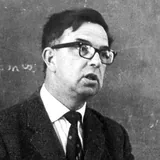
Nikolai Krogius was a Soviet grandmaster from Saratov who played in seven USSR Championship finals between 1958 and 1971 and won the Chigorin Memorial at Sochi in 1964. He was also a psychologist with a doctorate in the field, and he brought that training to chess as an author and as a second to Boris Spassky in the world championship matches of 1969 and 1972. He later ran the chess department of the Soviet sports committee, served as a FIDE Vice-President, shared first place at the 1993 World Senior Championship, and spent his last years in New York.
Saratov
Krogius was born in Saratov on 22 July 1930. His father, Vladimir Brennert, was an artist, and his mother, Elena Krogius, taught chemistry at Saratov University. His grandfather August Krogius was one of the founders of Russian typhlopsychology, the psychology of the blind. He got his first chess set in September 1942, in exchange for tobacco, and was coached by Nikolai Aratovsky.
He won the Russian junior championship in 1948 and became a master in 1952. Boris Spassky's foreword to Krogius's first book, Chelovek v shakhmatakh (Man in Chess, 1967), describes him as a two-time champion of the Russian Federation. In 1953 he graduated from the philosophy faculty of Leningrad University. At the 1954 World Student Team Championship in Oslo he scored 7½/9 on board three, and the Soviet team took silver.
The Soviet finals
Krogius tried several times to qualify for the USSR Championship before he reached his first final, at Riga in 1958, at the age of 27. He scored 9½/18 there and tied for ninth place. In all he played seven finals between 1958 and 1971 and scored 67/135. In the 1959 final at Tbilisi he beat Paul Keres, who finished second in the Candidates tournament later that year.
His first international tournament, he wrote in Chelovek v shakhmatakh, was at Ploiești in Romania in 1957. At Varna in 1960 he tied for first with Nikola Padevsky. He became an International Master in 1963. In 1964 he took clear first at the Chigorin Memorial in Sochi with 11/15, and FIDE made him a grandmaster later that year. At the 1965 European Team Championship in Hamburg he won a board gold medal and a team gold medal.
“I remember how Fischer kept turning his head in annoyance, on finding himself in unaccustomed solitude at the board.”
“We have a world champion, and we don’t need another one.”
Tournaments at home and abroad
At Le Havre in 1966, his first individual tournament in Western Europe, Krogius shared second and third place behind Bent Larsen. In January 1967, at the USSR Championship in Tbilisi, he beat David Bronstein, and later that year he shared first place at Sochi with Boris Spassky, Alexander Zaitsev, Leonid Shamkovich and Vladimir Simagin. He won at Varna in 1969 ahead of Vlastimil Hort, and in 1970 he finished second in the Russian Championship at Kuibyshev behind Anatoly Karpov. His highest rating was 2575, in July 1971.
Psychology and Spassky
Krogius defended his candidate's dissertation in psychology in 1969 and his doctoral dissertation in 1980. From 1970 to 1980 he worked at Saratov University, where he headed the psychology department from 1978. His book Psychology in Chess appeared in English in 1976. In Psikhologiya shakhmatnogo tvorchestva (The Psychology of Chess Creativity, 1981) he treated knowing the opponent and knowing oneself as two inseparable parts of the same preparation. He also described residual images, pictures of an earlier position that stay in a player's mind, and traced the idea to two of his own games at the 1964/65 USSR Championship in Kiev: against Mikhail Tal he still counted on a pawn on c7 that had already left the square, and against Leonid Stein he calculated as if Stein's queen were still on c1.
He was on Boris Spassky's team for the 1969 world championship match against Tigran Petrosian, which Spassky won, and again for the 1972 match against Bobby Fischer in Reykjavík. He told the story of that work in Boris Spassky (2000), a two-volume biography written with A. N. Golubev and L. E. Gutsait. One autumn evening in 1968 Spassky telephoned him in Saratov and asked him to help prepare for Petrosian, and Krogius agreed at once. For several months Krogius, Spassky and Igor Bondarevsky, Spassky's trainer since 1961, lived at a hotel on the Volga at Dubna, near Moscow, studying Petrosian's games and Spassky's own for four to six hours a day.
During the match the fourteenth game was adjourned after Spassky played 43...Ke4 almost without thinking. That night at Krasnaya Pakhra, Krogius and Bondarevsky first judged the position a draw; then, as Bondarevsky took out a cigarette, both saw 44.f3+, and they spent the rest of the night looking for traps. To spare Spassky's nerves they told him Petrosian had probably not sealed that move. Petrosian had, but 48...Bf1, prepared overnight, caught him out and the game was drawn. After winning the title, Spassky told the press that Krogius, a professional psychologist, had given him much useful advice and helped him stay calm and control his emotions at the moments of greatest tension.
Reykjavík 1972
For the 1972 match Krogius was a docent in the psychology department at Saratov University, the only member of Spassky's group who was not a professional chess player, and the USSR Sports Committee obtained eight months' leave for him from the Ministry of Higher Education. In Reykjavík he represented the USSR Chess Federation on the match committee. On the night of 14 July the committee voted three to one to uphold the chief arbiter Lothar Schmid's decision to score the second game, which Fischer had not come to play, as a loss for Fischer; Fred Cramer of the United States federation voted against.
In My Great Predecessors Part IV, Kasparov quotes Krogius's recollection of the contest over arriving at the board. Fischer had usually arrived four or five minutes late. Before the seventh game, Krogius wrote in Boris Spassky, he and Spassky agreed that Spassky would answer in kind: Spassky arrived on time but stayed in his rest room behind the stage. Fischer came out three minutes after the clock was started and found himself alone at the board until Spassky appeared a couple of minutes later. Krogius remembered Fischer looking round in annoyance and said that, after this, Fischer stopped turning up late on purpose.
After the match Krogius talked with Fischer several times, mostly in Russian, at receptions given by the President of Iceland, at the American cultural center and by the Soviet ambassador. When Krogius set out his views on why players make mistakes, Fischer summed up that mistakes are often made when a player persists in his delusions. Krogius asked whether that thought had guided his preparation, since a new Fischer had played in Reykjavík. Fischer only smiled.
Administrator
From 1981 to 1989 Krogius headed the chess department of the USSR State Sports Committee, and from 1981 to 1990 he was a vice-president of the USSR Chess Federation. He joined the FIDE Executive Board in 1982 and was a FIDE Vice-President from 1986 to 1990. He received the Order of the Badge of Honor in 1981 and became an International Arbiter in 1985. He captained the Soviet team in the 1984 match against the Rest of the World in London, and in 1990 he led Anatoly Karpov's delegation at the world championship match against Garry Kasparov.
Kasparov recalled a call from Krogius to Baku during the 1981 Karpov–Korchnoi match at Merano. After Korchnoi cut Karpov's lead to 4–2, Krogius sought new ideas for White against the Open Variation of the Ruy Lopez.
In My Great Predecessors Part V, Kasparov also describes a conversation early in 1982. He wanted to accept an invitation to Bugojno, but Krogius suggested Dortmund, a tournament four categories lower. Kasparov reports Krogius's reply when asked why: "We have a world champion, and we don’t need another one." Kasparov eventually obtained permission to play at Bugojno after appealing to senior officials and the Azerbaijani leader Geidar Aliev.
Senior chess and New York
In his sixties Krogius returned to tournament play. He tied for third to sixth place at the 1991 World Senior Championship with 8/11, and at Bad Wildbad in 1993 he shared first place with 8½/11; the title went to Mark Taimanov on tiebreak. In 1998 he moved to Staten Island, New York. With Lev Alburt he wrote Just the Facts!, an endgame book that won an award from the Chess Journalists of America, and he published memoirs in 2011 and 2014. He was married to Irina, and they had two daughters.
Legacy
Krogius died in New York City on 14 July 2022, eight days before his 92nd birthday. He was among the first to make sports psychology a profession and apply it to chess, and he did so while playing seven Soviet finals, winning tournaments at Sochi and Varna, and working in Spassky's camp in two world championship matches.
Books
Books Nikolai Krogius wrote, co-wrote, edited, or contributed to. Translations and reprints are grouped under the same work.
-
Человек в шахматах
Author
-
Память и внимание шахматиста
Coauthor — Yakov Rokhlin, Nikolai Krogius
-
О психологии шахматного творчества
Author
-
Законы эндшпиля / Notes on the Endgame
Author
-
Возрастные различия интеллектуальных способностей
Author
-
Психологическая подготовка шахматиста
Author
-
Psychology in Chess
Author
-
Личность в конфликте
Author
-
Энциклопедия середины игры
Contributor — collective middle-game reference
-
Психология шахматного творчества
Author
-
Шахматы — творчества и воспитания
Author
-
Marshall-Angriff
Coauthor — Nikolai Krogius, Andrei Matsukevich
-
El ajedrez paso a paso: Curso general de ajedrez / Schach für Aufsteiger: 33 Lektionen
Author
-
Winning Chess Endgames / Just the Facts!
Coauthor — Lev Alburt, Nikolai Krogius
-
Борис Спасский, Volume 1
Coauthor — Nikolai Krogius, Alexander Golubev, Leonid Guttsait
-
Борис Спасский, Volume 2
Coauthor — Nikolai Krogius, Alexander Golubev, Leonid Guttsait
-
Шахматы: Игра и жизнь
Author
-
Записки гроссмейстера
Author