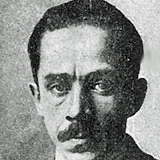
Peter Romanovsky finished second to Alekhine in the first Soviet championship in 1920, won the USSR Championship in 1923 and shared it with Fedir Bohatyrchuk in 1927. He was one of the founders of the Soviet chess school as a player, organizer, teacher and author: he started the first Soviet chess periodical, helped lead Leningrad chess for two decades and trained a generation of masters. His Mittelspiel of 1929, rebuilt after the siege of Leningrad as two volumes on planning and combination, was later published in English as Chess Middlegame Planning, Chess Middlegame Combinations and Soviet Middlegame Technique. He was the first Soviet chess player named Honored Master of Sport, and FIDE made him an International Master in 1950 and an International Arbiter in 1951.
A Tver family and a 1909 upset
Romanovsky was born on 17 July 1892 (29 July New Style). Most reference works give Saint Petersburg as his birthplace, but the church certificate published by the historian Alexander Kentler shows that he was baptized as Peter on 25 August in the Church of the Nativity of the Mother of God in Tver. Kentler thinks he was most likely born in the village of Stary Pogost in Tver district, where his father, Arseny Yakovlevich Romanovsky, had served as a priest before studying law in Saint Petersburg; Peter was the seventh of eight sons. When he entered the Saint Petersburg Polytechnic Institute in 1911, Romanovsky himself gave Tver as his place of birth.
Chess ran in the family. His older brother Yevgeny was a second-category player and Alexander a first-category one. In 1908 Peter replaced the ill Alexander in a tournament at the St Petersburg Chess Club and, playing with a clock for the first time, beat the master Freiman. At the 1909 All-Russian Amateur Tournament, won by Alekhine, he tied for 10th and 11th places, and Kotov and Yudovich write that his victory over Alekhine "attracted general attention". Emanuel Lasker annotated his win over Apollon Viakhirev from the same event in the tournament book.
In 1913 Romanovsky became the student champion of Saint Petersburg, which earned him a place at the German Chess Federation congress in Mannheim in the summer of 1914.
Mannheim and internment
At Mannheim he played in the Hauptturnier B, one of the subsidiary events, and was tied for second to fourth places when the outbreak of the First World War stopped play on 1 August. His account of Alekhine's arrival at Mannheim, two hours before the first round and openly planning a title match with Capablanca, is quoted in Kasparov's My Great Predecessors.
Romanovsky was one of eleven Russian players interned by Germany after the tournament. The internees played their own tournaments: he tied for fourth and fifth at Baden-Baden in 1914, took third at Triberg 1914/15 and tied for fifth and sixth at Triberg 1915. In Petrograd, Alekhine gave charity simultaneous exhibitions for Romanovsky and the colleagues still held at Triberg, including one at the Polytechnic Institute on 8 December 1914. Romanovsky was released in the spring of 1915, and on 1 April he applied to the Institute to be reinstated as a student, citing his captivity as the reason for his absence.
“‘But the world champion is Lasker, not Capablanca,’ I objected. ‘But soon it will be Capablanca,’ Alekhine replied.”
“This game ... is a wonderful work of chess art. In it Reshevsky would seem to have embodied all that has been put forward in recent years by modern chess.”
“My better judgment warned me against going for the gambit line. However, a humble refusal to accept the sacrifice would be akin to a psychological surrender that could weigh heavily on my follow-up play.”
“a flank attack needs to be prepared by conquering the centre or solidly fortifying it; and the foundations for a middlegame plan must already be laid in the opening.”
“Peter Romanovsky wasn’t just one of the founders of the Soviet chess school: he was its cornerstone.”
“Romanovsky is an artist and seeker. He strives, in his games, to prove or refute one or another strategic idea, to create interesting and beautiful combinations.”
“Romanovsky’s Middle Game is a definitive work which has played a great part in improving the standard of Soviet play; it has been translated into many languages.”
“the true value of Romanovsky was always based on his insightful words and that remains the case today.”
Champion of a new country
At the All-Russian Olympiad in Moscow in October 1920, the first Soviet championship, Romanovsky scored 11 out of 15 and finished second, a point behind Alekhine, and he was promoted to master. In 1921 he founded the first Soviet chess periodical, the bulletin of the Petrograd commune's chess circle. In July 1923 he won the second USSR Championship in Petrograd, and in 1924 he was second to Efim Bogoljubov in the third.
In 1925 he tied for first in a Leningrad tournament of ten with Bogoljubov and nine Leningrad players, and shared first in the Leningrad Championship with Grigory Levenfish, Alexander Ilyin-Zhenevsky and Ilya Rabinovich. At the Moscow international tournament of November and December 1925 he scored 11½ out of 20 and tied for seventh with Richard Réti, ahead of Akiba Rubinstein and Rudolf Spielmann. He had been invited to Baden-Baden the same year, but Ilya Rabinovich went in his place, and Romanovsky never played abroad in the Soviet period.
In 1927 he won the Leningrad tournament of the six strongest local players, drawing only two of ten games and finishing ahead of the young Mikhail Botvinnik. That autumn, at the fifth USSR Championship in the Hall of Columns in Moscow, he and Bohatyrchuk tied with 14½ out of 20 and were declared co-champions because a playoff could not be scheduled.
Leningrad master, teacher and author
From 1918 to 1939 Romanovsky was one of the leaders of the Leningrad chess section, and he combined tournament play and teaching with work as a consultant in Leningrad banks. In 1928 he and Levenfish published a book on the Alekhine–Capablanca world championship match, and in 1929 came Mittelspiel, his guide to combination and planning in the middlegame, followed by books on openings, chess ideas in practice, chess creativity and teaching method. In June 1934 he was among the first Soviet athletes named Honored Master of Sport, the first chess player to receive the title.
He divided first place with Botvinnik in a 1933 tournament of Leningrad masters. At Leningrad 1934, with Max Euwe and Hans Kmoch, he tied for second with Nikolai Riumin, half a point behind Botvinnik, and at the Moscow international tournament of 1935 he shared eighth to tenth places, beating the Women's World Champion Vera Menchik.
His pupils included Vladimir Alatortsev, Georgy Lisitsin, Grigory Ravinsky, Vitaly Chekhover and Leonid Savitsky, and he worked with the women players Lyudmila Rudenko, Kira Zvorykina and Valentina Borisenko and with the future trainer Vladimir Zak. His biographer Sergei Tkachenko writes that even Botvinnik matured and grew stronger with his help. In 1939 the strain of work brought on a heart attack.
The siege and the Moscow years
The siege of Leningrad destroyed his family. Between 6 and 26 January 1942 his companion Agnessa Garmsen and his four daughters, Svetlana, Anya, Rogneda and Kira, aged 6 to 18, died, and his brother Yevgeny, who lived in the same apartment, died that May. In a notebook entry of 31 January Romanovsky wrote that work was his only way to go on living and that he was beginning a new book, Selected Games. The revised middlegame manuscript he had just finished was lost.
In March 1942 he was evacuated, taken off the train at Aleksandrov and hospitalized, and then went to his brother Alexander in Ivanovo, where he played in the city championship. In 1943 he moved to Moscow. Near the end of the war he married again, and his son Viktor was born in February 1945. From 1947 to 1957 he taught chess at Moscow State University, and Selected Games appeared in 1954.
FIDE awarded him the International Master title in 1950 and the International Arbiter title in 1951. He was made an Honored Coach of the USSR in 1956, received the Order of the Red Banner of Labor in 1957 and served on the presidium of the USSR Chess Federation. In January and February 1960 he was chief arbiter of the 27th USSR Championship in Leningrad. He rewrote his lost middlegame book as Mittelspiel: Plan (1960), followed by Mittelspiel: Combination (1963). He died in Moscow on 1 March 1964.
Legacy
Romanovsky's results put him among the leading Soviet players of the 1920s, and as an organizer, teacher and writer he helped build the Soviet chess school; his biographer Sergei Tkachenko calls him its cornerstone. Kotov and Yudovich called his Mittelspiel one of the best books in chess literature and a guide for many Soviet masters. His middlegame volumes and his Selected Games have all been published in English translation.
Books
Books Peter Romanovsky wrote, co-wrote, edited, or contributed to. Translations and reprints are grouped under the same work.
-
Матч Алехин – Капабланка на первенство мира (Alekhine–Capablanca World Championship Match)
Coauthor — Grigory Levenfish
-
Миттельшпиль: Комбинация и план в шахматной партии (Middlegame: Combination and Plan in the Chess Game)
Author
-
Что каждый должен знать о дебюте (What Everyone Should Know about the Opening)
Author
-
Шахматные идеи на практике (Chess Ideas in Practice)
Author
-
Пути шахматного творчества (Paths of Chess Creativity)
Author
-
Вопросы шахматной методики (Questions of Chess Methodology: Programs for Chess Schools)
Author
-
Chess in Russia: The Players and Their Games (Annotated)
Author — forewords by Mikhail Botvinnik and C. H. O'D. Alexander
-
Избранные партии (Selected Games)
Author
-
Романтизм в шахматном искусстве (Romanticism in the Art of Chess)
Author
-
Миттельшпиль: План (Middlegame: Planning; in English as Chess Middlegame Planning and in Soviet Middlegame Technique)
Author
-
Миттельшпиль: Комбинация (Middlegame: Combination; in English as Chess Middlegame Combinations and in Soviet Middlegame Technique)
Author