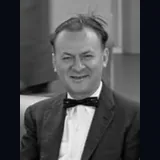
For a few years in the late 1930s Reuben Fine was, on results, one of the two or three strongest players in the world: a Bronx prodigy who beat reigning and former World Champions in Europe and shared first prize at one of the strongest tournaments ever held. Then, with the world title arguably within reach, he stopped playing seriously and never really came back. He became a psychologist, a teacher and the author of books that outlasted his playing career, and chess players have wondered ever since what he might have done. He is American chess's great what-if: the player who could have been champion and chose not to try.
A Bronx prodigy
Reuben Fine was born in the Bronx in 1914 to Russian-Jewish immigrant parents and was raised by his mother alone from the age of two. An uncle taught him the moves when he was eight, and the game took hold quickly. He sharpened it at the Marshall and Manhattan chess clubs, the twin engines of New York chess, and at the City College of New York he captained the team to a national collegiate title in 1931. His degree is usually dated 1932, but in Lessons from My Games (1958; published in Spanish as Una pasión por el ajedrez, 2025) he dated it to 1933, saying he graduated shortly after winning a place on the American team for the Folkestone Olympiad.
He made his name quickly. At seventeen he won the first of his U.S. Open Championships at Minneapolis in 1932, and he went on to win all seven U.S. Opens he ever entered: 1932, 1933, 1934, 1935, 1939, 1940 and 1941. The one prize he never won was the U.S. Championship itself, where time and again he finished just behind his great rival Samuel Reshevsky; in four attempts at the national title he scored better than seventy-eight percent and still never took it.
The world's stage
Kasparov recounts in My Great Predecessors, Part IV that Fine began learning German after Pasadena 1932 so that he could read Tarrasch, Réti, and Nimzowitsch in the original. His study of their books accompanied his move into international chess.
In the second half of the 1930s Fine carried American chess onto the European stage and won there, repeatedly, against the strongest opposition alive. He won Hastings 1935–36 with 7½/9, a point ahead of Salo Flohr, and in 1937 he visited the Soviet Union as an official guest and won the tournaments at both Moscow and Leningrad, whose fields, he recalled in Lessons from My Games, included the strongest Soviet players of the day except Botvinnik. At the Stockholm Olympiad of 1937 he took the board-two gold medal with eleven and a half points from fifteen, helping the United States win the team gold.
Holland was his base in these years. He learned Dutch and married there, and in the autumn of 1936 Euwe asked him to act as his second for the return match with Alekhine, helping to prepare openings and studying Alekhine's style. In 1937 English chess figures asked whether he would become chess editor of the London Times. He agreed, but the offer was never made official. The only explanation he heard, which he said he could not vouch for, was that the paper had briefly decided not to take on any more Jews.
Across three Olympiads, 1933, 1935 and 1937, he won five medals, four of them gold, with a strong personal score. By the late 1930s the retrospective rating tables put him among the world's top handful of players, an American who could face Alekhine, Euwe, Keres and Botvinnik and more than hold his own.
“Dissatisfied with this arrangement and the general tenor of the event, I withdrew.”
“Yet even masters have had to learn practically everything from bitter experience because the standard material available has been scattered in a thousand different, and often inaccessible, places.”
“Numerous new variations have appeared, but the ideas themselves have remained remarkably constant.”
“Chess is, fortunately, not a finished science, but a steadily growing organism.”
“Several years ago the writer met a prominent clergyman at a social gathering. As soon as he heard that I was a psychoanalyst, he asked: “What denomination?””
“A loss for chess — and a draw, at best, for psychoanalysis.”
“Grandmaster Reuben Fine’s classic book on the endgame was my compass when I started to play chess and continued to guide me after I became a master.”
“From my own experience I know that to write such a book would take years.”
AVRO 1938
Fine's high-water mark came at the AVRO tournament in the Netherlands in 1938 — a double round-robin gathering of the eight strongest players in the world, staged in part to identify a challenger for World Champion Alexander Alekhine. The field was the most formidable ever assembled to that point: Alekhine, Capablanca, Euwe, Botvinnik, Keres, Reshevsky, Flohr and Fine.
By the spring of 1938, he wrote, he had tired of the round of tournaments and decided to go home and finish his studies. He even asked the AVRO organizers to release him from his contract; they refused, and he believed the decision to quit freed him from some of the excess caution that had held him back before.
Fine started as if the tournament were already his, scoring five wins and a draw in his first six games, and he finished tied for first with Paul Keres on eight and a half points from fourteen. Along the way he beat the reigning World Champion Alekhine in both their games, at the very event meant to find his challenger. On results alone, Fine had earned a shot at a title match. The war, and what came after it, meant he never got one.
The tournament also brought Fine into discussions about how the championship should be organized. Botvinnik recalled, in the account reproduced in My Great Predecessors, Part I, that the leading players proposed a club to approve title-match rules. Fine and Euwe were asked to prepare and circulate the draft. The war ended the initiative.
The crown declined
When Alekhine died in 1946 still holding the title, FIDE organized a tournament of the world's best to fill the vacancy. As an AVRO co-winner Fine was invited, and he turned it down. In Lessons from My Games he gave his own account of the background: he, Botvinnik, Euwe, Keres, Reshevsky and Smyslov had drawn up an agreement to play a title tournament in 1947, when he was still willing to take part, but the Soviet players withdrew shortly before it was due to begin. By the time it was revived for 1948 he had taken up his new profession as a psychoanalyst and, he wrote, could not play. His stated reason was the psychology doctorate he was finishing at the University of Southern California, but his later writing made clear he was unhappy with more than that: with an American chess federation he found indifferent to its masters, with a rescheduled event split between Holland and the Soviet Union, and with what he suspected the Soviet players might arrange among themselves. “Dissatisfied with this arrangement and the general tenor of the event,” he wrote, “I withdrew.”
It was not a passing mood. He declined the 1950 Candidates Tournament as well, and after the war he never again entered serious top-flight competition with any regularity. FIDE awarded him the International Grandmaster title in 1950, in the first list of official titles, but by then the player it honoured had effectively already gone. His last major event was the Wertheim Memorial in New York in 1951, where he placed fourth — a quiet coda to a career that ended not in defeat but in departure.
The other board
Fine gave the rest of his life to the mind off the board. During the Second World War he had put his analytical gifts to work for the U.S. Navy, calculating the probabilities of where German U-boats might surface in the Atlantic and serving as a translator. Afterward he completed his doctorate and became a psychoanalyst, professor and author, teaching at City College, Amsterdam, Florence and elsewhere, founding his own Creative Living Center, and publishing some fourteen books on psychology — among them a critical re-evaluation of Freud and a full history of psychoanalysis. In the preface to Freud: A Critical Re-Evaluation of His Theories (1962) he wrote that “basically today we are all Freudians, no matter what name we are called.”
Fine continued to teach through his books. As the first world-class player to edit Modern Chess Openings, he transformed that standard text; The Ideas Behind the Chess Openings (1943) explained the plans behind the variations; and Basic Chess Endings (1941) became one of the most respected endgame manuals ever written. In the latter's original introduction, he explained that even masters had learned endings through bitter experience because the material was scattered and often inaccessible. He collected typical positions and practical rules into one reference, dedicated to the memory of Emanuel Lasker.
Yuri Averbakh's foreword to Pal Benko's 2003 revision of Basic Chess Endings recalls meeting Fine during the USA–USSR match in New York in 1954. Fine told him he had found the work so fascinating that he finished the book in four months. When they met again at the Manhattan Chess Club early in the 1990s, Averbakh asked whether he intended to prepare a new edition. “Yes, it is my dream,” Fine replied, but he added that he did not know whether he had enough time. Benko eventually revised the book and converted it to algebraic notation, with the conversion carried out by Laszlo Lovass.
Fine did revise his opening book. In the preface dated March 1989, included in the 1990 algebraic edition of The Ideas Behind the Chess Openings, he described rechecking the variations against the Encyclopaedia of Chess Openings and other reference works. “Numerous new variations have appeared, but the ideas themselves have remained remarkably constant.” He also converted this book to algebraic notation. His continuing emphasis was on understanding what a move was trying to accomplish.
He also brought his two disciplines together in The Psychology of the Chess Player, a Freudian reading of the masters that the chess and psychology worlds received with equal unease.
Legacy
Fine died in New York on March 26, 1993. He was inducted into the U.S. Chess Hall of Fame in 1986 as a member of its charter class, and his books long outlived his playing days: Basic Chess Endings, the 1941 reference that generations learned from, is still consulted more than eighty years later. He quit near his peak, leaving a record against World Champions that few Americans have matched and a question no one can answer: what might he have done if he had kept playing instead of turning to psychoanalysis? In 1963 he played a handful of friendly games against the young Bobby Fischer, one of them good enough that Fischer included it in My 60 Memorable Games, a brief late glimpse of a talent chess players always wished had stayed.
Books
Books Reuben Fine wrote, co-wrote, edited, or contributed to. Translations and reprints are grouped under the same work.
-
Basic Chess Endings
Author — later revised by Pal Benko
-
Bobby Fischer’s Conquest of the World’s Chess Championship
Author
-
Chess Marches On
Author
-
Chess the Easy Way
Author
-
Dr. Lasker’s Chess Career
Coauthor — Fred Reinfeld
-
Freud: A Critical Re-evaluation of His Theories
Author
-
Lessons from My Games / A Passion for Chess
Author
-
Love and Work: The Value System of Psychoanalysis
Author
-
The Middlegame in Chess
Author
-
Modern Chess Openings, Sixth Edition
Editor and reviser
-
Narcissism, the Self, and Society
Author
-
Practical Chess Openings
Author
-
Psychoanalytic Psychology
Author
-
Schaaksleutel
Coauthor — Salo Landau
-
The Development of Freud’s Thought
Author
-
The Forgotten Man: Understanding the Male Psyche
Author
-
The Healing of the Mind: The Technique of Psychoanalytic Psychotherapy
Author
-
The History of Psychoanalysis
Author
-
The Ideas Behind the Chess Openings
Author
-
The Intimate Hour
Author
-
The Logic of Psychology: A Dynamic Approach
Author
-
The Meaning of Love in Human Experience
Author
-
The Psychoanalytic Vision
Author
-
The Psychology of the Chess Player
Author
-
The Teenage Chess Book
Author — assisted by Benjamin Fine
-
The World’s a Chessboard
Author
-
The World’s Great Chess Games
Author
-
Troubled Men: The Psychology, Emotional Conflicts, and Therapy of Men
Author
-
Troubled Women: Roles and Realities in Psychoanalytic Perspective
Author