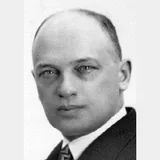
Savielly Tartakower never won the world title, and he would have been the first to joke about it. He was a doctor of law who served in two world wars, a polyglot who gambled away his winnings, and the wittiest man ever to sit at a chessboard. When Réti, Nimzowitsch and their allies threw out the old rulebook, he gave the movement its name, hypermodern, and wrote it all down in prose so quotable that players still repeat his lines a century later. He gave the game new openings, new books, and a way of laughing at its cruelties. “Erro, ergo sum,” he said: I err, therefore I am.
An Austrian boy in a Russian city
Tartakower was born in 1887 in Rostov-on-Don, the son of well-to-do Austrian Jews who ran a textile business in the Russian port city. His parents had converted to Christianity shortly before his birth; he was baptised, and stayed a Protestant, at least on paper, all his life. That is how his fellow master Hans Kmoch told it in a memoir printed in Russian in the 2016 collection Savely Tartakover: Shakhmatnye partii, okonchaniya, stat'i. His was a comfortable, cultured childhood — until 1911, when both his parents were killed during a break-in at their home. His brother, also a student in Vienna, was killed on the Russian front early in the First World War. The only relative left was a sister in Russia, whom Tartakower saw just once, as a spectator at the Moscow tournament of 1925.
He finished school in Geneva in 1904 and went on to read law at the University of Vienna. In an article reprinted in the same collection he recalled that his parents had wanted him to study medicine, and that he chose law because it called above all for a good memory, which left time for chess. He took his doctorate in 1909. At the oral examination he was asked how the Jewish community was administered, a question his crib notes had not covered, and could only reply that it was administered; the examiner in criminal law asked whether he was the well-known chess master. Kmoch remembered him speaking Russian, German and French perfectly, reading Latin and Greek, and translating poetry as a secret hobby — though, in one of the small ironies of his life, he never learned a word of Polish, even after Poland became the country he would represent before the world. In 1928 he published in Paris Svetloe unynie (“Bright Melancholy”), a playful anthology of “lunar poets”. His name appears nowhere in it: the title page credits only a translator from the lunar dialects, S. Revokatrat, which is Tartakover spelled backwards, and the poems are signed with the reversed names of real writers, among them Gogol, Pushkin, Bunin and Čapek.
The hypermodern revolution
In the years after the First World War, a group of younger masters set out to overturn classical chess. Where the old school taught that the centre must be occupied with pawns, the new school argued it could instead be controlled from a distance — invited forward, then attacked and undermined. Tartakower was its chronicler more than its inventor. His Die hypermoderne Schachpartie (“The Hypermodern Game of Chess”), published in 1924, gave the movement the name that stuck and taught a generation to think in the new style. In the book itself he spoke of a neo-romantic school and named Réti, Breyer, Alekhine and Bogoljubow as the men who had overturned the old thinking. Réti had once been his own chess pupil: in the same book Tartakower recalled being asked, around 1908, about the prospects of his seventeen-year-old pupil, and predicting that Réti would become the best player in the world without becoming world champion. Garry Kasparov, in My Great Predecessors, calls Nimzowitsch the pioneer of hypermodernism and Tartakower its “witty populariser”.
He was always inventing openings. At the Barcelona tournament of 1929 the organizers asked him to come up with a variation honoring the region's chess heritage; the system he produced, 1.d4 Nf6 2.c4 e6 3.g3, is still played at the very highest level as the Catalan Opening. Five years earlier, at the great New York tournament of 1924, he opened his game against Géza Maróczy with 1.b4. The story usually told is that he did so the morning after admiring an orangutan at the city zoo, and named the move the Orangutan. In Die hypermoderne Schachpartie (1924) he credited the name Orang-Utan to an unnamed chess zoologist, who apparently had in mind the pawn's climb from b2 to b4 and b5. The move was not new to him either: he had already played it against Réti in the fifth game of their 1919 match in Vienna. The solid Tartakower Defense of the Queen's Gambit Declined still carries his name, as do variations in the Dutch and the Caro–Kann. He named other men's openings too: in 500 Master Games of Chess, written with Julius du Mont, the Slav Defence is “Slav (vide Tartakower)”, before the authors point out that Polerio had given it in 1590.
“The winner of the game is the player who makes the next-to-last mistake.”
“Rubinstein is the rook ending of a chess game, begun by the gods a thousand years ago.”
“… it is not the one who plays well who wins, but simply the one who plays better!”
“It's always better to sacrifice your opponent's men.”
“Dr. Tartakower is far and away the most cultured and the wittiest of all the chess masters I have ever met.”
“The Polish team is captained and led by Dr S. Tartakower, a master with profound knowledge and great imagination. Luckily for the others, the Polish team has only one Tartakower.”
“Without such people, the chess world would not be what it is. It is not rules and regulations that make up the essence of the chess community, but individuals.”
Tournaments and the flag of Poland
Tartakower was a fixture of the elite circuit for four decades. At London in 1922 he was one of the eight leading masters who signed Capablanca's “London agreement” on the rules for world championship matches. He won the Hastings congresses of 1926/27 and 1927/28, shared first place with Nimzowitsch at London 1927, and took the strong Liège tournament of 1930 two points ahead of Mir Sultan Khan. In a 1930 poll of chess journalists by the French magazine Loto, which Kasparov reprints, he was voted tenth in the world. He was twice champion of Poland — at Warsaw in 1935 and Jurata in 1937 — and, as a naturalised Frenchman in his sixties, champion of France at Paris in 1953.
His deepest loyalty on the board was to the Polish national team. He played in six Chess Olympiads for Poland between 1930 and 1939, captaining and training the squad and helping organise the 1935 Olympiad in Warsaw. At Hamburg 1930 he played second board behind Akiba Rubinstein, scoring nine wins, six draws and one loss as Poland took the gold medal; at Prague 1931 he won the individual gold medal on board two. When Poland's young Miguel Najdorf rose to greatness, he never stopped calling Tartakower “my teacher,” and in his own notes, quoted by Kasparov, he said what he had learned: “I followed the advice of my mentor Tartakower, who taught me to proceed on the basis of common sense and a general evaluation, and not to be too carried away by the calculation of variations.” Their 1935 match went to the pupil, 3–2. Watching the 1939 Buenos Aires Olympiad, José Raúl Capablanca wrote of the Polish captain as “a master with profound knowledge and great imagination” — adding, drily, that luckily for everyone else the team had only one Tartakower.
The soldier and the bohemian
Twice the century called Tartakower away from the board to fight in its wars. In the First World War he went to the Russian front as a lieutenant in a Viennese infantry regiment. Kmoch recalled that he volunteered for the riskiest operations for extra pay, and that once, wounded with a bullet lodged below his ribs, he walked a long way to the first-aid post. In 1939 the Second World War broke out while he was captaining Poland at the Buenos Aires Olympiad. He and Alekhine called for a boycott of the German team in protest at the attack on Poland, and the Polish and French teams refused to play the Germans. Najdorf and Frydman stayed in Argentina; Tartakower went back to Europe and joined Charles de Gaulle's Free French forces, serving under the cover name Lieutenant Cartier.
Off the battlefield he lived like a character from a novel. He was a compulsive gambler and was, by the end, often broke. Later accounts put his prize money on the roulette tables; Kmoch remembered cards — tarock with the bankers of the Vienna Chess Club, écarté in riskier company — and that he usually lost. At Munich in 1909, he admitted, he spent the evenings at daily poker games, then lost the last-round game and first prize after booking a business appointment for the hour he expected the game to be over. Yet he paid every debt to the last cent, even to card sharps. When rich admirers once staged a quick tournament with a large first prize meant for him, and docked the real winner, Sándor Takács, a point to hand it over, Tartakower bowed, took the banknotes and tore them up. In Paris he and Andor Lilienthal were offered good money by a circus lion-tamer to play an exhibition game in a lion's cage; according to Lilienthal, as Kasparov tells it, they declined for fear that the lion “might interpret the chess code in his own way.”
He was deeply superstitious, and chess folklore remembers the battered old hat he would produce only for the final round of a tournament — where, the story goes, he always seemed to win. Colleagues nicknamed him “Tartacaviar.” When Capablanca told him after a hard-fought draw that his play was “lacking in solidity,” Tartakower shot back: “That is my saving grace.” By his own account, on the eve of Nottingham 1936 he was reported drowned when a ship from Holland went down in a storm. He had travelled another way, walked in with twenty minutes gone on his clock, and drew with Capablanca, who had expected a free day.
The writer and the wit
If Tartakower the player belongs to chess history, Tartakower the writer belongs to literature. He was among the finest chess journalists of his age and the author of books that have never gone out of print: the Bréviaire des Échecs (“A Breviary of Chess”), the two great anthologies 500 Master Games of Chess and 100 Master Games of Modern Chess compiled with Julius du Mont, and his own My Best Games of Chess, 1905–1954. Emanuel Lasker, Kasparov records, called him “the Homer of chess”. Kmoch said he could write for forty-eight hours without a break. At Baden-Baden in 1925 he worked through the night on an article until the porter knocked at eight to announce breakfast, then sat down at nine with Black against Akiba Rubinstein and won.
His verdicts on his rivals had the same edge. After Baden-Baden 1925 he wrote that “Capablanca has the title, Lasker has the results, but only Alekhine has the style of a real world champion.” In Die hypermoderne Schachpartie he told how, when he played 3.c3 in the Ponziani against Milan Vidmar in one of their matches, Vidmar remarked that luckily chess also had better moves, and he corrected him: luckily it also had worse ones. He gave games nicknames, among them the “Polish immortal” for an early miniature of Najdorf's. In 1945 he proposed the match between the Soviet Union and the Rest of the World that was finally played in Belgrade in 1970.
He set out his own approach to the game in Uroki shakhmatnoy strategii (“Lessons of Chess Strategy”), a short book published in Leningrad in 1927 in an authorised Russian translation from his German. A chessplayer's real aim, he argued there, is to win, and the search for truth comes second, so strategy should put the will first. On that view there were no objectively better or worse positions: the player's talent shapes the character of the position, and chess should be played in that spirit and never as dull arithmetic.
But it is his sentences that survive best — the “Tartakoverisms” that every chessplayer eventually learns by heart. “The winner of the game is the player who makes the next-to-last mistake.” “An isolated pawn spreads gloom all over the chessboard.” “The blunders are all there on the board, waiting to be made.” “It's always better to sacrifice your opponent's men.” The habit was already there in 1924: Die hypermoderne Schachpartie gives a page of his sayings about mistakes, among them that a game of chess is usually a fairy tale of 1001 mistakes, and that he made mistakes and therefore existed. The chess historian Harry Golombek, who knew them all, called him “far and away the most cultured and the wittiest of all the chess masters I have ever met.”
Legacy
Tartakower died in Paris in February 1956, seventeen days short of his sixty-ninth birthday, his prize money long since lost at the gaming tables. In the autumn of 1955 he had won one more first prize in Paris, and he was still writing: his last article was being prepared for print when news of his death arrived. He left behind no world title — but he left the openings that still bear his name, the books that still teach the game, and a body of wit that has outlived nearly everything else from his era. More than any champion, he gave chess its self-knowledge: the understanding that the game is, as he put it, “a fairy tale of 1001 blunders,” and that to play it at all is to err, and to err is simply to be human. Erro, ergo sum.
Books
Books Savielly Tartakower wrote, co-wrote, edited, or contributed to. Translations and reprints are grouped under the same work.
-
100 Master Games of Modern Chess
Coauthor — Julius du Mont
-
Bréviaire des échecs
Author
-
Führende Meister: 23 Schachindividualitäten
Author
-
Die hypermoderne Schachpartie / The Hypermodern Game of Chess
Author
-
Indisch: Aus der Werkstätte einer Eröffnung
Author
-
Moderne Schachstrategie: Ossip S. Bernstein’s Schach- und Lebenslaufbahn
Author
-
Neue Schachsterne: 30 Schachindividualitäten
Author
-
Das neuromantische Schach
Author
-
Het schaakspel
Author
-
Schachmethodik
Author
-
Die Zukunftseröffnung: Das Zukertort–Réti-System
Author
-
Шахматные партии, окончания, статьи (Games, Endings and Articles)
Author — posthumous collected writings
-
My Best Games of Chess 1905–1930 / Tartacover vous parle
Author
-
My Best Games of Chess 1931–1954
Author
-
Winke für die Schachstrategie
Author
-
500 Master Games of Chess, Volume I: Open Games
Coauthor — Julius du Mont
-
500 Master Games of Chess, Volume II: Semi-open and Closed Games
Coauthor — Julius du Mont
-
Светлое уныние: антология лунных поэтов
Author — Savielly Tartakower (S. Revokatrat pseudonym)