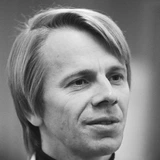
Ulf Andersson was Sweden's leading player through the 1970s and 1980s and, at his peak, fourth in the world. He was one of the most solid grandmasters of his time, and he drew a great many of his games against his peers. But he was renowned for winning endgames that looked unwinnable, above all rook endgames, often after very long games: for his opponents, an early exchange of pieces was the signal that the suffering was about to begin. He handed Anatoly Karpov his first defeat as World Champion. Then, in his forties, he turned to correspondence chess and went to the top of that rating list too.
Västerås
Andersson was born in Västerås on 27 June 1951. He won the Swedish Championship in 1969, and FIDE made him an International Master in 1970 and a grandmaster in 1972. Through the 1970s and 1980s he led the Swedish team at the Olympiads, and his best result there came at Buenos Aires in 1978, where he took third place on first board, behind Viktor Korchnoi and Orestes Rodríguez Vargas.
He won or shared first place at Göteborg 1971, Dortmund 1973, Camagüey 1974 and Cienfuegos 1975. In 1975, at Milan, he beat Anatoly Karpov with Black in a Sicilian, using the Hedgehog formation he had in part originated. It was the first game Karpov lost as World Champion.
The world's top ten
Andersson won at Belgrade 1977, Buenos Aires 1978 and Hastings 1978/79, the Phillips & Drew Kings tournament in London in 1980 (shared with Korchnoi and Tony Miles) and 1982 (shared with Karpov), Johannesburg 1981, Turin 1982 (also shared with Karpov), Wijk aan Zee 1983, Rome 1985 and 1986, and Reggio Emilia 1985/86, shared with Ljubomir Ljubojević and Oleg Romanishin. He was in the world's top ten from 1982 to 1984 and again from 1988 to 1991.
In 1983 he drew a six-game match with the former World Champion Mikhail Tal, and in 1984 he played top board for the Rest of the World in the second match against the Soviet Union. In 1996 he set a world record for a simultaneous exhibition, against 310 opponents, scoring 268 wins, 40 draws and two losses. The record stood until 2004.
“He is a very prophylactic player, seeing all kinds of tactics well in advance and avoiding pitfalls with great skill.”
“For most of us, if we're playing a peer and major exchanges occur, a quick draw is the likely result ... for Andersson ... exchanges [are] often not the prelude to a quick draw but the signal that it [is] time for his opponent to start suffering.”
The grinder
Andersson was a very solid positional player, and he drew a high proportion of his games against fellow grandmasters. What set him apart was the ending. He was famous for winning endgames that looked unwinnable, especially rook endings, and for winning them in very long games. He struggled to keep his nerves in check over the board, and often avoided lines that carried any risk of loss.
An early influence came from a loss. In an exhibition game at Siegen in 1970, just after the Olympiad, the nineteen-year-old Andersson faced Fischer's plan of Kh1, Rg1 and g4. Kasparov, in Garry Kasparov on My Great Predecessors, Part IV, credits the impression made by that game with Andersson's later work on the Hedgehog and the method of storing attacking force in a compact position (Game 83).
Correspondence
Andersson began playing correspondence chess in 1995, and it suited him: he had time to consider every nuance of a move, and his correspondence games were far more tactical than his over-the-board play. On his way to winning the Norwegian Postal Chess Federation's 50th-anniversary tournament he reached a provisional rating of 2821 on the 1998 list, the highest in ICCF history, and after earning an established rating in 2002 he reached the top of the official list.
He was one of the few players still competing without computer assistance in the early 2000s. As postal play gave way to faster email events, he found himself sending moves before he was satisfied with them, and he declined a wildcard for the correspondence world championship. He finished his last correspondence game in 2003, having lost only one official game in his correspondence career, to Hans-Marcus Elwert.
Legacy
Very few players have been as successful as Andersson at both over-the-board and correspondence chess. As of 2024 he was still the highest-rated inactive player on the ICCF rating list, and in his seventies he still played tournaments from time to time. His long, patient endgames remain a model of how to win a position that looks level.
Books
Books Ulf Andersson wrote, co-wrote, edited, or contributed to. Translations and reprints are grouped under the same work.
-
Learn from the Grandmasters
Contributor — own game annotations