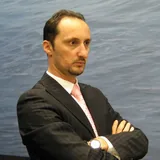
Veselin Topalov played chess the way a storm crosses open country — fast, loud, and without apology. Where a generation of champions prized control and the safety of the draw, the Bulgarian went the other way entirely, hurling pieces into the attack and daring the strongest players alive to survive him. In 2005 that fearlessness carried him to the world title in a single overwhelming fortnight at San Luis, and for years afterward he sat at or near the very top of the rankings. He was the great uncompromising fighter of his era — adored for the violence of his games, never once content with half a point when a whole one might be torn loose.
The boy from Ruse
Topalov was born in 1975 in Ruse, on the Bulgarian bank of the Danube, and learned the game from his father at the age of eight. The talent announced itself early: he won the World Under-14 Championship in Puerto Rico in 1989 and took silver at the World Under-16 in Singapore the following year. By 1992 he was a grandmaster.
At twelve he had begun working with Silvio Danailov, the manager who would steer — and at times inflame — his entire career. Together they built one of the most relentless competitive operations in chess, and Topalov rose through the 1990s into the company of Kasparov, Anand and Kramnik, marked everywhere he went by the sheer aggression of his play.
Kasparov records one of those early results in My Great Predecessors, Part V: at Las Palmas in December 1996, Topalov shared third place with Kramnik on 5/10, behind Kasparov and Anand.
San Luis: the world title
His moment came in the autumn of 2005. The FIDE World Championship at San Luis, Argentina, gathered eight of the world's best in a double round-robin, and Topalov simply ran them over. He scored an astonishing 6½ out of 7 in the first cycle, putting the title almost out of reach before the field had drawn breath, then steered safely home through the second half to win by a clear point and a half.
His performance rating for the event was around 2890 against a field averaging close to 2740, one of the most dominant results at a world championship in the modern era. Veselin Topalov was the FIDE World Champion, and for the next several years he would be, by rating, the strongest player in the world.
“I am definitely very aggressive. That is what everyone says, everyone knows it.”
“Perhaps there was a sign from above that Topalov would play a great game today.”
Elista and the schism
In 2006 came the match the chess world needed: a reunification contest at Elista against Vladimir Kramnik, holder of the Classical title, to merge the crowns that had been split since 1993. It should have been a celebration. Instead it became the most poisonous match in modern memory.
Danailov accused Kramnik of suspiciously frequent visits to his private bathroom; when the toilets were locked in response, Kramnik refused to play game five and forfeited it in protest. The dispute, known ever since as Toiletgate, overshadowed the chess. Topalov fought back from the forfeit to level the classical games at 6–6, but Kramnik won the rapid tiebreak 2½–1½ and the unified title. FIDE later reprimanded Topalov over the affair. He had lost the title, but not his appetite for a fight.
Sofia, and the road back
Topalov clawed his way back to a world-title match. By winning the 2009 Challenger Match against Gata Kamsky 4½–2½ he earned the right to challenge Viswanathan Anand, and in 2010 the two met in Sofia — Topalov playing, for once, on home soil. The match opened in chaos: a cloud of Icelandic volcanic ash grounded Europe's flights and forced Anand into a forty-hour journey by road to reach the board.
What followed was a heavyweight fight that ran the full distance. Topalov struck first; Anand struck back; the score stood level at 5½–5½ going into the twelfth and final game. There, pressing for the win as he always did, Topalov overreached — and Anand's counterattack decided it. He lost the match 6½–5½, but he had lost it the way he played everything: going forward, refusing the safe draw that might have taken him to a tiebreak.
The uncompromising style
Topalov played aggressive chess and said so. "I am definitely very aggressive," he said. "That is what everyone says, everyone knows it." He sacrificed material on instinct, trusting his calculation to justify it afterward, and his best games are among the most exciting of his era. His M-Tel Masters in Sofia, which he won three years running, was played under Sofia rules that banned short draws, which suited the man who hated them most.
He stayed near the top long after losing the title. He returned to world No. 1, won the 2013 FIDE Grand Prix to qualify for the Candidates, and as late as 2015 reached his personal-best rating of 2816 and won Norway Chess. He took board-one gold at the 2014 Olympiad in Tromsø. The titles came and went, but his style never changed.
Legacy
Veselin Topalov will be remembered as the great attacker of his generation — the FIDE World Champion of 2005 whose run at San Luis ranks among the most dominant in the title's history, and a player who twice climbed to world No. 1 on the strength of relentless, uncompromising chess. His career carried its share of storm, from the bitterness of Elista to the volcanic chaos of Sofia, but through all of it he never learned to play it safe. In an age that often rewarded caution, Topalov reminded everyone that chess, at its heart, is a fight.
Books
Books Veselin Topalov wrote, co-wrote, edited, or contributed to. Translations and reprints are grouped under the same work.
-
Topalov-Kramnik 2006 World Chess Championship: On the Edge in Elista
Coauthor — Zhivko Ginchev