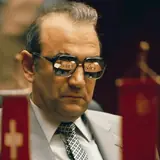
Viktor Korchnoi spent his whole life one step from the top, and he fought there longer and harder than anyone before or since. Twice he took a world-title match to the very last game, and twice he fell short; ten times he reached the Candidates. He has been called the greatest player never to become world champion, and he brought chess something beyond results: a will to fight that wouldn't quit, a counterpuncher's courage that never accepted a position was lost, and a determination to be free even at the cost of his country, his family and his reputation.
A Leningrad childhood
Korchnoi was born in Leningrad on 23 March 1931. His parents separated when he was small. His mother, a pianist who had completed the Conservatoire course, was too poor to feed him and handed him over to his father's family, Polish nobility fallen on hard times, who had him baptized a Catholic. His father taught Russian language and literature and also worked as a refrigeration engineer at a confectionery factory. “I learned to play chess somewhere around the age of six,” Korchnoi wrote in his autobiography Chess is My Life. “My father taught me.” He became keen on the game only as a teenager, toward the end of the war.
He spent the siege of Leningrad in the city. His father was sent to the front in November 1941 and was killed in one of the first battles, on the shore of Lake Ladoga. Within a couple of months his grandmother and her brother had died. Korchnoi and a neighbor wrapped each body in a sheet and dragged it on a sledge across the city to the cemetery. The ration cards of the dead could still be used until the end of the month, sometimes longer: “The dead lent the living a helping hand!” At the end of 1942 he went into the hospital with dystrophy.
At the end of 1943 he enrolled in the chess club of the Leningrad Pioneers' Palace, directed by the candidate master Abram Model, a former trainer of Mikhail Botvinnik. From 1944 to 1946 he also studied with the master Andrei Batuyev, who ran a district children's club. Once Batuyev caught him trying to play blindfold, sat him down with his back to the board and played him a game. Korchnoi held out for about 20 moves, and Batuyev told him: “Good lad, you'll become a master!” From 1945 to 1948 Vladimir Zak was the Palace club's only teacher, and Korchnoi studied directly with him. Garry Kasparov, in My Great Predecessors, dates his serious start a little later, to the autumn of 1944, when he was thirteen.
He was Soviet Junior Champion in 1947 and again, in a tie, in 1948. Toward the end of the 1940s the grandmaster Alexander Tolush offered to make a master of him, and he answered, “I myself will become a master!” Kasparov writes that he later regretted the refusal, after seeing how Tolush had transformed Spassky. He started his first Soviet Championship semi-final, in 1950, with no points from seven games, and in his first final, in 1952, finished sixth, ahead of Bronstein, Smyslov and Keres. The titles came in steps: Soviet Master in 1951, International Master in 1954 and Grandmaster in 1956. That year, after he saved a difficult ending at the USSR Championship, he met Batuyev in the foyer. “How well you played that,” his old teacher said. “You'll be a grandmaster!” Korchnoi looked back on it plainly in My Best Games: “I was no child prodigy. Chess knowledge did not come easily to me.”
Four times champion of the Soviet Union
Between 1960 and 1970 Korchnoi won the Soviet Championship, the strongest national event in the world, four times: Leningrad 1960, Yerevan 1962, Kiev 1964–65 and Riga 1970. In fields full of world champions and future world champions, he stood out as the toughest fighter, a player who played for the win and agreed to fewer draws than almost any of his peers. In the mid-1960s he won every mixed round-robin he entered, among them Yerevan 1965, Sochi 1966 and Leningrad 1967. “Whether with White, or with Black, I would impose complicated play on them,” he wrote in My Best Games, “the games were prolonged, and draw offers were, naturally, ignored.” In Karpov–Korchnoi 1974 William Hartston and Raymond Keene retold a story that Eduard Gufeld had published in the Soviet weekly 64. Korchnoi was invited to Mark Taimanov's birthday party, but that afternoon the two had to play each other in an unimportant club match. Everyone expected a quick draw. Korchnoi played for the full five hours and won, and there was no party (p. 11).
After his first title, in 1960, David Bronstein summed up the three leaders by their mottoes: Korchnoi's was “Risk and win!”, Petrosian's “Win without risk!” and Geller's “Create!”. Before the 1961 return match between Botvinnik and Tal, both champions asked through their seconds to work with him. “I declined them both,” Korchnoi recalled. “Not because I thought that I had nothing to learn from Botvinnik or Tal, but I considered that if I myself was intending to fight for the title of world champion, I should not go and work with them.” At the Candidates tournament on Curaçao in 1962 he surged into the lead with three successive wins, over Fischer, Filip and Tal, but could not stay there; Kasparov notes that Petrosian, Keres and Geller drew all their games with one another.
He was known as a defender. After his first title in 1960 he told a journalist that he owed his successes chiefly to his ability to save difficult positions, and the remark was quoted about him for years. In Chess is My Life he wrote that he had moved on: “From childhood I had known how to defend, and nothing more. I had to relearn, and to a certain extent I was successful.” He credited his rise in the 1960s to learning to fight for the initiative and keep it. The relearning took a long time. By the time, “at the age of forty plus,” that he felt ready to fight anyone for the world title, he later lamented, “I had already exhausted much of my God-given energy.” The defensive gift stayed with him. In The Master Game, Book Two (1981), Jeremy James and William Hartston named Emanuel Lasker as his great hero and wrote that “like Lasker he is often to be seen at his best in desperate defensive positions” (p. 66).
Mikhail Tal, the great attacker of the age, never solved him. In their first game, in a team event in the summer of 1953, Tal, sixteen and still a candidate master, offered a draw a pawn down. Korchnoi played on and won on the 94th move. “From this time on he would play against me as if doomed,” Korchnoi wrote in 1977, putting their score at 13–2 with roughly 25 draws. Kasparov counts the decisive games at 9–1 to Korchnoi before their 1968 Candidates semi-final and 11–2 after it. Paul Keres had the same hold over Korchnoi: “He became for ever my most difficult opponent.” Over the decades Korchnoi beat nine undisputed world champions, Botvinnik, Smyslov, Tal, Petrosian, Spassky, Fischer, Karpov, Kasparov and Carlsen, something only Keres and Alexander Beliavsky have also done.
“When I defected it was because of chess, not politics. I wanted to be a free person. Freedom is my essential stance.”
“It is evidently all a question of optimism. If a player believes in miracles, he can sometimes perform them.”
“As for me, I am a practical player, and what attracts me in chess are not the rules, but exceptions to them, which, fortunately, occur very often.”
“The character of a person determines his chess style. Boring people play boring chess. Cheerful people value entertainment in chess. Striking personalities play brilliant chess…”
“A player who does not like draws (and I am one of them) must somehow disturb the balance.”
“The greatest player never to have been world champion.”
“But apart from enormous chess talent, tenacity and character, there are two qualities that distinguish Korchnoi among his many colleagues: his boundless love for the game, and his absolute honesty in analysis.”
“The people of Leningrad must help one of the most talented of Soviet chess players, Viktor Korchnoi, to overcome the crisis he is experiencing.”
“He fights to win every game, dislikes draws as much as Larsen, and frequently gets into fearful time trouble through his purist search for the best move and combination.”
“When he lived in the USSR, I called him a hero of socialist labour, but when he moved to the West I awarded him the title of hero of capitalist labour!”
1974: the title match that never was
Korchnoi had never been comfortable with the Soviet authorities. In 1965 he joined the Communist Party, “under the naive impression that, by my participation in party work, I could correct much that I did not like,” and because membership made it easier to travel abroad. In June 1965, at the end of the European Team Championship in Hamburg, he was unexpectedly invited to stay in the West and declined. After he did leave, he lamented: “Eleven years of normal life were lost.” By 1974 he had reached the Candidates final, the last match before a shot at the world title. His opponent was the twenty-three-year-old Anatoly Karpov, and the Soviet chess establishment was behind the younger man. Karpov's seconds were Efim Geller and Semyon Furman, and his helpers included Petrosian, Averbakh, Tal and even Botvinnik. No grandmaster would serve as Korchnoi's official second, so he worked with the masters Osnos and Dzhindzhikhashvili. David Bronstein helped him privately for a week and was then barred from reporting on the match for his newspaper. Asked in an interview just before the match whether he was afraid of Karpov, Korchnoi replied, Hartston and Keene reported, “I am afraid only of the dentist, and of nothing else in the world” (pp. 25, 33).
Karpov won the second, sixth and seventeenth games. In the seventeenth Korchnoi, striving for more, “had completely overlooked” Karpov's reply to a knight move (p. 75). At 0–3, according to a Novosti report the authors quote, many masters tried to persuade him to quit (p. 88). He won the 19th game instead, Karpov's “first loss in seven months” (p. 82), and then the 21st in nineteen moves with a knight sacrifice on move 13. Hartston and Keene wrote that between the 18th and 19th games they had suggested that line of attack to him and analysed it with him (p. 86). Near the end he began receiving anonymous letters (“Just you try beating Karpov, and we'll show you!”), and he sensed that “if I were to level the scores, something might happen to me in the street.” The last three games were drawn. In the 24th, with Karpov a pawn up, “Korchnoi smiled, held out his hand, and offered Karpov a draw, and the right to challenge Robert J. Fischer” (p. 92). He lost the match by the narrowest possible margin, 12½–11½.
When Bobby Fischer refused FIDE's terms and would not defend his title in 1975, Karpov was awarded the championship without a game being played. The match Korchnoi had lost by a point had been the closest thing to a title match in that cycle. Fischer later declared, “If there is anyone I feared, it was Korchnoi. I don't understand his moves at all and I don't know how to play against him.” By Hartston and Keene's count the two had each won two games against the other, with four draws, between 1962 and 1970 (p. 7). Kasparov thought he was posing and that the player Fischer really feared was Karpov. Had Korchnoi, Spassky or Petrosian qualified instead, Kasparov wrote, Fischer would have played. “Definitely!”
After the match Korchnoi told the Yugoslav paper Politika that Karpov was no more talented than the grandmasters he had beaten, and that he agreed with Fischer that draws should not count in such matches. Petrosian answered in Sovietsky Sport. Korchnoi remembered the reply as headed “Unsporting, grandmaster!”; Kasparov writes that Petrosian's article was titled “Regarding an interview by V. Korchnoi” and that readers' indignant letters then ran under the “Unsporting” heading. On 20 January 1975 the Sports Committee told Korchnoi that he was excluded from the Soviet team for a year (“For irregular conduct,” as the order put it), barred from playing abroad, and that his salary would be cut; Kasparov puts the cut to his grandmaster's stipend at one third. “To make an example of me, as a warning to others,” Korchnoi wrote. “For what? For independence in thinking and behaviour.” “My criticism of Karpov was of course, a crime, but was nevertheless an internal matter,” he wrote, “whereas my support for Fischer was considered to be an act of treachery.”
The defection
Korchnoi wrote that by December 1974 he knew his “obstinate nature” would force “radical changes.” After Hastings 1975–76 he sent his chess books and photo albums to Genna Sosonko in Amsterdam, and later his archive of letters followed. In July 1976 he shared first place with the English player Tony Miles at the IBM tournament there. A week before the end he gave an interview to Agence France-Presse in which he called the Soviet refusal to play in the Olympiad in Israel disgraceful. “From this time, although I had never essentially bothered with politics,” he wrote, “I had become a ‘dissident’, and an open one.”
On his last official day in the Netherlands he was due at the Soviet embassy in The Hague at seven in the evening to report on the tournament. He finished a simultaneous display in The Hague at half past five and went to friends in Amsterdam instead. The next day he asked for political asylum at an Amsterdam police station. A widely told story has Miles spelling out the words “political asylum” for him. He was the first strong Soviet grandmaster to defect. The answer came as a TASS statement, a Chess Federation resolution stripping him of his sporting titles, and an open letter of condemnation from more than thirty Soviet grandmasters. Only Botvinnik, Bronstein, Spassky and Gulko did not sign, and Korchnoi later recalled Bronstein as one of the few who “did not sign the sordid document, concocted against me by the Soviet authorities.” The Federation also asked the FIDE Congress to exclude him from the coming Candidates matches. The Soviet bloc boycotted that Congress, held in Israel, and the letter, Korchnoi wrote, was read out but “in view of its absurdity it was not even discussed.” “How my subsequent life will turn out, what will happen with my chess career, I do not know,” he wrote a year later. “But I could no longer live under a regime which deprives people of their self-respect.”
The cost was high. He was stateless for years before taking Swiss citizenship. Reference works date that to 1979 or 1980, but Kasparov writes that in 1990 Korchnoi turned down Gorbachev's restoration of his Soviet citizenship because he was still waiting for the Swiss one, and flew home to Leningrad, by then St Petersburg, only after receiving it, in the spring of 1992. He had to leave behind his wife Bella and his son Igor, who was later drafted and imprisoned for evading military service; Kasparov gives the sentence as two and a half years. “The members of my family became hostages, who had to pay for my escape,” Korchnoi said. They were not allowed to emigrate until the summer of 1982, after the Merano match. During Korchnoi's worst days at home, his son had gone to school wearing a badge from the Siegen Olympiad, “with Kortschnoi pinned to his lapel.” In Soviet reports, Sosonko wrote, Korchnoi's name “was usually concealed behind the faceless word ‘opponent’ or ‘challenger’, and in official articles – ‘turncoat’ or ‘traitor’.”
Baguio and Merano
His first Candidates match after defecting was against Petrosian at Il Ciocco in 1977, which the newspapers called the “match of hate.” “We did not speak to each other, did not shake each other's hand, did not allow our gaze to cross,” Korchnoi wrote. He won it with two wins, one loss and nine draws, then beat Lev Polugaevsky and Boris Spassky to become Karpov's challenger. “A fugitive grandmaster from the country with the strange name of ‘The Soviet Union’,” as he later described himself in My Best Games, he had earned the right to meet “the pride of the Soviet people.”
The 1978 match at Baguio City in the Philippines was played amid open hostility and constant accusations. In the second game Karpov's helpers handed him a drink that looked like a fruit yogurt, and Korchnoi protested that FIDE rules forbade any contact between a player and the auditorium; some accounts say his camp suspected a coded message. The Soviet side called it “a storm in a yoghurt cup”, but the chief arbiter, Lothar Schmid, ruled that the drink be handed over at one fixed time, to avoid any suggestion of prompting. Korchnoi played in mirrored glasses, “to deprive Karpov of his favourite occupation — standing at the board, staring straight at his opponent.” From the fourth game the parapsychologist Vladimir Zukhar sat near the stage and stared at him, and the fight over where Zukhar sat became the match's main intrigue away from the board. The winner would be the first to six wins. Karpov led 4–1 before Korchnoi won the 21st game, and 5–2 after the 27th. Korchnoi then won three of the next four games. “He fought like a lion!” Kasparov wrote, and six years later that example sustained him through his own first match with Karpov.
The last of those, game 31, was adjourned in a rook ending with Karpov leading 5–4. In the twelve hours before play resumed, Korchnoi and his team of Raymond Keene, Michael Stean and Yakov Murey could not find a win and concluded that the position was objectively drawn. At the board he chose a dubious king move on purpose, “to take the game away from the path of home analysis, to muddle Karpov,” and won, leveling the match at 5–5. He returned to that ending for years and called it in Practical Rook Endings “one of the most complicated in my life, and very likely, in the entire history and practice of chess!” Karpov won the 32nd game and the match, 6–5 with 21 draws. Zukhar was back in the fourth row for that game. Raymond Keene telephoned the chief arbiter, Miroslav Filip, to resign it, and Korchnoi wrote to Filip that he would not resume the adjourned game but would not sign the scoresheet, because it had been played “under absolutely illegal conditions.” He stayed away from the closing ceremony. Looking back, Korchnoi wrote that he had played for three months “with the most practical champion in the history of chess.” Immediately after the match, at forty-seven, he led Switzerland at the Buenos Aires Olympiad with the best result on board one, +7 =4, and on the year's results received the only chess “Oscar” of his career.
In 1980 he played in the BBC's The Master Game, in which the players recorded their thoughts on each game. In his group he met Lothar Schmid, the chief arbiter at Baguio, who had been almost retired from competitive play for some years. When their game reached a position from game 28 of the Baguio match, Korchnoi remarked that his opponent had been “the main referee of the match at that moment although probably he doesn't know well how to play this line”; Schmid then improved on Karpov's play. Later, with Korchnoi short of time, Schmid offered a draw. “I don't accept,” Korchnoi said. “I will play for the win, or vice versa.” He was probably already losing when his flag fell, and James and Hartston blamed his “iron will to win” (pp. 84–87). He beat Robert Byrne and Michael Stean and finished second in his group.
Three years later he challenged again, at Merano in 1981, and this time Karpov was overwhelming. The “Massacre in Merano” ended 6–2 with ten draws. Korchnoi was fifty and had lost two title matches to Karpov. “I endured Moscow, I endured Baguio, but Merano I could not endure,” he said ten years later. “Therefore I gave my word: never to play a match with Karpov again.” He kept playing in the Candidates, and in 1983 he beat Lajos Portisch 6–3 at Bad Kissingen before losing the semifinal to Garry Kasparov. “Kasparov is a highly technical player for his age,” he said afterward. “He goes in for a risk only when he is confident that such a step is justified.”
Legacy
What set Korchnoi apart was that he never stopped. He won the Zagreb Interzonal in 1987 at fifty-six, and at Drammen at the start of 2005 he beat the fourteen-year-old Magnus Carlsen, 59 years his junior; the birth years of his opponents ran from Grigory Levenfish's 1889 to Carlsen's 1990. Kasparov put his longevity down to “Korchnoi's selfless love for chess and his supreme professionalism.” He won the World Senior Championship in 2006 at seventy-five, when he was the oldest player in the FIDE top 100, took the Swiss Championship at seventy-eight and again at eighty, and in 2014 played a two-game match against Wolfgang Uhlmann when their combined age was 162. His playing career lasted about seven decades. In a game at Calcutta in 2000 he declined to repeat moves with Black and noted: “chess is not only a game – it is a battle of characters!” He left three openings named after him, an autobiography aptly titled Chess is My Life, and a rivalry with Karpov so bitter it helped inspire the musical Chess and the film Dangerous Moves. He died in Wohlen, Switzerland, in 2016, aged eighty-five. He is remembered less for the title he never won than for how he fought, through exile, old age and every opponent he ever faced.
Books
Books Viktor Korchnoi wrote, co-wrote, edited, or contributed to. Translations and reprints are grouped under the same work.
-
The King's Gambit
Coauthor — Vladimir Zak
-
Learn from the Grandmasters
Contributor — own game annotations
-
Chess Is My Life: Autobiography and Games
Author
-
My Best Games, Volume1: Games with White
Author
-
My Best Games, Volume2: Games with Black
Author
-
Practical Rook Endings
Author
-
Chess Is My Life
Author
-
The KGB Plays Chess
Coauthor — Boris Gulko, Yuri Felshtinsky, Vladimir Popov
-
The Master Game, Book Two
Contributor — own game annotations