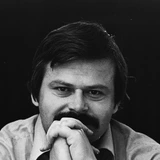
Vlastimil Hort was one of the strongest players in the world through the 1960s and 1970s, and one of the best loved. He played fourth board for the Rest of the World against the Soviet Union in 1970 and came away unbeaten, won the championship of Czechoslovakia six times and reached the Candidates matches in 1977. There, when Boris Spassky fell ill and had used up his rest days, Hort gave him one of his own instead of claiming the match; Spassky recovered and won by a single point. The next day Hort played more than six hundred people at once. After he left for West Germany in 1985 he won that country's championship three times, and became a familiar face on German television.
Kladno
Hort was born on 12 January 1944 in Kladno, in what was then the German-occupied Protectorate of Bohemia and Moravia. He became an International Master in 1962 and a grandmaster in 1965, and from 1960 he played for Czechoslovakia at the Olympiads, eleven times in all.
In his chapter of How to Open a Chess Game (1974) Hort remembered how he was taught as a child. Emil Richter, twice champion of Czechoslovakia, told the young players over chocolate milk and cookies: “Never forget that each piece must have a lot of air!” A schoolteacher who disapproved of 1.e4 e5 2.Qh5 asked the boy whether he had a little sister at home, and whether his mother let her go out alone in the evening. When Hort shook his head, the teacher said: “Well, you should not let the Queen go out alone, either.”
He won strong international tournaments at Hastings 1967/68 and Skopje 1969, and the Czechoslovak Championship six times. In a poll to choose the best Czechoslovak player of the century, he finished second, behind Richard Réti.
The Rest of the World
At the Sousse Interzonal of 1967 Hort was Bobby Fischer's scheduled opponent on the day Fischer failed to appear; Hort was awarded a win by default, and Fischer withdrew from the tournament soon afterwards. Hort shared sixth place with Samuel Reshevsky and Leonid Stein. As Kasparov records in My Great Predecessors, Part III, they played off for the final Candidates place in Los Angeles in February 1968. All three again finished level, with four points from eight games; Reshevsky qualified because he had the best Berger tiebreak score from the Interzonal.
In 1970 he was chosen for the Rest of the World team in the match against the Soviet Union in Belgrade. On fourth board he scored an unbeaten plus one against Lev Polugaevsky, in some ways the greatest result of his career.
“The forest is my home.”
“In any case, for me there were only three brilliant world champions: Tal, Fischer and Kasparov.”
“Well yes, you’re a Scandinavian!”
“I would advise him to take a three week holiday on a sunny beach (it is what I need and will do myself) then he will regain his intuition for the right moves.”
“You are either world champion, or nothing.”
“In three of these I had the initiative, but could not break Vlastimil's resistance.”
“Vlastimil Hort's mournful 'what shall I do?' that runs through his comments like a Schumann refrain”
Portorož and Ljubljana
In June 1975 Hort shared third place with Semen Furman and Zoltán Ribli on 9½ of 15 at the Vidmar Memorial in Portorož and Ljubljana, Anatoly Karpov's first tournament as world champion. RHM Press commissioned him to write the tournament book, Portoroz/Ljubljana Grandmaster Chess Tournament 1975 (1977), and his round reports did not spare him. Of his only loss, to Furman, he wrote that after the adjournment “Hort then lost his objectivity and played for a win with 48 P-B6? After that move it was not only his objectivity that was lost ...” In the last round he drew with Svetozar Gligorić, which secured Gligorić second place; Hort wrote of himself that he “was so tired in the final rounds that he was also glad.”
The Spassky match
In 1977 Hort reached the Candidates matches and was drawn against the former World Champion Boris Spassky. Late in the match Spassky fell ill and used up all his time-outs without recovering. Hort could have claimed the match by forfeit. Instead he gave Spassky one of his own rest days.
In the penultimate game Hort had a clearly winning position, but he forgot the clock and sat thinking until his time ran out. The last game was drawn, and Spassky won the match +2 −1 =13. The next day Hort gave a simultaneous exhibition against more than six hundred opponents, a world record at the time, to get the loss out of his head.
Germany
Before he left Czechoslovakia, Hort already played much of his chess in West Germany. Jeremy James and William Hartston wrote in The Master Game, Book Two (1981) that he was a club professional in Cologne and had helped Robert Hübner prepare for his matches in the world championship cycle. On the BBC's The Master Game the clock troubled him again. He reached the final of the 1979 series, drew four games with Bent Larsen and lost the fifth on time. In the 1981 series he pressed a rook-and-bishop against rook ending against the teenage Nigel Short until his flag fell; under the rules he had lost, but Short agreed to call it a draw. Recording his thoughts for the program, Hort called time shortage “my illness in this television series.”
In 1985, while playing in a tournament in Tunisia, Hort defected to the West and settled in West Germany. The same year he played 636 opponents at once in Cologne, a simultaneous record that earned him a place in The Guinness Book of Records. He won his new country's national championship in 1987, 1989 and 1991, and played for Germany at the Olympiads of 1988, 1990 and 1992.
With Helmut Pfleger he became a regular chess commentator on German television. He kept playing well into old age, in veterans' teams against women grandmasters among other events, and in 2006 he became Senior World Champion at Chess960. He also wrote on the Alekhine Defence.
Stories from the circuit
Hort learned to gather mushrooms from his father at seven. In My Chess Stories, he recalled taking Fischer into the Slavonian woods during the Vinkovci tournament in 1967. Back at the hotel he threw away Fischer's harvest because the mushrooms were poisonous. When Hort joked with the chef about cooking mushrooms for Fischer, the American insisted that Hort eat first and that he would wait an hour.
In My Great Predecessors, Part V, Kasparov retells an exchange reported by Bent Larsen after his win over Karpov at Montreal in 1979. Larsen had used the Scandinavian Defence. Hort teased the Dane about choosing an opening that matched his nationality; Larsen replied that he regarded it as a good version of the Caro-Kann.
Legacy
Hort died at his home in Eitorf, Germany, on 12 May 2025, aged 81, from complications of the diabetes he had lived with for thirty years. He is remembered as one of the great sportsmen of chess: the player who gave his own rest day to a sick opponent in a Candidates match and lost the match by a point.
Books
Books Vlastimil Hort wrote, co-wrote, edited, or contributed to. Translations and reprints are grouped under the same work.
-
How to Open a Chess Game
Coauthor — Larry Evans, Svetozar Gligoric, Tigran Petrosian, Lajos Portisch, Paul Keres, Bent Larsen
-
The Best Move
Coauthor — Vlastimil Jansa
-
The Master Game, Book Two
Contributor — game annotations
-
Begegnungen am Schachbrett: So spielen Profis
Author
-
My Chess Stories
Author
-
Král na scestí
Author
-
Král v nesnázích
Author
-
Portoroz/Ljubljana Grandmaster Chess Tournament 1975
Main author and game annotator